
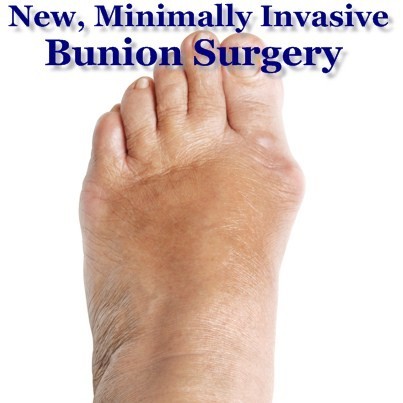
 Bunions are probably the most common deformity seen in the adult foot. The term ?bunion? is actually Latin for turnip. The scientific phrase used to describe a bunion is hallux valgus. Hallux is Latin for great toe, while valgus means deviation towards the outer side of the body. Bunions come in all shapes and sizes. This causes significant variation in symptoms and also in the extent of the surgery required to correct a bunion. Most patients who have symptomatic bunions complain of pain on the medial, or inner aspect of the big toe. However, bunions may also cause pain underneath the big toe, or even under the second toe.
 Causes
Causes of bunions are foot injuries, neuromuscular disorders, or congenital deformities. People who suffer from flat feet or low arches are also prone to developing these problems, as are arthritic patients and those with inflammatory joint disease. Occupations that place undue stress on the feet are also a factor; ballet dancers, for instance, often develop the condition. Wearing shoes that are too tight or cause the toes to be squeezed together is also a common factor, one that explains the high prevalence of the disorder among women.
Symptoms
No matter what stage your bunion is in, you can be in pain. Though bunions take years to develop, you can experience pain at any stage. Some people don?t have bunion pain at all. Pain from a bunion can be severe enough to keep you from walking comfortably in normal shoes. The skin and deeper tissue around the bunion also may become swollen or inflamed.
Diagnosis
People with bunions may be concerned about the changing appearance of their feet, but it is usually the pain caused by the condition that leads them to consult their doctor. The doctor will evaluate any symptoms experienced and examine the affected foot for joint enlargement, tissue swelling and/or tenderness. They will also assess any risk factors for the condition and will ask about family history. An x-ray of the foot is usually recommended so that the alignment of big toe joint can be assessed. This would also allow any other conditions that may be affecting the joint, such as arthritis, to be seen.
Non Surgical Treatment
Wide toe box, bunion pads, orthotics, or a combination. Mild discomfort may lessen by wearing a shoe with a wide toe box or with stretchable material. If not, bunion pads purchased in most pharmacies can shield the painful area. Orthotics can also be prescribed to redistribute and relieve pressure from the affected articulation. If conservative therapy fails, surgery aimed at correcting abnormal bony alignments and restoring joint mobility should be considered. If the patient is unwilling to wear large, wider shoes to accommodate the bunion because they are unattractive, surgery can be considered; however, patients should be told that orthotic devices should be worn after surgery to reduce the risk of recurrence. For bursitis, bursal aspiration and injection of a corticosteroid are indicated. For osteoarthritic synovitis, oral NSAIDs or an intra-articular injection of a corticosteroid/anesthetic solution reduces symptoms. For hallux limitus or hallux rigidus, treatment aims to preserve joint mobility by using passive stretching exercises, which occasionally require injection of a local anesthetic to relieve muscle spasm. Sometimes surgical release of contractures is necessary.

Surgical Treatment
If other treatments don?t help and your bunion is very painful, you may be referred to an orthopaedic or a podiatric surgeon for assessment. There are over 130 different operations that can be carried out to treat bunions. The simplest operations are called bunionectomies. The majority of the operations aim to correct the alignment of your big toe. This will narrow your foot and straighten out your big toe joint as much as possible. An operation won?t return your foot back to normal, but most people find that surgery reduces their symptoms and improves the shape of their foot. The operation your surgeon will advise you to have will depend on how severe your bunion is and whether or not you have arthritis.