
Cars and boats wear their history in plain sight. The sun etches into clear coat, road film bakes onto lower panels, cabin fabrics collect oil from skin and dust from air vents. On the water, gel coat chalks and loses gloss, salt creeps into crevices, and vinyl seats fade in a season if neglected. A strong detailing partner helps you manage all that aging. The wrong one can lock in swirls, haze your trim, or push coatings where they do not belong. The stakes are visible in daylight and they are not cheap to undo.
Picking the right car detailing service or boat detailing service is not about the shiniest Instagram reel. It is about process control, product knowledge, and a technician who knows when to stop. There is a difference between a wash that looks good wet and one that reads clean under proper lighting, and between a gloss that lasts a week and protection you can rely on for a season or more. If you sort providers by those realities, you end up with better results at a fair total cost of ownership.
What detailing actually includes, and what it does not
Terms are loose in this trade. One shop’s “full detail” might be another’s quick wash and vacuum. Before comparing prices, level set on what you want.
Exterior detailing covers the wash process, decontamination, and protection. A proper exterior starts with a contactless prewash, then a contact wash with clean mitts and the right shampoo, then chemical and mechanical decontamination to remove iron fallout and bonded tar. On neglected finishes, this step alone can lift three to six months of industrial fallout and road grime. Protection can be a polymer sealant, a wax, or a ceramic product, each with a different look, feel, and service life.

Interior detailing can mean anything from a fast vacuum and wipedown to a full cabin reset with deep extraction, steam for vents and tight seams, leather cleaning and conditioning, and targeted odor treatment. The main difference lies in dwell times, tool choice, and whether they remove seats safely on vehicles where that makes sense and is supported by manufacturer guidance.
Paint correction is its own category. That means leveling defects in clear coat to remove swirls, scratches that have not cut through the clear, water spots, and oxidation. You do not “add” clear. You remove a controlled microns-thin layer to reveal a flat, uniform surface. On many factory clears, safe one-step correction often removes 1 to 3 microns. Two steps with a cutting and a finishing polish might remove 3 to 7 microns depending on hardness, pad, and technique. A technician who measures thickness with a gauge and checks edges and repainted panels reduces risk dramatically.
Marine detailing shares principles with cars, but gel coat is thicker and more porous than automotive clear. That is why marine gel coating care often requires heavier cut compounds and rotary polishers, and why protection must stand up to UV, salt, and standing water. Boat ceramic coating chemistry is tuned for that environment. Using a car coating on a gel coat hull might shine for a few weeks, then let go under sun and salt. The right marine detailing plan accounts for dock rash, scum lines, and the way boats live in motion and at rest.
Quality shows in the process long before the gloss
When you visit a shop or watch a mobile team set up, the first ten minutes tell you most of what you need to know. Look for clean buckets with grit guards, labeled bottles, fresh towels stored in sealed bins, and wash mitts that are free of embedded grit. Ask, briefly, about their wash sequence. If the answer is something like foam, dwell, pressure rinse, contact wash from top to bottom, separate wheels and tires, you are in competent hands. If they jump straight to a bucket and mitt on a dusty car, expect wash marring.
Lighting is another giveaway. Real defect inspection uses a high CRI handheld light, not just sunlight. In the bay, color temperature matters. Warm and cool sources reveal different defects. Cutting and finishing polishes should be separated, with matching pads that are clean and designated. Cross contamination between heavily cut pads and finishing pads introduces haze that takes extra time to chase later.
On coatings, curing conditions matter. A thorough installer manages humidity, temperature, and time. That can mean infrared lamps or a quiet corner and instructions for the first 24 to 48 hours. If you live in a coastal climate, they should bring that up and suggest a product with strong chemical resistance and a plan for the first wash. A rushed coating install on a wet day with no cure management will not deliver the promised longevity.
The human factors: training, insurance, and restraint
Certifications are not the whole story, but they indicate effort. Look for training with major product lines, not only a weekend seminar. Ask how the team handles repainted panels and soft clear on specific brands. A pro will say, for example, that Subaru and Tesla paints can be soft and benefit from milder pad and polish combos, and that edges and body lines hold less clear and get masked off during heavy correction.
Insurance and business practices matter when seats come out, marine shore power is nearby, or a technician is working around sensors and trim. Confirm they carry liability coverage and can produce it without drama. For boats, ask how they secure power tools on the dock and whether they have worked with your marina’s access rules.
Perhaps the best test is restraint. Not every scratch should be chased. If a scratch catches a fingernail and runs deep, most of the time you live with it or touch it up. A detailer who recommends spot sanding without measurement or context is gambling with your clear coat or gel coat. You want someone who knows when to stop.
Products without hype: matching chemistry to the surface
For cars, the broad categories are sealant, wax, and ceramic. Sealants are the most forgiving to apply, with durability in the 4 to 6 month range in mixed weather. Waxes bring warmth to darker colors but give up longevity. Ceramic coatings vary. A single layer consumer product might last 12 to 18 months with proper care. A pro-only product with controlled application conditions may hold its water behavior for two to five years, though the upper end assumes gentle wash technique and climate favorability.
On boats, the choices tighten. Marine gel coating needs heavier UV blockers and stronger solvents. A ceramic built for gel coat can keep scum and oxidation at bay for a season or two, sometimes longer if the hull lives on a lift and is rinsed after use. Do not expect any product to survive neglect indefinitely. If a provider talks about permanent protection, ask them to define what that means for a boat that sits in warm, brackish water through summer.
Interior chemicals need the same discipline. Enzyme cleaners, oxidizers, and surfactants have their place, but they can also bleach or delaminate if misused. Steam is safe when used with care, not blasted into delicate electronics. A practiced hand knows where to pause.
Reading a price sheet the right way
Package names are marketing. The content matters. Time is a better anchor than fancy tier names. A thorough exterior decon and one-step polish on a mid-size sedan can take 4 to 6 hours for an efficient two-person team, longer on neglected paint. Add interior extraction, and the day can fill quickly. A coating add-on has its own clock, not only for application but also for curing.
You want transparency on what is included and what counts as a surcharge. Pet hair, sand in trunk liners, heavy mineral water spots, and tree sap pitch are all labor multipliers. On the marine side, scum line removal and oxidation correction vary widely in effort. A clean-looking white hull can still be chalky under hand. A shop that sets expectations clearly reduces friction later.
Evidence that actually means something
Photos can mislead. Freshly dressed tires and wet paint look great, even if the finish is swirled. Ask to see 50-50 shots under inspection light, not only in the shade. Look for consistent clarity in reflections at the panel level, not just a close crop. If possible, talk to a client who returned a season later. Long-term performance says more than a next-day shine.
Warranties exist, but they read differently in practice. Most ceramic warranties require proof of periodic maintenance and exclude mechanical damage. That is reasonable, and it still helps if the installer explains exactly how to maintain the coating and what breaks coverage. Get that in writing, even if informally.
How Hugo\'s Auto Detailing evaluates vehicles and boats
Shops vary in rhythm. At Hugo's Auto Detailing, the intake begins with a walkaround in natural light, then under handheld inspection. They note prior paintwork, thin clear on edges, and water spot etching on glass, then discuss a plan that balances improvement with preservation. If the client is looking at a car detailing service after a harsh winter, the team prioritizes salt neutralization on the chassis and jambs, then gentle decon on upper paint to keep marring low.
For boat work, they shift into marine detailing mode. On a 24-foot center console with chalky topsides, they test a small section with a medium cut and pad to check how quickly the gloss returns. They document the result and adjust. If the gel coat is heavily oxidized, they map out the hull in sections, starting high and moving down to the scum line with separate pads and compounds to avoid dragging contamination upward. When a client asks about boat ceramic coating, they explain the maintenance that protects the investment: freshwater rinses after outings, mild pH soaps, and quarterly checks on high wear zones like rub rails and steps.
What working with Hugo's Auto Detailing feels like on service day
Process management shows up in a thousand small choices. Hugo's Auto Detailing lays out clean towels in sealed bins by color code, one set for interiors, a separate set for glass to avoid smears, and another for paint. During paint correction, they work panel by panel, blow out pads with compressed air after every few passes, and mark high risk edges with tape so a tired hand does not cut where it should not. For interiors, they build from dry work to wet work, vacuum first, brush and air-purge seams, then hit problem areas with targeted chemistry before moving to extraction, so water use stays efficient and fabrics do not soak needlessly.
The same mindset carries to boats. Cord management around cleats and ladders, tool lanyards on the dock, and controlled compounding passes keep the work clean and safe. When applying marine gel coating protectants or a ceramic made for gel coat, they monitor temperature and dew point. If weather shifts, they pause rather than risk a smeary cure. Clients notice the outcomes, but the confidence really grows when the team explains why they skipped a risky step or recommended a milder approach that leaves more material for the future.
Red flags you should not ignore
Some problems are subtle, others shout. Any shop that uses a single bucket for paint and wheels is cutting corners where grit lives. If a detailer promises to remove every scratch without measuring or asking about prior work, they either do not understand clear coat or they plan to hide defects with heavy fillers. Scent bombs for interiors that mask odors instead of treating the source are another sign. On boats, aggressive acid baths for scum lines can leave streaks and harm fittings if not controlled, so ask what they use and why.
Another tell is overconfidence with coatings. If a provider says a ceramic cures fully in minutes and is ready for heavy rain the same day, take a breath. Many coatings set enough to dust in an hour or two, but they need a longer window for water contact. A straight answer here matters more than a quick turnaround promise.
A paint correction case that saved a client from a respray
A client brought in a dark blue sedan that had lived under trees. The clear was littered with shallow etching and swirl marks from automatic washes. On inspection, the trunk lid read about 100 to 105 microns, thinner than neighboring panels at 120 to 130 microns, a hint of prior work. Instead of a heavy two-step cut across the whole car, the team proposed a hybrid approach. They corrected most panels with a mild polishing compound and a foam pad, then used a careful, tape-lined, localized heavier cut on the worst areas of the hood and roof. The trunk, given its thin readings, received only a gentle refinish to preserve clear.
The result was a uniform, high gloss finish with 85 to 90 percent defect removal, while keeping clear coat in a safe range. They finished with a durable sealant rather than a coating, at the client’s request for easier DIY upkeep. Six months later, the car still beaded water well and looked sharp under gas station canopy lights, the harshest judge.
A marine detailing vignette: oxidation and the right ceramic
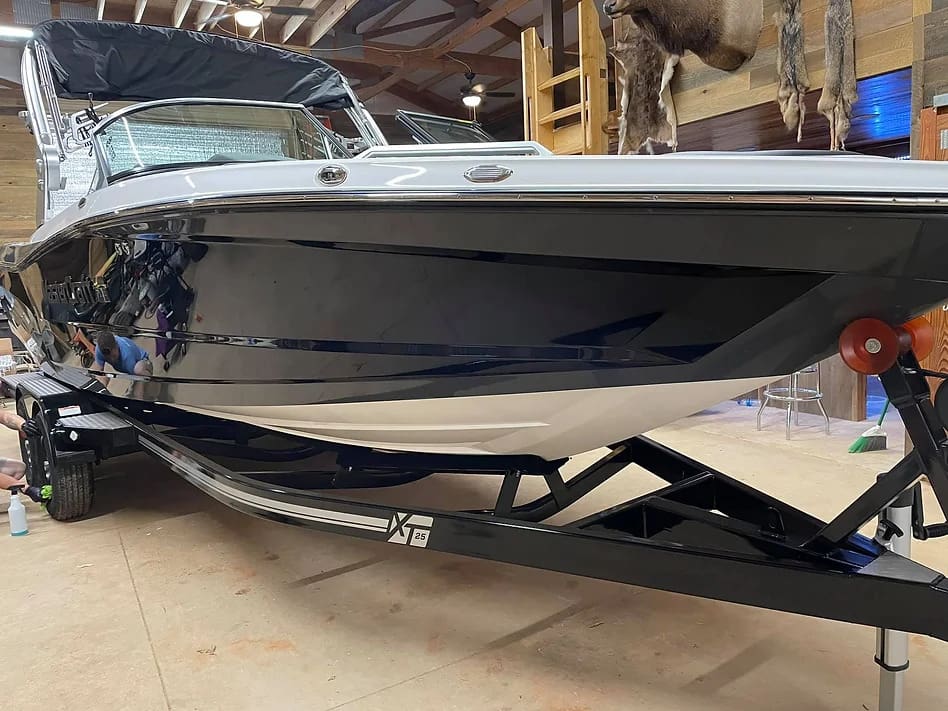
A freshwater cabin cruiser came in with chalky topsides and a stubborn scum line. The owner asked for the most durable protection, hoping to coat and forget. During testing, compounding revealed quick improvement, but a few spots needed an extra pass to clear deep oxidation. The team corrected the hull in a two-step process, cleaned the waterline safely with a controlled acidic cleaner, then neutralized and rinsed thoroughly. They installed a boat ceramic coating formulated for gel coat, not an automotive product, and staged the cure in the covered slip for 48 hours with airflow to manage humidity.
That season, the owner reported the scum line rinsed easily and the gloss held. Dock rash still happened, of course. Coatings do not beat contact with the pier. But maintenance was shorter and the look stayed crisp. This matched the honest promise, not a fantasy of invincibility.
Quick evaluation checklist for any detailing provider
- Look for a decon plan: iron remover, tar remover, clay, and separate wheel tools. Ask how they inspect paint or gel coat: lighting, thickness readouts, and tape on edges. Clarify the protection product: sealant, wax, ceramic, and why that choice fits your use. Confirm interior method: dry vacuum first, steam where appropriate, correct chemicals for leather and fabrics. Verify business basics: insurance, written scope of work, and cure or aftercare guidance.
Five smart questions to ask before you book
- What defects will remain and why did you choose that stopping point? How do you manage curing conditions for ceramic coatings on cars and boats? Which panels or areas are too thin or risky for heavy correction, and how will you protect them? For marine detailing, which products are purpose built for gel coat, and how will you handle the scum line? What does maintenance look like for your finish, including wash technique and timelines?
Picking services that match your goals
Daily driver, garage queen, fishing boat, weekend cruiser, each lives a different life. If you rack up highway miles, prioritize wash safety and durable protection. A ceramic that resists bug etching and a good prewash at home cut down on marred finishes. If your car lives mostly in a garage and you enjoy weekend wipe downs, a high quality sealant with seasonal reapplication may satisfy, especially if you value a specific look.
For boats that stay in the water, durability and easy scum removal rule. A boat ceramic coating helps, but do not skip preventive rinses and periodic scrubs. If the vessel is trailered and covered, you have more flexibility. A sealant built for marine use may suffice if you keep up with it, and you can focus your budget on interior vinyl protection and non-skid cleaning that keeps crew safe underfoot.
Facility, mobile, or marina work: logistics that shape results
A fixed bay gives a shop control over lighting, temperature, and dust, which is ideal for coatings and multi-step paint correction. Mobile work shines for maintenance details, single step polishes, and interiors, where you avoid the scheduling dance of dropping off and picking up. At marinas, permissions and power supply determine what is practical. A provider who has good relationships with dock management can work more smoothly, avoiding last minute delays.
Hugo's Auto Detailing balances this by scheduling heavy correction and ceramic installs in their controlled space, then running a mobile crew for maintenance and lighter services. The pattern minimizes https://augustyvrf994.theglensecret.com/car-detailing-service-for-evs-special-considerations-and-care risk and improves consistency. It also helps clients plan. Knowing that a coating install needs a day and a half in the bay, plus a day of soft care at home, sets expectations that everyone can live with.
Preparing your vehicle or boat for service
You can help by removing personal items and easy clutter, so the team can focus time and attention where it matters. Mention any prior bodywork, even if it looks perfect. If you know a panel was resprayed, that informs pad and polish choice. For boats, coordinate access and shore power if needed, and verify water availability for proper rinsing. A quick freshwater rinse the night before a detail, especially on a boat with salt residue, reduces the time spent on basic cleanup and keeps costs predictable.
Avoid applying dressings or quick detailers in the days leading up to service. Fresh silicone or high gloss tire gels can sling onto paint and complicate cleaning. If you have a coating already, be honest if it has seen automatic brushes or harsh cleaners. That helps the team assess whether it can be revived or if fresh protection is a better path.
Aftercare that protects your investment
Maintenance is less exciting than a reveal, but it is where value lives. For cars, a touchless prewash or thorough rinse, then a gentle contact wash with dedicated mitts and towels, keeps marring low. Dry with soft towels or a blower where possible. Use a pH balanced soap. Resist the lure of heavy degreasers unless you are stripping protection by design.
For interiors, keep a small kit with a mild interior cleaner, a soft brush, and a glass towel. Quick touch ups prevent stains from setting. Leather likes clean, not oily. Modern coated leather benefits from gentle cleaners and light protectants, not thick creams.
On boats, rinse after each outing. Even a two-minute hose down makes a visible difference. Use marine-safe soaps and avoid household cleaners that strip or leave films. Schedule a mid-season check for high wear zones and non-skid areas. If your hull is coated, keep an eye on water behavior. When beading weakens on traffic-heavy zones, a topper or light polish may restore performance without a full rework.
When a simpler package beats a complex one
It is easy to overbuy services if the menu is long. If your paint is new and only lightly marred, a gentle one-step polish plus a quality protection layer may deliver 90 percent of the visual gain at a fraction of the time. Save heavy correction for when you need it. With gel coat, a realistic target might be to restore gloss and remove the bulk of oxidation, then lock in with the right marine product. Chasing every last ghost of oxidation sometimes means heavy cut that reduces future options. Choose preservation when possible.
The bottom line
A capable car detailing service or marine detailing provider blends chemistry knowledge, disciplined technique, and judgment. You want a team that respects the material, explains trade-offs, and can point to long-term results, not only next-day shine. Watch their process, listen for nuance in their answers, and match service levels to how you actually use your car or boat. When you find that fit, the gloss you see on day one is just the start of a finish that stays honest in harsh light and holds up to real use.
Hugo’s Auto Detailing
1610 East Valley Rd, Montecito, CA 93108
(805) 895-1623
FAQs About Car Detailing
How long does car detailing take?
Car detailing typically takes between 2 and 8 hours, depending on the vehicle’s size, condition, and whether services like paint correction or ceramic coating are included.
How often should I get my car detailed?
Most vehicles should be detailed every 3 to 6 months, especially in Montecito, CA where sun exposure and coastal conditions can impact your vehicle’s paint and interior.
Is paint correction required before ceramic coating?
Paint correction is recommended if your vehicle has swirl marks, scratches, or oxidation. Proper preparation ensures better bonding and long-term performance of the ceramic coating.