
If you own a property in New Albany, Indiana, trees are more than landscape features. They frame streets, shade porches, and add resale value. They can also become safety hazards, insurance liabilities, and ongoing maintenance lines on your budget. When the time comes to prune, trim, or remove a tree, understanding what influences price will keep you from overpaying and help you choose the right crew. I’ve worked with homeowners and contractors in the area for years, and this article walks through realistic cost ranges, what those numbers include, ways to save without cutting corners, and when you should call a pro like Cummins Tree Service rather than attempting the job yourself.
Why price varies so much
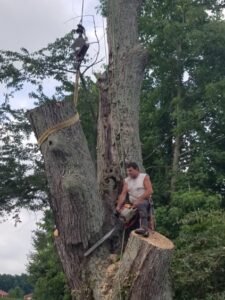
Tree work looks simple until you factor in height, species, access, and what you want done. A five-minute prune at ground level is far different from a multi-hour crown reduction on a 60 foot ash leaning over a garage. Contractors price jobs based on labor hours, equipment needs, insurance exposure, disposal, and local demand. In New Albany, heavy leaf seasons and winter storms can suddenly push prices up by creating a backlog of emergency calls. Expect seasonal variation.
Typical cost ranges you’ll see
For straightforward budgeting, here are realistic ranges you’ll run into in this region. These are not fixed quotes, they are market-typical ranges to help you evaluate estimates.
- Small pruning or trimming (shrubs to small trees up to 15 feet): $75 to $300. This usually covers selective pruning, shaping, or corrective cuts on trees that can be handled from the ground or with a short ladder. Medium tree pruning (15 to 30 feet): $150 to $600. Mid-size trees that require climbing or cherry pickers, with limb removal and light cleanup, fall here. Large tree pruning or crown reduction (30 to 60 feet): $300 to $1,200. These jobs require more crew time, safety lines, and often a chipper for clean-up. Tree removal, small (under 20 inches diameter at chest height): $300 to $900. Removal includes felling, cutting into manageable pieces, and debris removal. Tree removal, large (20 to 40 inches diameter): $800 to $2,500. Complexity and risk increase rapidly as diameter and height grow. Very large, hazardous, or complicated removals (old growth, over structures, in tight yards): $2,000 to $6,000 plus. Jobs requiring cranes, traffic control, or extended rigging fall into this category. Stump grinding: $75 to $450 depending on diameter and depth. Stump removal with excavation is more expensive and depends on root mass and soil conditions. Tree transplanting: prices vary widely, commonly starting around $1,200 for small trees and escalating significantly with size and distance. Transplanting involves root ball preparation, heavy equipment, and aftercare.
Why diameter matters more than height
Contractors often refer to diameter at breast height when estimating. A tree’s diameter is a proxy for total wood volume and weight, and that drives labor time and disposal cost. Two trees with similar heights can cost very different amounts if one is a slender cottonwood and the other is a massive sugar maple.
Damage, hazard, and insurance exposure raise the price
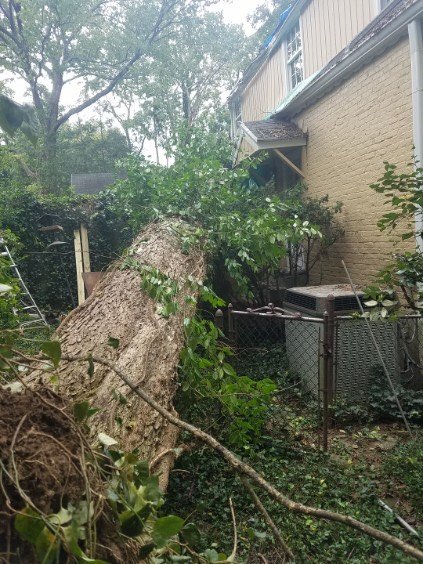
If a tree leans toward a house, grows through utility lines, or has cavities and decay, expect a hazard premium. Crews must adopt more conservative cutting practices, use additional rigging to control large limbs, and possibly coordinate with the utility company. That adds to labor, time on site, and the contractor’s liability. Reputable firms in New Albany, including Cummins Tree Service, carry insurance and will itemize these additions on your estimate.
What an estimate should include
A proper estimate is more than a single number. It should tell you what work will be performed, how many crew members will be on site, which equipment will be used, and how debris will be handled. Ask for these specifics if they are not included.
- Scope of work. Identify trees by species or location and describe the work, whether pruning, crown reduction, or full removal. Crew size and equipment. You want to know if a crew of two with a chipper is planned, or if a crane will be necessary. Cleanup and disposal. Will the company haul all chips away, leave mulch for your use, or pile logs for you to keep? Insurance and permits. Confirm liability and worker’s comp coverage. If your property is in a historic district or near certain easements, permits might be required. Payment terms and warranty. Many companies require partial deposit with final payment on completion. Some offer a short-term guarantee for prank damage or clean-up.
Save money without sacrificing safety
There are practical ways to reduce cost while keeping the job safe and professional. First, consolidate work. If you have several small trees or pruning needs, a single crew visit is more efficient than multiple calls. Second, decide what to do with the wood ahead of time. Leaving chips on site or accepting logs to burn at your leisure reduces hauling charges. Third, schedule non-emergency projects in late winter or early spring when demand is lower and contractors are not tied up with storm calls.
When not to cut corners
There are three situations where DIY or a low-priced offer is a false economy. First, any work involving wires should always be done by professionals who coordinate with the utility. Second, trees near structures or with heavy decay require experienced rigging and often additional insurance; mistakes can be catastrophic. Third, if you are quoted an unusually low price, ask what is excluded; cheap estimates sometimes leave the mess for you to deal with.
A short checklist before you hire (five quick items)
- Verify insurance and ask for a certificate of liability naming you as additional insured if requested. Get at least two written estimates with the same scope of work for easy comparison. Ask about disposal options and whether wood or chips are included in the price. Confirm who will handle permits if they are needed. Check references or online reviews, and ask to see photos of recent similar jobs.
Equipment and manpower: how they affect the bill
If a job requires a crane, aerial lift, or an extra crew for rigging, the hourly rate jumps. A typical small crew with a chainsaw and chipper is cheaper because less setup is needed. Some firms charge a flat fee per hour per crew member; others charge by the job. Watch for fleet charges if the property is remote or if access is limited, which means hand-carrying limbs through narrow yards.
Disposal and recycling
Many companies now chip branches and spread chips on site as a service. This saves hauling expenses and provides you with usable mulch. If you prefer to keep logs, contractors may reduce the price. Conversely, hauling to a landfill costs more. New Albany and Floyd County have green waste programs and local yards that accept chips, so check local options if you want to handle disposal yourself. Be sure to ask whether the contractor will leave a mulch pile in a convenient location or cover the lawn beforehand to prevent damage from heavy equipment.
Stump removal versus grinding: costs and consequences
Grinding stumps is the common, economical choice. It removes the visible hazard and allows a lawn or plantings over the area once the hole is filled. Complete stump removal, which extracts the root ball, is more disruptive and may be necessary when planting a new tree or building near the spot. Grinding leaves a root network that will slowly decay; if the stump is diseased, discuss whether full excavation is advisable.
Permits and neighborhood rules
In many municipalities, trimming a private tree does not require a permit. However, removing certain trees may. If your property is in an historic district or your tree is protected under local ordinance, you may need approval. Contractors familiar with New Albany will often handle permit procurement. If you live in a homeowner association, check rules https://rentry.co/5gx7a5nv about tree removal and approved contractors. Never assume you can remove a street tree without permission.
Storm damage and emergency response
Storms can change market pricing overnight. After a major weather event, you may see two problems. First, a backlog means longer waits and sometimes premium pricing for emergency service. Second, unscrupulous operators show up offering low prices and poor workmanship. If a tree presents immediate danger to people or structures, prioritize safety and documented proof of the hazard when working with an emergency crew. Reputable services will document damage and their interventions for insurance claims.
Insurance claims and documentation
If you plan to file a homeowner’s insurance claim, document damage before work begins if it is safe to do so. Take photographs, get a written estimate that lists hazardous conditions, and save receipts. Many insurers will reimburse reasonable costs for removing hazardous trees after a covered event. Clear, dated documentation simplifies the claim process.
Anecdote from a New Albany yard
A client called me one spring after a storm pushed a silver maple against her garage. The initial quote she received locally was modest because the company planned to cut the tree top down and leave sizable lower limbs for her to handle. I recommended a full removal by a certified crew because the roots had lifted the driveway and the tree was close to electric service. The full-service estimate doubled, but it included crane-assisted rigging, stump grinding, and hauling. Because the contractor coordinated with the utility and provided a certificate of insurance, the homeowner avoided potential damage to her garage and a separate utility billing. She paid more upfront but avoided multiple problems later.
Why pick a local company like Cummins Tree Service
Local firms carry experience with Indiana species, soil conditions, and neighborhood regulations. Cummins Tree Service and other established contractors know which ash trees are at risk for emerald ash borer infestations, how saturated spring soils affect root stability, and when to recommend cabling or selective pruning instead of removal. Local companies also respond faster after storms and have relationships with nearby disposal yards. When evaluating companies, ask specifically about local experience and examples of recent work in New Albany.
Negotiating the estimate responsibly
If a quote seems high, ask your contractor to break it down. Often you can make trade-offs that reduce cost without cutting safety: leave chips, take logs, or postpone nonessential pruning. Conversely, do not push for shortcuts in high-risk situations. Paying slightly more for an experienced crew and comprehensive insurance is better than a low bid that leaves you with property damage or a lawsuit.
Red flags to watch for
Be wary of knock-on-the-door offers after a storm, crews that demand full payment upfront, or companies unwilling to provide a written estimate. A legitimate contractor will show proof of insurance, explain methods, and be transparent about extra charges such as crane time or stump grinding. Ask about cleanup — nothing is worse than a supposedly low-priced job that ends with your yard filled with debris.
Questions to ask on site
When a crew arrives for an estimate, have a checklist of questions. Ask whether the crew will climb or use a lift, how they will manage traffic and neighbors if the tree is on a corner lot, and what protections they will use to prevent lawn damage. Inquire about expected start and completion times, and whether they will call before arriving. Clear communication prevents surprises.
Final thoughts on budgeting
Plan for contingencies. If an estimate is $1,200, keeping a 10 to 20 percent buffer covers unexpected issues like excessive rot or a hidden root system. If you have multiple trees, group work into a single contract to reduce mobilization costs. Finally, choose competence over the cheapest price for hazardous or large work. Trees are long-term investments in your property. The right pruning can add years to a tree’s life and improve safety and curb appeal. The wrong cut can lead to decay and early removal.
If you want help choosing a contractor, preparing a site for an estimate, or understanding a written bid you’ve received, I can walk you through it and point out specifics to watch for based on recent New Albany jobs. For many homeowners, a single phone call to a reputable local service, such as Cummins Tree Service, answers more questions than pages of web research.
Cummins Tree Service
10245 Lotticks Corner Rd SE, Elizabeth, IN 47117
(502) 492-4208
cumminstree@gmail.com
Website: https://cumminstreeservice.com/