
The last days of substance dependence addiction twelve-step program residential care can bring a strange mix of feelings. You are stronger than when you arrived, and you are ready to go home, yet part of you wonders what happens when the structure of campus life falls away. At La Hacienda Treatment Center, chemical dependency treatment was never meant to end at the front gate. La Hacienda has been successfully treating addiction since 1972, and its alumni community, outreach meetings and family support form a continuum of care that keeps going after discharge. This article explains what that continuum looks like and how people stay connected.
Why recovery continues after chemical dependency treatment
As a devastating disease, addiction needs long-term attention much like other chronic illnesses. A residential stay accomplishes a great deal: physical stabilization, an introduction to the 12 Steps, a clearer understanding of the illness and the start of healthier habits. Yet the hardest test usually happens back home, where familiar stresses, people and places remain. Full recovery means living differently over the long run, and that is far easier with company. The continuum of care is there so that the support found on campus can travel with you into daily life.
Relapse is part of the disease, and it is never a reason for shame. If it happens, returning for help is a sign of strength. La Hacienda places people who have relapsed into groups suited to their history, such as relapse after long sobriety or several earlier treatment episodes, so they can do the work again with people who understand. Knowing that the door stays open can make the first months after discharge feel less like a high wire and more like solid ground.
The alumni community
Alumni are people who completed treatment at La Hacienda and chose to stay connected. Over the years, generations of families have passed through the program, and many alumni return for meetings, for visits and to encourage newcomers. Many of the compassionate staff are in recovery themselves. For anyone who has just completed chemical dependency treatment, meeting people with long-term recovery makes a deep impression. Hope stops being abstract and becomes a person standing in front of you.
The alumni community is not a club with dues or a sales pitch. It is a fellowship of people who know what it took to get here. Many alumni stay in touch with the friends they made during treatment, call each other on hard days and celebrate milestones together. The 12-Step principles learned on campus give everyone a shared language. Service, one of those principles, is a big part of alumni life: helping the next person is one of the ways people keep their own recovery strong.
Support meetings for alumni and families
La Hacienda has six outreach offices, in Austin, Dallas, Fort Worth, Houston, Kerrville and San Antonio. They host support meetings for alumni and their families after discharge. These offices are not treatment sites; they are places to gather, share and stay connected. Treatment itself always happens on the campus in Hunt, Texas, in the Texas Hill Country. The outreach offices make it possible for people across the state to stay close to their recovery community without traveling back to campus every time they need support.
Families are welcome at these meetings, and that matters. Recovery changes a household, and loved ones need a place to talk about what they are experiencing too. Alongside the family program, which helps adult family members understand addiction, codependency, family dynamics, communication and relapse prevention with no tuition fee for families, these meetings give families an ongoing connection after their loved one comes home.
How chemical dependency treatment prepares you for what comes next
A good continuum depends on a solid beginning. During chemical dependency treatment, every patient follows an individualized treatment plan shaped by a medical and clinical evaluation. The plan includes individual counseling, group counseling, didactic groups that address relapse prevention, Big Book studies, 12-Step meetings on campus and in the community, and therapeutic activities like a ROPES course. Because patients attend meetings off campus while still in treatment, they leave already knowing what it is like to walk into a room in the wider recovery community.
A strong medical base helps too. A physician is on site every day — weekends and holidays included — so patients can see a physician every day. Care is led by four full-time board-certified addiction medicine physicians and a full-time psychiatrist, with 24/7 nursing and a licensed Special Care Unit where medically supervised detox takes place. Patients who go home with their physical health stabilized and a residential chemical dependency treatment clear grasp of their condition are far better prepared to keep up the recovery work that follows.
In a normal week, staying connected usually looks simple. Most alumni go to 12-Step meetings near home, much like the ones they attended both on campus and in the community during treatment. Many work the Steps with a sponsor, someone with more time in recovery who offers guidance. Add an outreach support meeting, a phone call to a friend from treatment and some act of service, and the week has a steady shape. It is not complicated, though it does require commitment. Because those habits began in residential care, they feel familiar instead of strange, and the company of others makes them easier to keep.
A campus that stays with you
Many alumni say the campus never really leaves them. They remember sunrise from Serenity Hill, meetings by the north fork of the Guadalupe River, long talks in the Bodega and shared meals in the dining room. The 40-acre campus where two forks of Guadalupe River meet becomes a fixed point in their story. For many, it is a reminder of where a new life began.
If you or someone you love is considering chemical dependency treatment and wants to know what support looks like afterward, call admissions. They can explain the alumni community and the outreach meetings, answer questions and verify insurance at no cost. La Hacienda is in-network with most major insurance carriers, including Marketplace plans, and coverage depends on each policy. Everyone gets the same campus, and everyone is welcome in the community that grows from it.
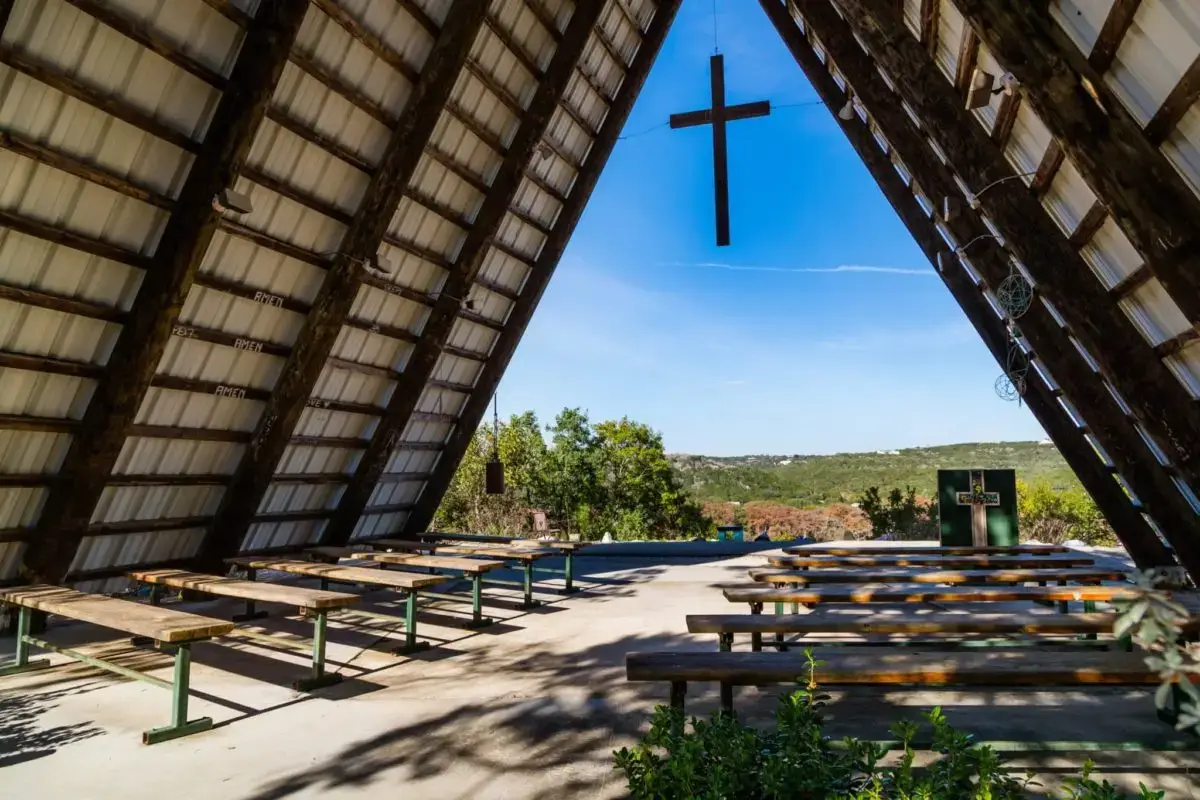
La Hacienda Treatment Center provides residential addiction treatment on a 40-acre campus in Hunt, Texas.
La Hacienda Treatment CenterHunt, Texas
Phone: (830) 238-4222
Website: www.lahacienda.com
Contact La Hacienda Treatment Center:
La Hacienda Treatment CenterHunt, Texas
Phone: (830) 238-4222
Website: www.lahacienda.com