
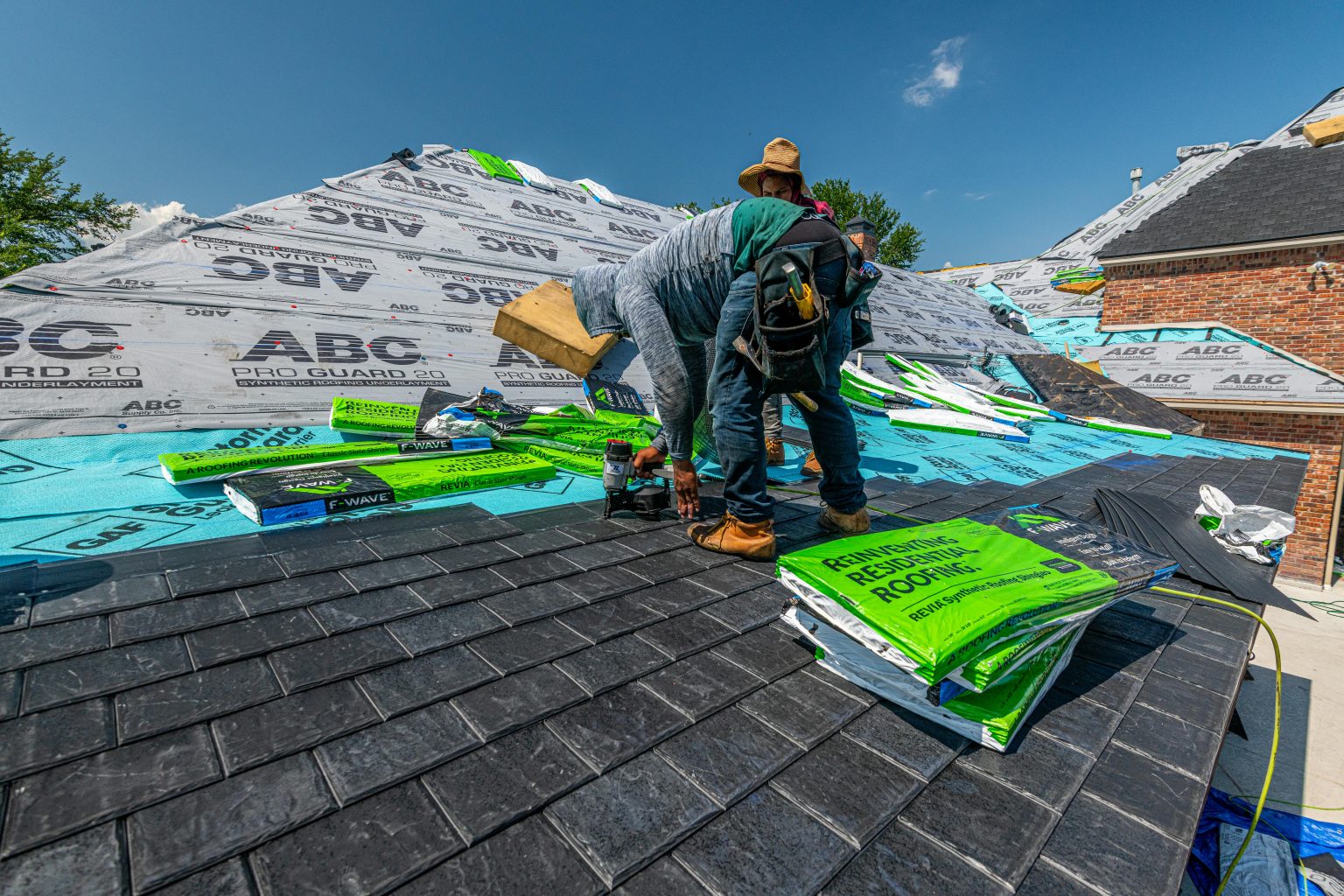
Metal roofing earns its reputation the hard way. It stands up to sun, wind, freeze-thaw cycles, and driving rain better than many other systems, and when it is installed well, it can last for decades. That durability sometimes creates a false sense of security. Owners assume metal can take almost anything, and by the time they notice a problem, a simple service call has turned into a larger repair.
The good news is that most metal roof issues do not begin as dramatic failures. They start small. A backed-out fastener. A seam that has opened just enough to wick in water. A flashing detail that looked fine from the ground but has been working loose for seasons. Long-lasting roof repairs come from catching those details early, understanding what caused them, and choosing a repair that fits the roof system instead of forcing a quick patch onto it.
I have seen metal roofs that gave another fifteen years of service after a careful repair campaign, and I have seen roofs shortened by a decade because someone reached for caulk and hoped for the best. The difference usually comes down to diagnosis, materials, and restraint. Not every leak needs a full roof replacement. Not every problem should be buried under coating. Good judgment matters.
Why metal roofs fail in specific ways
A metal roof is not one thing. Exposed-fastener panels, standing seam systems, structural panels, architectural panels, and metal shingles each behave differently under load and weather. Repair work that performs well on one type may fail quickly on another.
Exposed-fastener roofs, common on agricultural buildings, workshops, and some commercial properties, often leak first at the screws. The neoprene washers age, the screws can back out from thermal movement or vibration, and repeated wetting around the fastener opens a path for water. On standing seam roofs, leaks are more likely to show up at seams, clips, penetrations, transitions, and terminations rather than across the broad field of the panel. Older metal roofs may also suffer from oxidation, especially where protective coatings have worn thin or dissimilar metals were paired without much thought.
Movement is a constant factor. Metal expands when heated and contracts when cooled. Over a long panel run, that movement is not subtle. Every penetration, curb, skylight, vent pipe, and end lap has to tolerate that cycle without tearing, pulling apart, or trapping water. A repair that ignores movement may look solid on day one and split open by the second summer.
Water behavior matters just as much as material behavior. A roof can appear to leak in one place and actually be taking on water several feet uphill. Capillary action at seams, ponding caused by poor slope, wind-driven rain at sidewalls, and snow build-up around details all complicate diagnosis. The smartest repair often begins with a slow, methodical inspection instead of a rush to seal the visible stain.
Start with the cause, not the symptom
The most expensive repair mistakes I see come from treating the interior evidence as the roof defect. A stain on a ceiling tile is just a clue. It may point to the area, but it does not tell you the failure point. On metal roofs, water frequently travels along purlins, under underlayment, or down panel ribs before showing itself.
A proper inspection means getting on the roof, not just looking from a ladder. It means checking panel condition, seams, fasteners, penetrations, flashing details, transitions into walls, ridge conditions, gutters, and points where foot traffic has been concentrated. It also means noting recent work by other trades. I have seen more than one leak created by an electrician, HVAC crew, or satellite installer who drilled first and asked questions later.
If the roof is safe to access, walk it carefully and deliberately. Soft-soled shoes help, but so does knowing where to step. Standing seam roofs can be damaged by careless foot traffic, and some panel profiles are far more forgiving than others. Repairs done after unnecessary damage are a frustrating form of self-inflicted cost.
One practical habit pays off every time: document everything. Wide photos, close-up photos, panel layout, location of defects, and notes on panel length and profile can save hours later. If replacement parts are needed, those details become even more important because matching an older metal panel or trim profile is not always straightforward.
The leaks that show up most often
Most recurring metal roof leaks fall into a handful of categories. The challenge is that they often appear together on aging roofs, which is why piecemeal work sometimes disappoints.
- Fasteners that have loosened, corroded, or lost washer integrity Failed sealant at penetrations, laps, and trim details Open or damaged seams, especially where thermal movement is concentrated Flashing failures at curbs, sidewalls, ridges, and transitions Rust or coating loss that has progressed beyond a surface cosmetic issue
That list looks simple on paper. In the field, each item can branch into several repair paths. A backed-out screw on a relatively new roof may just need replacement with the right oversized fastener and washer. Hundreds of backed-out screws across a weathered roof may signal broader movement, substrate issues, or fastener fatigue, and a spot fix may not be enough.
Why sealant alone rarely solves the problem
Sealant has an important role in metal roof repairs. It is also one of the most overused materials in the trade. A bead of sealant applied over dirt, oxidation, wet surfaces, or an actively moving joint is not a repair. It is a temporary cover, and often a very temporary one.
The right sealant must match the roof substrate and the detail being repaired. Some products adhere well to painted steel but not to heavily weathered galvanized surfaces without proper preparation. Others remain flexible enough for movement but are not meant for broad exposed patches. Surface prep matters just as much as product selection. If the roof is chalking, rusting, or contaminated with oil and dust, adhesion will be compromised before the sealant even cures.
There is also the temptation to over-apply. Thick smears of mastic may look reassuring to an untrained eye, but they can trap water, hide underlying failure, and make future repairs harder. I have lifted old patch material and found rust progressing quietly underneath because the original problem was never corrected. A cleaner, more targeted repair usually lasts longer and leaves the roof serviceable.
Fastener problems deserve more respect than they get
On exposed-fastener roofs, screw issues are often the main event. People tend to think of a screw as either present or missing, but the real picture is more nuanced. Fasteners can back out slightly, just enough to relieve pressure on the washer. Washers can crack from UV exposure. The hole in the metal can elongate from movement. Corrosion can seize or weaken the screw shank. Any of those conditions can let water in.
Replacing a few failed screws with identical new screws is not always the best practice. If the hole has worn larger, the new fastener may not bite adequately. In those cases, a properly sized oversized fastener may be the better choice. Washer quality matters too. Cheap washers age fast, especially in harsh sun or near coastal conditions. Saving pennies on fasteners during repair work can shorten the repair far more than most owners expect.
There is also a judgment call about scale. If a roof has isolated fastener failures, targeted replacement makes sense. If the roof has widespread fastener fatigue, a full fastener replacement program may be more economical than returning every rainy season to chase leaks one by one. That kind of project is tedious, but on the right roof it can significantly extend service life.
Seams, laps, and movement details
Standing seam roofs are often described as low maintenance, which is fair, but low maintenance is not no maintenance. Seams can separate, clip systems can loosen, and details at end laps or penetrations can become vulnerable over time. Thermal movement is usually the hidden actor.
Long panel runs are especially sensitive. If the roof was not detailed well at installation, or if movement has been restricted by poorly executed retrofit work, the stress tends to show up at penetrations and transitions. A pipe boot that looked properly sealed may tear where the flexible material meets the rigid metal. A curb flashing may split at a corner. A panel may show oil canning that is mostly cosmetic, but the stress at nearby details can be very real.
Repairing these conditions often calls for more than sealant. It may require replacing a boot with one designed for metal roof movement, reworking flashing geometry, adding closure components, or even selectively removing panels to access the failed detail correctly. That is why metal roof work often frustrates contractors who are excellent with shingles or membrane roofs but lack experience with metal systems. The material demands a different mindset.
Rust changes the repair conversation
Surface oxidation does not always mean a roof is near failure. On older steel roofs, some degree of weathering is common. The important question is whether the oxidation is superficial or structural. If rust is limited to the surface and the panel remains sound, preparation and treatment can be part of a viable repair strategy. If corrosion has eaten through panel thickness, especially around fasteners or lower roof areas that stay damp, patching becomes a shorter-term measure at best.
Preparation is where many rust repairs succeed or fail. Loose corrosion has to be removed. The substrate needs to be dry and stable. Primers and coatings, if used, should be compatible with the roof and with each other. I have seen coatings peel because someone applied them over chalky paint without enough cleaning, and I have seen patch panels fail because the surrounding corroded metal kept deteriorating around the patch.
This is where honesty matters. Not every rusted roof should be sold as a repair candidate. If panel loss is widespread, if purlins or decking are involved, or if the roof has active leaks in multiple aging details, replacement may be the more durable financial decision even if it costs more upfront.
The details around penetrations are where experience shows
Most stubborn leaks happen at interruptions in the panel field. Vents, stacks, HVAC curbs, skylights, snow retention attachments, and wall transitions all interrupt the clean drainage path of a roof. Each of those details should be repaired with respect for water flow and panel movement.
A common example is a vent pipe boot that has hardened and cracked. Replacing it sounds easy until you realize the panel profile, seam configuration, and pipe location limit how the new boot can be installed. Forcing a generic part into place can create uphill wrinkles or fishmouth edges that catch water. The better repair is often the slower one, involving proper disassembly, fitted flashing, and fastening patterns that do not fight the roof’s movement.
Another example is rooftop equipment added after the roof was installed. Service crews often cut corners because their focus is on the unit, not the roof. If a new penetration was flashed with products intended for flat roofs or if fasteners were overdriven, the leak may not appear until a year later. By then, the trail of responsibility is murky. During inspection, always pay close attention to newer rooftop additions. They fail disproportionately often.
Coatings can be excellent, but only in the right context
Roof coatings are sometimes discussed as if they are a universal answer. They are not. On a suitable metal roof, a well-specified coating system can seal minor irregularities, protect weathered surfaces, improve reflectivity, and postpone replacement. On an unsuitable roof, coating can simply hide problems until they grow worse.
The roof has to be a good candidate. Panels should still be structurally sound. Wet insulation or damaged substrate below should be addressed first. Seams, fasteners, penetrations, and flashings often require detail work before the field coating is applied. If the contractor skips those steps and relies on the coating to bridge every defect, the lifespan of the system will likely disappoint.
Owners are often drawn to coatings because they seem less disruptive than tear-off, and that can be true. But coating success depends heavily on preparation, film thickness, weather during application, and the installer’s discipline. A cheap coating job can become an expensive delay tactic. A careful one can buy meaningful time.
Repairs that last usually follow a disciplined process
Good metal roof repairs are rarely glamorous. They are methodical. The crews that do them well tend to follow the same practical habits every time.
- Confirm the leak path before touching materials Match repair products to the roof type and finish Prepare the substrate thoroughly, especially at rusted or chalked areas Respect thermal movement in every flashing and penetration detail Test and reinspect the repair after completion
That last step gets skipped too often. A controlled water test is not always appropriate or possible, but some form of verification matters. If the leak was elusive, the repair should not be considered complete just because the patch looks neat. A second set of eyes also helps. Many callback visits could have been prevented by a final inspection done before the crew left the site.
Timing matters more than many owners realize
Season and weather affect repair quality. Extreme cold can limit sealant performance and make some materials less workable. Intense summer heat can make metal painfully hot, but it also accelerates curing and affects how products skin over. Morning condensation on panels can quietly ruin adhesion if the crew starts too early. Wind can complicate handling of trim and sheet material.
There is also the issue of urgency. A small active leak during the rainy season may call for a temporary stabilization followed by a permanent repair when weather allows. That is a reasonable approach, provided everyone is honest about what is temporary. Problems begin when temporary work is treated as final work and forgotten until the next storm exposes it.
If a building contains sensitive equipment, finished interiors, inventory, or tenant spaces, timing becomes even more important. Water intrusion on a metal roof can remain hidden longer than Roof Repairs expected, and by the time stains appear, insulation, decking, or interior finishes may already be affected. A quick response can save much more than the roof itself.
When a repair becomes a partial restoration
There is a middle ground between isolated repairs and full replacement, and it often makes sense on aging metal roofs. Partial restoration might involve widespread fastener replacement, selective panel replacement, seam treatment, flashing upgrades, and coating over a prepared surface. It is more comprehensive than a service patch but less invasive than starting over.
This approach works best when the roof still has a solid backbone. If the panel layout is serviceable, the substrate is dry and sound, and the main problems are concentrated in known failure points, a restoration-minded repair plan can produce long-lasting results. It also gives owners a chance to sequence spending. Instead of reacting to every leak, they can address the roof as a system.
The trade-off is that partial restoration demands careful planning. Material compatibility has to be considered. Warranty expectations must be realistic. And the work should be documented well, because future service crews need to know what was changed and where.
Choosing the right contractor is part of the repair
Metal roofing looks simple from the parking lot. Up close, it rewards specialization. A contractor who understands panel profiles, clips, expansion behavior, and metal-specific accessories will usually see options that others miss. That matters not just for fixing leaks, but for avoiding collateral damage.
Ask how the contractor plans to diagnose the problem. Ask what type of metal roof you have and how they identified it. Ask whether they expect to replace fasteners, rework flashing, or use sealant as one component of the repair rather than the whole plan. Good answers are usually specific. Vague promises about “sealing it all up” should make you cautious.
Photos from previous metal roof repairs are useful, and so is a clear explanation of what is temporary versus permanent. If the roof is older and parts may be hard to source, an experienced contractor will say so. That is not a red flag. It is often a sign that they know the realities of the work.
Maintenance is the quiet force behind longevity
The best repair strategy in the world loses value if the roof is ignored afterward. Metal roofs reward periodic inspection. That does not mean constant fussing or unnecessary traffic. It means looking at the roof on a schedule and after major weather events, especially high wind and hail.
Even a simple annual review can catch backed-out screws, failed sealant, clogged drainage, or minor flashing issues before they become interior leaks. If other trades need rooftop access, protect the roof by controlling where they walk and requiring proper roof detail work for any new penetration. Many avoidable roof repairs begin with one careless visit from another subcontractor.
For owners managing several buildings, keeping a repair log is worth the effort. Patterns emerge. If leaks recur at a specific wall transition or equipment curb, that detail may deserve a more substantial redesign. If one slope weathers faster due to sun exposure or prevailing wind, inspection frequency can be adjusted. Long life often comes from these unremarkable habits rather than from any miracle product.
Metal roofs can last a very long time, but they do not do it by accident. Durable Roof Repairs come from understanding how metal moves, how water behaves, and where details usually fail. The strongest results are not necessarily the most expensive. They are the ones grounded in proper diagnosis, compatible materials, and workmanship that respects the roof system as a whole. When that happens, a repair does more than stop a leak. It restores confidence in the roof above the building, which is what owners are really paying for.
Royalty Exteriors
151 NJ-10 Suite 103A
Succasunna, NJ 07876, United States
+1 973-333-7234
FAQ About Roof Repairs
Can you fix a roof leak without replacing the whole roof in Succasunna,NJ?
Often, a localized leak can be repaired without replacing the entire roof, depending on its cause and the condition of the surrounding materials. Damaged shingles, flashing, or a roof penetration may need targeted work. Royalty Exteriors offers roof repairs for leaks, storm damage, and shingle issues. An inspection is needed to determine the appropriate scope.
What is considered a minor roof leak?
A leak may be considered minor when the damage is limited to a small area and the surrounding roofing remains sound. A small ceiling stain alone does not establish the extent of the problem because water can travel before becoming visible. Have the source and any concealed damage assessed promptly.
Is it better to repair or replace a leaky roof?
The decision depends on the roof\'s age, overall condition, leak source, extent of damage, and history of previous repairs. A localized problem on an otherwise serviceable roof may be suitable for repair. Widespread deterioration or recurring leaks may justify considering replacement. Ask for an inspection and a written explanation of the recommended work before deciding.