
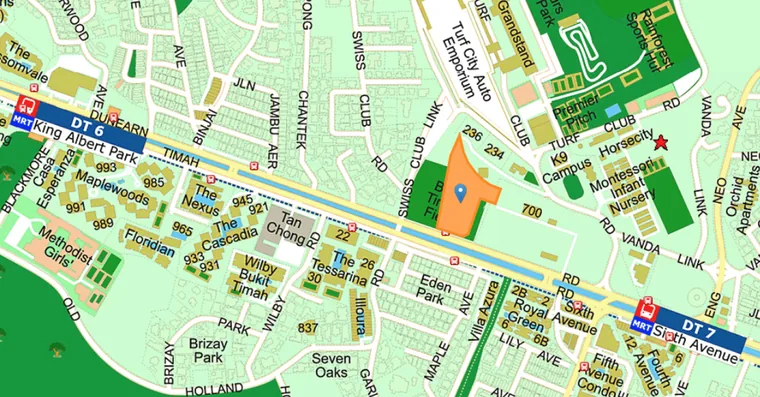
If you’ve been tracking the “Dunearn Green” search trail online, you might have noticed a bit of noise in naming. The key verified launch that matches the Bukit Timah Turf City area is Dunearn House, a new private residential development at Dunearn Road in District 11, next to the former Bukit Timah Turf Club / Turf City precinct, near Sixth Avenue MRT.
This matters because new launch weekends often get discussed as if everyone is referencing the same project. In the case of this area, the clean, defensible details point to Dunearn House as the launch being reported publicly.
Below, I’ll walk through the most important sales milestones for the new launch weekend, anchored only to what’s been verified: the project’s location context, the launch timing, the developer group, the scale of the development, and the take-up figure reported for the first launch weekend.
Where Dunearn House sits in the Turf City story
The redevelopment of the former racecourse site into a new residential precinct is not just a branding exercise, it is the core backdrop for why people keep talking about this pocket of Bukit Timah. URA’s Turf City planning materials describe a transformed precinct with green links, heritage and community spaces, and new road and transport connections.
Dunearn House is positioned on the land parcel at Dunearn Road, within the Bukit Timah Turf City masterplan / precinct. That positioning is a big part of how buyers read the future of the area, especially if you’re the type who considers more than just the nearest MRT.
From a practical perspective, the location is also about what’s immediately nearby. Verified descriptions place Dunearn House beside the former Turf Club / Turf City area and in proximity to Sixth Avenue MRT. In Singapore, that often translates to a “liveability” conversation that runs alongside investment thinking. You may not feel the full precinct transformation on day one, but residents usually care about commute practicality, access to amenities, and the feel of the neighbourhood daily.
The basics that set the stage for weekend demand
Before anyone starts talking about take-up rates and buyer sentiment, the baseline project facts shape expectations. For this launch, the confirmed details are:
- Developer group: Frasers Property, CSC Land Group, and Sekisui House Project size: 380 homes Launch timing: the site was announced as the land parcel at Dunearn Road and reported as launched on 8 December 2025 Launch weekend take-up figure: 56% take-up at the first launch weekend on 26 July 2026
When you put those together, you get a more grounded way to interpret what happened over the weekend. A take-up rate is always easier to overreact to than to understand. But it’s still meaningful information when the sample size and the scale are clear.
A 56% take-up at first launch weekend, for a development of 380 homes, suggests the initial pool of interested buyers was not just curious. It indicates a portion of the market was willing to make commitments during that initial window.
Of course, it does not automatically mean “this will keep rising in a straight line.” Sales momentum can change quickly once buyers compare the actual unit mix, view the showflat experience, and reassess value against other options in the district. Still, the weekend number gives you a signal about how the demand side was behaving at the moment when information was fresh and urgency incentives (if any) were at their strongest.
What “new launch weekend” usually tests, and why 56% matters
A new launch weekend compresses several decision steps into a short period. Buyers tend to show up with either serious conviction or a structured comparison mindset.
From the sales floor, the weekend is essentially testing four things at once:
First, whether the project’s positioning is compelling enough for people to act quickly rather than wait. In this case, the verified location within Turf City precincts and proximity to Sixth Avenue MRT gives the project a distinct lifestyle narrative, not just a generic “new condo in the area.”
Second, whether pricing can hold up in the minds of buyers once they see the unit types they can actually afford or target. The context available here does not confirm a detailed price list being publicly fixed well in advance. So what we can say confidently is limited to the reported take-up number, not a commentary on how specific pricing behaved across unit tiers.
Third, whether the unit mix and buyer expectations align. A take-up rate is influenced by which configurations are available during the weekend, and how buyers interpret those options.
Fourth, whether the market trust factor is present. Launch weekends can be noisy if people are unsure about delivery timelines, build certainty, or overall developer track record. Here, we only have the verified developer group name, but a multi-developer team can help buyers feel there is organisational weight behind the project. Even so, trust is not the same as “guaranteed long-term demand,” it just shapes whether people are willing to commit early.
So when the developer reported 56% take-up at the first launch weekend on 26 July 2026, that number serves as an early stress test. It shows there was a meaningful portion of buyers who moved from interest to action under weekend conditions.
Timeline milestones you can anchor to
People often lose the plot with new launches because the marketing cycle can start before the official launch date, and interest can build well ahead of the weekend events. To keep the sequence clean, here are the verified milestones as dates and reported facts.
Only three items are necessary, because adding more can lead to speculation when details are not confirmed:
- The project land parcel at Dunearn Road was launched as reported on 8 December 2025 26 July 2026 was the first launch weekend where the developer reported 56% take-up The project is 380 homes, which affects how to read the scale of that take-up figure
That’s the backbone. Everything else you might hear from forums or social media is often a commentary layer on top of these ground facts.
Interpreting 56% take-up without over-reading it
A common mistake in reading take-up numbers is turning them into a single story. In reality, take-up rates are shaped by how the weekend was structured and what “take-up” means in the developer’s reporting language. The verified statement tells us the reported figure, but without additional operational definitions, it’s safest to treat 56% as “reported take-up at that weekend,” not as an Dunearn Green eternal forecast of eventual absorption.
Here’s a more grounded way to interpret it.
When take-up is at that level early on, it usually reflects at least one of these conditions:
The launch appealed to a buyer segment that values the specific district dynamics. Bukit Timah is not a generic suburban market, and Turf City’s redevelopment narrative can matter to owner-occupiers as much as to investors.
Or, buyers were comfortable enough to commit after seeing enough information. Weekend decisions often depend on the unit layout, the feel of the showflat, the clarity of the selling process, and the buyer’s confidence in the overall product.
Or, competition from other launches in the same period did not sufficiently steal the spotlight.
But even with these plausible drivers, it is still possible for subsequent weeks to slow. New launches can also hit their peak when information is still concentrated, then soften when buyers spread out and compare. A weekend snapshot is useful, but you still want to watch what happens after the initial wave.
What buyers should focus on after a strong launch weekend
If you’re tracking “Dunearn Green New Launch Weekend” conversations, the smartest way to use the 56% figure is not to chase hype. It’s to treat it as a prompt to do better due diligence before committing yourself.
Because the verified context does not provide a final released price list in a clean, confirmed way, you should be cautious about anyone claiming exact pricing outcomes immediately after launch. Some project pages describe pricing and floor plans as being released around preview or launch rather than as fully fixed public facts. That means the only truly solid milestone you can rely on from verified information is the take-up number itself, and the project’s core launch facts.
So what should you check in real life, especially if you’re deciding whether to buy now or wait?
You’ll want to confirm your own financial feasibility against what’s actually available. New launches often offer a mix of units, and the best value can be present in the unit types that most people overlook. That doesn’t mean there’s a hidden bargain, it means the market’s attention is not always equally distributed.
You’ll also want to consider how you personally value the location story. Turf City’s long-term transformation is part of the rationale for many buyers, but not every household has the same patience horizon. If you care most about day-to-day convenience in the first year, you’ll weigh proximity to transport and amenities differently than someone who is more focused on the precinct’s maturation.
And if you’re buying for lifestyle, you’ll likely care about how the immediate environment feels, not only what the masterplan promises. Verified sources point to the masterplan elements like green links and heritage/community areas, but the lived experience depends on timelines of development and how quickly connecting features come online.
A practical way to assess where the weekend momentum stands
When a developer reports a high take-up number early, the market mood can shift quickly. People start asking, “Should I act now?” That pressure can be real, but it can also be misdirected if you’re not grounded in your own constraints.
Here’s a short, buyer-focused checkpoint you can use when evaluating a new launch after a reported weekend milestone:
Confirm the unit types that match your budget and target size, don’t just look at the project headline Compare the live availability and incentives, if any are presented at the sales gallery Check that your intended move-in timeline and holding horizon align with your risk tolerance Treat the weekend take-up as a demand signal, not a guarantee of future pricing or continued momentumThat’s it. Nothing magical, but it prevents a lot of rushed decisions that buyers regret later.
“Dunearn Green” versus Dunearn House: why the naming confusion matters
The keyword phrase “Dunearn Green” shows up in search behavior, but the verified launch in this precinct is Dunearn House. If you’ve been watching “Dunearn Green” content, the safest assumption is that you might be seeing either a naming slip, a different marketing label, or content that blends projects.
This confusion matters because sales milestones are not transferable across projects. A 56% take-up figure at the first launch weekend is specific to the launch being reported, and you want to be sure you’re comparing apples to apples, especially when you’re making a financial decision.
If you want a clean anchor, stick to the verified facts we have here: Dunearn House is on Dunearn Road in District 11, part of the Bukit Timah Turf City precinct, near Sixth Avenue MRT, with 380 homes, and a reported 56% take-up at the first launch weekend on 26 July 2026.
What to watch next if you’re tracking sales momentum
Once a strong first weekend is reported, the next question becomes whether buyer interest converts consistently beyond that initial rush. The verified context does not include later-stage take-up numbers or subsequent weekend reports, so I can’t invent those.
But you can still watch for credible indicators during the sales cycle, based on how new launches typically unfold. The clearest signals tend to be:
- whether unit availability changes significantly after the weekend demand wave whether buyer queries pivot from “is it selling” to “which configurations are left and how does it price out for my unit choice” whether the sales narrative shifts from launch urgency to value comparison
You don’t need to overthink it. Just pay attention to whether the project continues to feel “in demand” in the way your own purchasing process experiences it.
When buyers start feeling that there are fewer good options, or when sales staff angle conversations toward narrower unit types, it’s often a sign the early pool has already converted. When availability remains broad and choices stay flexible, it can mean demand is steady rather than spiky.

The bottom line from the verified weekend milestone
The key sales milestone you can rely on from verified reporting is straightforward:
- Dunearn House, with 380 homes, reported 56% take-up at the first launch weekend on 26 July 2026. The development is launched as part of the Dunearn Road land parcel within the Bukit Timah Turf City precinct, in District 11, near Sixth Avenue MRT. The verified launch date for the land parcel announcement is 8 December 2025, and the developer group includes Frasers Property, CSC Land Group, and Sekisui House.
That’s a strong start by any new-launch benchmark, especially because the first weekend is usually the hardest to impress. Buyers show up with the least patience for uncertainty, and the decisions made there often reflect genuine appetite rather than casual interest.
If you’re using this milestone to guide your next step, treat it as a demand signal and then do the work that decides your personal outcome: confirm what’s available for your desired unit type, align your timeline with what you can live with, and ensure the value works for your household, not just the market story.
The weekend number tells you what the crowd did. Your unit choice, budget discipline, and timeline tell you what you should do.