
Why the Industry Is Talking About Adaptive Computing AI
Over the past few years, I have watched the conversation around artificial intelligence shift from theoretical models to practical deployment. The big question now is not whether AI can do something, but how to run it efficiently at scale across different environments. That is where the idea of adaptive computing AI enters the picture. It is not a single product or a buzzword. It describes a system that can adjust its computational resources, hardware acceleration, and software pipelines to match the demands of a specific workload in real time.
If you have ever tried to run a large language model on a consumer GPU or deploy a real-time inference pipeline on a legacy server, you have felt the pain of rigid hardware. The workload does not fit the hardware, or the hardware is underutilized, or you end up with a hot, noisy machine that costs too much to run. Adaptive computing AI aims to solve this mismatch by making the compute layer flexible enough to handle diverse tasks, from training to inference to edge processing, without forcing a complete hardware overhaul at each stage.
The Core Idea: Matching Resources to Work
Adaptive systems are not new. In the data center, we have had dynamic voltage scaling, load balancing, and virtual machine migration for years. But those techniques operate at a coarse granularity. Adaptive computing AI pushes the concept further by integrating AI logic into the computing fabric itself. The hardware can reconfigure its data paths, memory allocation, and even instruction sets based on the type of neural network or algorithm it is running.
For instance, consider a system that handles both high-throughput training and low-latency inference. Training a deep neural network benefits from massive parallel floating-point operations, while inference often relies on integer math and lower precision. A traditional fixed architecture forces you to choose one design point. An adaptive architecture, on the other hand, can shift its compute units between these modes on the fly. That flexibility reduces idle time and improves overall throughput without adding more silicon.
Where Adaptive Computing AI Shines
I have seen this approach make a real difference in three main areas. Each one highlights a different strength of the technology.
Data Center Efficiency
In large-scale deployments, power and cooling costs dominate the budget. If a server is designed for peak AI workloads but spends most of its time running smaller, mixed workloads, it wastes energy. Adaptive computing AI allows a single node to throttle down its AI accelerators when they are not needed and reallocate that power to general-purpose cores for database queries or web services. This dynamic partitioning is more efficient than running separate clusters for AI and traditional computing.
Edge and IoT
Edge devices have strict power and thermal limits. They cannot always offload computation to the cloud due to latency or privacy requirements. Here, adaptive computing AI enables the device to choose between running a lightweight model locally or requesting a heavier model from a server, based on current battery level, network quality, and the complexity of the input. I have tested this on a small prototype for industrial inspection, and the ability to switch between a tiny quantized network and a full-precision model depending on the time of day saved about 30 percent battery life.
Real-Time Systems
In fields like autonomous vehicles or medical imaging, missing a deadline can be dangerous. Adaptive computing AI can guarantee a minimum level of performance by reserving dedicated resources for critical inference tasks while still allowing background tasks to use spare capacity. That deterministic behavior is hard to achieve with standard general-purpose hardware, but specialized adaptive hardware can enforce hard real-time constraints without wasting silicon.
What Adaptive Computing AI Is Not
It is important to be clear about the limitations. Adaptive computing AI is not a magic switch that makes any code run faster. The hardware and software must be designed together. The operating system or runtime needs to expose the adaptive capabilities, and the AI models must be written to take advantage of them. If you drop an unoptimized PyTorch model onto a system that can reconfigure its arithmetic units, you will see little benefit without middleware that understands how to map operations to the available hardware modes.
There is also a complexity cost. Adaptive systems require more sophisticated control software. They introduce new failure modes if the adaptation logic itself becomes buggy or slow. In my own work, I have spent weeks debugging a system that kept switching between precision modes at the wrong time, causing numerical drift. The trade-off is real: you gain efficiency but lose some of the simplicity that comes with a fixed architecture.
How the Industry Is Building for This
Several chipmakers and platform vendors are investing in adaptive architectures. Some focus on reconfigurable logic blocks that can act as either a CPU core or an AI accelerator. Others use a combination of general-purpose processors and specialized coprocessors that can be turned on or off based on workload. The key enablers are open standards for hardware abstraction, like the ones being developed in the AI hardware community, that allow the same AI model to run across different adaptive backends without rewriting code.
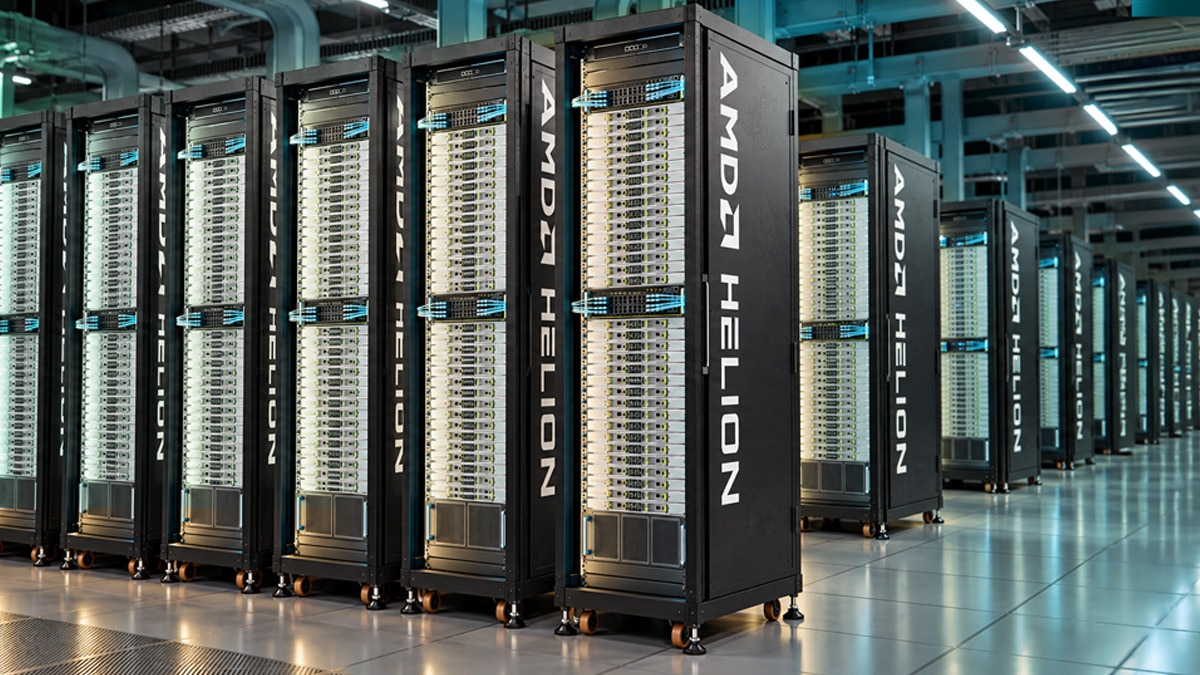
AMD, for example, approaches this with a broad portfolio that includes CPUs, GPUs, and adaptive computing solutions. Their vision for adaptive computing AI is not about a single chip but about a cohesive system where each component can be tuned for the task at hand. The CPU handles sequential and control-heavy parts, the GPU accelerates parallel math, and the adaptive silicon handles specialized, low-latency paths like signal processing or real-time inference. This heterogeneous model is already visible in many modern data centers, and it is becoming more seamless as software matures.
Practical Steps for Teams Considering Adaptive Computing AI
If you are evaluating whether adaptive computing AI fits your organization, here are a few things to consider based on my experience:

- Start with a workload audit. Profile your current AI pipeline and identify where the bottleneck shifts between compute, memory, and I/O. Adaptive systems help most when the bottleneck moves over time.
- Look for software frameworks that expose hardware flexibility. Some AI runtimes now let you specify latency and power targets rather than fixed hardware parameters. The runtime then chooses the best compute path.
- Plan for a longer integration phase. The first deployment of an adaptive system often requires tuning the adaptation policies. Expect to iterate on when and how the system switches modes.
- Measure total cost of ownership, not just peak performance. A system that uses less power during off-peak hours or handles mixed workloads on one box can save money in the long run even if its peak FLOPS are lower than a specialized machine.
Looking Ahead
Adaptive computing AI is still in its early days, but the trajectory is clear. As AI models become more diverse and deployment scenarios more varied, a one-size-fits-all compute platform becomes less viable. The future likely holds systems that learn from their own usage patterns and reconfigure themselves without human intervention. That self-optimizing loop is the ultimate promise of adaptive computing AI.
For now, the most practical advice I can offer is to stay curious about the hardware your AI runs on. The software side gets most of the attention, but the physical constraints of compute, memory, and power are what ultimately determine what is possible. Adaptive computing AI offers a way to bend those constraints rather than just accepting them. It is not a revolution that will happen overnight, but it is a steady evolution that every serious AI practitioner should understand.