
高校に入ったばかりの頃、私は自己啓発に興味を持ち始めました。
自己啓発の世界では「本」がその中心にあります。一部の本は特に有名で、多くの初心者は何百万部も売れている王道の本から読み始めます。たとえ、そうした本に対して世間に偏見があったとしても。
私自身の旅の始まりは、父が私に『7つの習慣 ティーンズ』を手渡してくれたことでした。この本の著者はショーン・コヴィーで、あのスティーブン・コヴィーの息子です。
当時はまだ読書習慣もほとんどなかった年齢でしたから、正直に言うと内容はあまり覚えていません。でも不思議なことに、時が経って、今またスティーブン・コヴィーの原著『7つの習慣』を読むことになったのです。
そしてついに、私はその教えの意味を、心から理解し始めています。
第3の習慣:「最優先事項を優先する」からの学び
この章で私が得た大きな気づきのひとつが、時間管理マトリクスです。
スティーブン・コヴィーは、人生のあらゆる活動を4つの象限(クアドラント)に分ける「時間管理マトリクス」を紹介しています。
- 横軸:「緊急」vs「緊急でない」
- 縦軸:「重要」vs「重要でない」
したがって、左上の第1象限は「緊急かつ重要」なこと。すぐに対応すべき必須タスクです。
右上の第2象限は「重要だけど緊急ではない」こと。
右下の第3象限は「緊急だけど重要ではない」こと。
そして左下の第4象限は「緊急でも重要でもない」、いわゆる“逃避的な娯楽”のような活動です。
第2象限の活動のポイント
- 第1象限(重要かつ緊急):当然ながらすぐに対応すべき。
- 第3象限(緊急だが重要でない):人は「忙しい気分」になるので好みがちだが、実は意味がない。できれば人に任せるか、エネルギーが少ない時間に対応を。
- 第4象限(緊急でも重要でもない):できるだけ避ける。ただし、たまのリラックスとして短時間ならOK。
ではなぜ第2象限だけスキップしたかというと…ここが最も重要だからです。
真の成長を生む「第2象限」
コヴィーはこんな問いを投げかけます:
「今はやっていないけれど、定期的に行えばあなたの人生に大きなポジティブな変化をもたらすであろう“たったひとつのこと”は何ですか?」
この問いに対する答えこそが、第2象限の活動です。
なぜなら「重要ではあるが、今すぐでなくても困らないこと」こそが第2象限の本質だから。
しかし、この問いは「自分の人生に大きな違いを生むかどうか」でフィルターがかかるため、本当に意味のあることしか残りません。
第1象限は基礎にはなるけれど、飛躍的な成長は難しい。第3象限はそもそも重要でないし、第4象限は言わずもがな。
でも第2象限だけが、長期的にあなたを飛躍させるポテンシャルを持っているのです。
ただし、第2象限の活動は「意識」や「意志力」を要するものが多い。楽ではないけれど、やるしかないのです。
実生活での応用
以下は第2象限にあたる具体的な活動の例です:
- 自己成長
– スキル習得や個人プロジェクト - 予防・健康管理
– 運動、定期検診、人間関係における境界線づくり - 計画・振り返り
– 目標設定、週次レビュー - 人間関係の構築
– 意図ある会話、家族時間、メンタリング
たとえば、30分のコーヒーチャットも、10週間のプログラミング講座も、どちらも立派な第2象限の活動です。
大事なのは、「自分の現在の状況に合った範囲で、継続的に第2象限に取り組むこと」。
私の実践例
私はこの夏、高校を卒業したばかりで、比較的自由な時間があります。そこで、**「計画」×「自己成長」**の活動に力を入れることにしました。
将来の目標は医学部進学。その準備の一環として「研究活動」に興味を持っています。
特に、医療系の研究。Columbia大学の研究ページを見ると、ほとんどの研究ポジションでプログラミングスキルが求められていることに気づきました。
昨夏、Boston Universityの研究プログラムに参加した際も、最も貢献していたのはプログラマーたちでした。
私はというと、プログラミングはほぼ未経験。
そこで、Harvardが提供する無料のPythonオンライン講座に申し込むことに。
今は最終プロジェクトに取り組んでいます。講座を終えたら、次の“第2象限プロジェクト”を探すつもりです。
結論
つまり、あなたにとっての「第2象限」を見つけ、それを実行しましょう。
ここまでこの記事を読んでくださったあなたには、あと5分だけ使って考えてみてほしいのです:
「今やっていないけれど、定期的に行えば人生に大きなポジティブな変化をもたらす“たったひとつのこと”は何か?」
それを見つけ、実行すること。それが、あなたの人生を前進させる最良のスタートです。
そして、その鍵は、たった一つの正しい問いを自分に投げかけることから始まるのです。
【原文】
A long time ago, somewhere around the start of high school, I started to take an interest in self-development. One of the key pillars of the self-development world is the books. Some are significantly more famous than others, and most beginners stick to the ones that have sold millions of copies, despite the odd stigmas around some of them.
Perhaps what started my own journey was my father giving me a copy of “The 7 Habits of Highly Effective Teens,” by Sean Covey, son of the legendary Stephen Covey. Having been so young and just starting to build my reading habit, frankly, I don’t remember all that much from the book. However, things have come full circle, and I found myself assigned to read Stephen Covey’s original “The 7 Habits of Highly Effective People.”
Finally, I am starting to take to heart some of the lessons.
Recently, from his habit three, “Put first things first” chapter, I took away an invaluable insight.
The Time Management Matrix
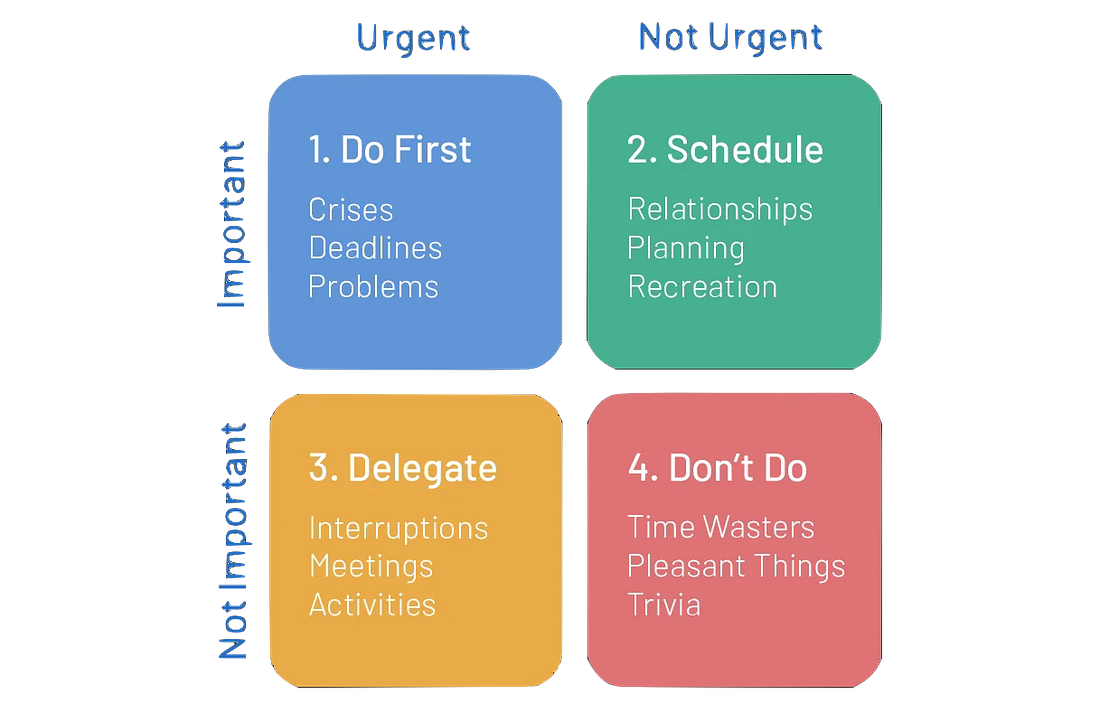 |
Covey introduces what he calls “the time management matrix.” He proposes that you can split your life’s activities into four quadrants. The columns are labeled “Urgent” and “Not urgent”, and the rows are labeled “Important” and “Not important”. Thus, the first, upper left quadrant indicates the must-do activities that are both urgent and important—they must be done and they must be done quickly. Quadrant 2 in the upper right indicates important, but not urgent activities. These activities are very important, but even if not done immediately, you’re life will not go down the drain. Quadrant 3 on the bottom right indicates activities which are urgent, but not important. People like these activities since they make you feel busy, but really, these activities are rather meaningless. It’s the “productive procrastination” category. And finally, quadrant 4 on the bottom right indicates the “escape” activities—the mindless pleasures that you know are meaningless but are relaxing.
Let me give you the takeaway really quick. First, you want to complete your quadrant 1 activities just because of the nature of them. You must do them now. Your quadrant 3 activities can typically be delegated or done during later hours when your brain isn’t at its max. Quadrant 4 activities should generally be avoided. However, every now and then, you do need the relaxation, but don’t make them habit.
You might have noticed that I skipped quadrant 2. Yes, this is because quadrant 2 activities are the most important to making significant advancements in your endeavors.
Quadrant 2
While reading, Covey posed a brilliant question: “What one thing could you do (something you aren't doing now) that, if you did it on a regular basis, would make a tremendous positive difference in your personal life?”
That’s the key question to be asking.
If you consider the question for yourself, the answer is most likely a quadrant 2 activity. Of course, this happens just by the nature of the question because it’s asking for something important that you aren’t currently doing (not urgent but important).
But the key phrase is “…would make a tremendous positive difference in your personal life.” By default, your answers will be filtered out by which activities will make a tremendous positive difference in your life and which won’t. The cool thing is, basically no other quadrant of activities has this potential. Quadrant 1 is kind of the bread and butter; it’s work or school. These will reward you with a great foundation, but it’s never going to win you the Michelin Star. Quadrant 3 activities are not even important, meaning they’re not aligned with your goals, so of course they won’t lead to astronomical gains. Yeah, quadrant 3 activities will have you running, but not towards the finish line. And I don’t even need to explain quadrant 4.
Keep in mind, quadrant 2 activities require significantly more mental power and discipline to do. And honestly, I don’t know what to tell you except that they just have to be done. The beauty of the time management matrix is that it makes you clearly aware of the efficacy of the things you are doing. Once you finish your quadrant 1 tasks of the day, if you resort to quadrant 3 and 4 activities, then okay, whatever. But you will be aware of it. And hopefully, this awareness will sooner or later draw you towards quadrant 2.
Practical Application
To make things clear, the following are both principled and more specific examples of quadrant 2 activities:
-
Development
-
Building a skill or personal project
-
-
Prevention
-
Exercise, health checkups, setting boundaries with new people
-
-
Planning (but don’t get caught up for too long here)
-
Goal setting, reflecting, weekly planning
-
-
Relationship building
-
Thoughtful conversations, family outings, mentoring
-
Quadrant 2 activities can be as short as a 30-minute coffee chat with a friend or as long as a 10-week coding course. Therefore, just do what you can. If it’s currently a tough semester at school, don’t take the 10-week course yet—wait until break. However, you can still fit in developing a lifting habit or having a quick dinner with friends. The key thing is to make sure you are consistently doing quadrant 2 activities and completing them thoroughly.
Personally, I just graduated high school, so I have an entire summer ahead of me with very few responsibilities. Thus, it was a perfect time for me to combine planning and development. My next big goal in life is to go to medical school, and one of the most popular activities in medical school applications that I’m interested in is research.
Specifically, I’d like to do medicine-related research. I was looking at Columbia’s undergraduate research page and, as expected, most opportunities recommended the applicant have some coding skills. Last summer, I attended a research program at Boston University, and I found that the biggest contributors to the project were consistently the programmers.
Well, I have very little coding knowledge, so I decided to enroll in a free online Python course offered by Harvard. I’m currently doing my final project, so I’ll have to look for my next big quadrant 2 project soon. Hopefully, completing the course will make me a greater asset in the lab. Yes, that’s what we should strive for: to be a greater asset.
You can see how I took into account my overarching goals and current situation to decide which activity would yield me the largest returns. And I acted upon it.
Conclusion
So basically, decide what quadrant 2 activity you want to pursue, and do it.
Since you had enough time to read this article, I implore you to take just five more minutes and answer the key question, “What one thing could you do (something you aren't doing now) that, if you did it on a regular basis, would make a tremendous positive difference in your personal life?”
Once identified and acted upon, I am certain you will make significant progress in your endeavors. All you needed to know was the right question to ask. Well, this is it.