本を整理していたら、興味深い事を書いた本が出てきました。

勝間和代さんの本です。

勝間さんの本は好きで結構読みます。


As I was sorting out my books, I found a book introducing interesting ideas.

Katsuma Kazuyo 勝間和代 CPA, writer, critic

Now she is very famous known as “working business woman”.
I like her books.

勝間和代のビジネス頭を創る7つのフレームワーク力 ビジネス思考法の基本と実践/勝間 和代
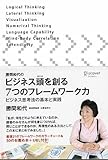
一部をご紹介しようと思います。

1.理論思考

2.水平思考

3.視覚思考

4.数字力

5.言語力

6.知的体力

7.偶然力

彼女がマッキンゼーとJPモルガンで培ったビジネス思考力の磨き方を紹介しています。

I’m introducing some parts:

1.Logical thinking
2.Lateral thinking
3.Visualization
4.Numerical thinking
5.Language capacity
6.Mind body
7.Serendipity

Introducing her method of developing business thinking ability which she leaned in McKinsey&Company, and JP Morgan in her career.

ビジネス思考力を身につけることで5つの果実を得ることができるといいます。


1.世の中の変化を予測する力

2.1.によって判断力が身につきリスク管理能力がつく

3.迅速な判断が可能になり、行動力が身につく

4.自由な時間、良い収入・職業を手に入れられる

5.長時間労働を防ぐ事ができる


具体的な学習プロセスは、最低限の知識を習得し、痛い思いをしながら実践で学ぶ事と。。。

それは、まさにMBAでなされている事と同じプロセスであると。しかし、だからと言ってMBAを取得する勉強をする必要は無く、日々の仕事を通して身につけることができる。


As we acquire the ability of business thinking, we get 5 fructifications, says she.


1.Enable to make a prediction of future happenings in higher accuracy
2.Because of ability of high quality prediction, it enables to mange risks by preparing taking enough time.
3.Enable to take new actions by determining the situation quickly and accurately.
4.Enable to have a plenty of time and good earning with good jobs.
5.Enable to eliminate Mickey Mouse operations and keep off from long hour working.

The process is to acquire the minimum knowledge and adds up new flam works by experiencing pains as much as possible, says she. MBA is just what it is. Practicing rather than acquiring knowledge. But we can polish our ability through daily works without leaning them in MBA.


1.理論思考について:

全ての思考はフレームワークから入ります。

「フレームワークとは、現実を観察する方法を構成する仮定、概念、価値、慣行の集まり「

基本的なフレームワークとしては 3C(company, competitor, customer), 4P, PDCA, 製品進化のトライアングル, CTQ(シックスシグマ), SWOT, 人口分布曲線, 影響要因, バリューチェーン等々がある。

フレームワークを沢山持つことで、よりその場その場にあわせた対応力を身につけることになると。

例えば、状況に応じたを分析して迅速に意思決定をするといったことです。

そして、行く行くは自分のオリジナルのフレームワークを作ることができるようになる。


However, we don’t necessarily lean them in MBA to go to MBA. We can polish our ability through daily work practices.

1.Logical thinking:
All thoughts starts from the flame works. The flame work is an anthology of hypothesis, concepts, value, and practice that consists the methods to examine the real case situations, basic ones are for instance known as 3C(company, competitor, customer), 4P, PDCA, Triangle of Product Development, CTQ, SWOT, Population Curve, Forces at Work, Value Chain, etc.....

Having many flame works means that it enables you to use suitable tools to process many different kind of information, determining them, and helps your decision making, depending on the cases. It also means that as many as tools you have, you can process matters more efficiently. You will become able to make up your original flame works by combining them.

2.水平思考力について:


これは理論思考力と組み合わせる事でより強固になる。

繰り返し鍛える事で、アイデアの観点を広げる事ができるようになる。


他にも、具体的な方法を紹介しています。
非常に勉強になりますよ!


2.Lateral thinking:
It's empowered by combining with Logical thinking. By practicing them, it enables you to increase idea's angle exponentially.


And other, she is introducing how to inform you idea efficiently and also methods to keep your brain fresh.


Introduction:

The economic growth started from around early year 2000.

The real GDP growth of 5% has been kept from 2002 to 2008. 2009 was down effected by slow down of world economic growth by 1.3%. In 2010, again, it’s recovered by 4.1%.


Individual consumption leads the economic growth:

Since the first half of 2000th, the final consumption expenditure of households has started contributing to the economic growth.

As the back bone of this economic growth, there are 2 main reasons effecting this. One is the consumption effected by growth of people’s earning. The other one is the appearance of the strategy among enterprises aiming to development the new markets.


Rising of middle-class:

Employment rate has been favorably growing in Africa.

The population of employee grew by 1.3 times in 10 years, from 217,850,000 in 1998 to 289,510,000 in 2008, according to ILO.

The buying capacity per consumer has also been growing. Purchasing power based GDP is $1,132 in 1990, $1,326 in 2000. And IMF estimates that it will grow by 63.5% in 10 years at $2,167 in 2010.

Yet, the inequality rate has not recovered. Gini's coefficient, which gauges the inequality rate, are South Africa 57.8(2000), Kenya 47.7(2005), Nigeria 42.9(2003), Ivory Coast 48.2(2002) in Africa. It can be compared to Thailand 42.5(2004), Malaysia 37.9(2004).

The Gini’s coefficient is described in the number among 0to 100.As the number get close to “0”, the inequality ratio gets down, more equalized.

So, even though the buying power is strong, the level of the buying power itself is different among rich and poor.]


[Texas Univ. Data: Classified population in whole African continent]

High-income class:
50,000,000~150,000,000 people (
5~15%)

Middle-income class: 350,000,000~500,000,000 people (35~50%)

Low-income class: 500,000,000~600,000,000 people (50~60%)


The most focused class is the middle class and below recently.

This class is defined as income of $4,000~17,000 in purchasing power parity base, according to “Global Economic Prospects 2007 of World Bank.


The products that meet the consumer needs came out:

There is another cause of consumer activation movement.

Recently, many shopping malls have been developed in many places in Africa, which serves not on food products, but also entertainments.

The industry composition of GDP is still mainly from the agriculture and hunting (19.3%), the mining and utility (22.7%). The manufacture is still small as 10.3%(2008) and decreasing from 16.7%(1990).


This tells that “import the product that needed”.


Cheap products from China:

EU is still a big importing supplier, but China is expanding its market now.

Especially, 2 wheel mortar cycles, electronics such as TV, shoes and cloths from China is expanding its market rapidly now.

The cheap products have taken out buying ability of lower-income class and activated the consumption also


Profitable business model in the U.S. works out in Africa:

With reachable price range and needs matching, people buy products even low-income class, enterprises have been recognizing lately.

The big connection company ARPU of MTN is now earning by slash prices and compete on volume strategy in cell phone market among low-income class.

Cell-phone company l in Kenya Safari-com’s business model caught attentions among low-income class people. They introduced a banking system links from cell phones by targeting the inconvenience of unorganized infrastructure of banks in Africa.

Small potion products such as flavoring material, soap, for just one time use.


Expansion of market under population growth:

The population of Africa was 764,330,000 in 2005. Now it’s 800,000,000.

The population is estimated to be 1,300,000,000 in 2030, 1,753,270,000 in 2050.


JETRO Japanese report


http://www.jetro.go.jp/jfile/report/07000211/shiryou.pdf


Materials:


http://www.jetro.go.jp/jfile/report/07000211/honbun.pdf


Body:


http://www.jetro.go.jp/jfile/report/07000211/youshi.pdf


Over views:


(Apologize for my poor translation)


I translated some part of Body cocuments as below:


JETROがアフリカの市場について2010年3月に報告書を出していました。


JETRO was introducing emerging Afrcan market in 2010,March Report.

Japanese expressions is difficult especially in writings; even that is for Japanese natives.


I studied business manners through readings though I am Japanese.

Business manners are tough.


さすが! と言われる 図解ビジネスマナー/著者不明

My friend Mike, who's started running a small company in Japan, asked me some questions about Japanese business e-mail writing expression.

There are some manners you should know in order to have a good relationship with customers.
I gave him some tips about basic manners of Japanese e-mails.


+++++++++++++++++++++++++++++++++++++++++++++++++++++++++++++++++++


When we want to write e-mails to good customers and give them good impression, here are some formats like this below for example:

--------------------------------------------

○○▽▽社長 様××△△ 様


いつも大変お世話になっております。

▲▲▲㈱の○○です。


・・・・

・・・


今後とも何卒(nanitozo)よろしくお願申し上げます。

----------------------------------------------


Beggning of the e-mail++++++++++++++++++++++++


Company name 「○○○ 株式会社」


Write whole name, not shorten way as .

“社団法人”not ().

“有限会社” not ().

* Another patern:・・・・・・・・・・・・・・・・・・・・・・・


「○○○ 株式会社 御中」


If the address name is ended with body corporate name such as; company, school, write 御中(onchunot 様(sama.


・・・・・・・・・・・・・・・・・・・・・・・・・・・・・・・・・・・・・・・・・・・・・・


Persons name  「○○▽▽社長 様」


1.「代表取締役○○▽▽ 様」
2.「代表取締役○○ 様」
3.「○○▽▽社長 様」

4.「○○社長 様」


You may write just the persons last name and simplified job title like 4. as you get into close relationship.


Persons name  「××△△ 様」


If the person dosent a job title, you should write a full name But as you get into close relationship, omitting the first name is fine.


Beginning of sentence 「いつも大変お世話になっております。」


This is set expression of starting sentences.


As you get close to, you can shorten just as:


1.「いつもお世話になっております。」

. 「お世話になっております。」


Closing of the sentence+++++++++++++++++++++++++


You need to write a closing sentence as a set expression as well.


「今後とも何卒よろしくお願申し上げます。」


Preferable to close like this at the first e-mail or say hello e-mails.


Here are some other expressions:


 1.「以上、何卒(nanitozo)よろしくお願い申し上げます。」


Preferable to close like this when begging something with a deeper expression.


 2.「以上、よろしくお願い申し上げます。」


Asking politely in daily e-mails.


 3.「以上、よろしくお願い致します。」


Asking politely in daily e-mails, but not rigidly formal with close customers.


+++++++++++++++++++++++++++++++++++++++++++++++++


○○○ 株式会社