
There is a special kind of quiet that comes from watching a flame settle into its own rhythm. For many homeowners, the question isn’t whether to have a fire feature at all, but which direction to go: retrofit an existing masonry fireplace with a gas fireplace insert, or restore and keep a traditional wood-burning fireplace as the primary heat and ambiance source. The choice affects comfort, maintenance, safety, energy costs, resale value, and even the kind of evenings you’ll have at home.
I’ve installed and serviced hundreds of fire features, from century-old brick hearths to sleek modern gas fireplaces. There is no one-size answer. Instead, there are patterns that emerge once you factor in the house, the occupants, and the kind of heat you truly want. This guide unpacks the trade-offs with practical details, price ranges, and the kinds of issues that show up a year or two later when brochures are long gone and real usage sets in.
What a Gas Fireplace Insert Actually Does
A gas fireplace insert is a self-contained, sealed firebox designed to slide into an existing wood-burning fireplace opening. It connects to a gas line and vents through the existing chimney with a dedicated liner system, typically a co-linear setup that brings in combustion air and exhausts flue gases through separate flexible liners. The sealed front with a ceramic glass panel and gasket keeps combustion inside the unit, while a blower often circulates room air around the hot firebox and back into the space for efficient heat.
Most homeowners who choose gas fireplace inserts do so for three reasons. They want dependable heat during the season without hauling wood. They want a cleaner fireplace that doesn’t smoke or shed ash into the room. And they want immediate, repeatable results: push a button, flame arrives. The best inserts are quiet, modulate flame height, and can be paired with thermostats or smart controls. The less impressive models still produce a nice flame but can feel like a space heater behind glass if not sized and vented right.
If you’re starting from a blank wall rather than an existing hearth, a gas fireplace (a built-in zero-clearance model) is the right category to evaluate. If you’re staying with your masonry opening, you’re in insert territory.

The Case for Keeping a Traditional Fireplace
A traditional wood-burning fireplace is part appliance, part piece of architecture. When maintained and used well, wood fire has a signature fragrance and a dynamic flame pattern that gas can mimic but never truly match. You feel the radiant heat on your skin and hear the low snaps that call out for a chair and a mug. Ask any longtime wood burner, and they’ll mention rituals: stacking seasoned splits, kindling pyramids, and the satisfaction that comes from getting a stubborn draft to move on a rainy day.
There are downsides to wood. Open fireplaces are notoriously inefficient as a primary heat source. If you don’t add a wood insert or a set of tight-fitting doors, an open fireplace can pull warm air from the room up the chimney, especially once the fire starts to die. That can turn a living room into a drafty space on a cold night. Wood also creates creosote in the flue, which requires regular chimney inspections and cleaning. Your local codes and insurance policies will often specify inspection frequency. For a fireplace used on weekends through the season, once a year is common. For heavier use, particularly with marginally seasoned wood, twice a season inspections can be prudent.
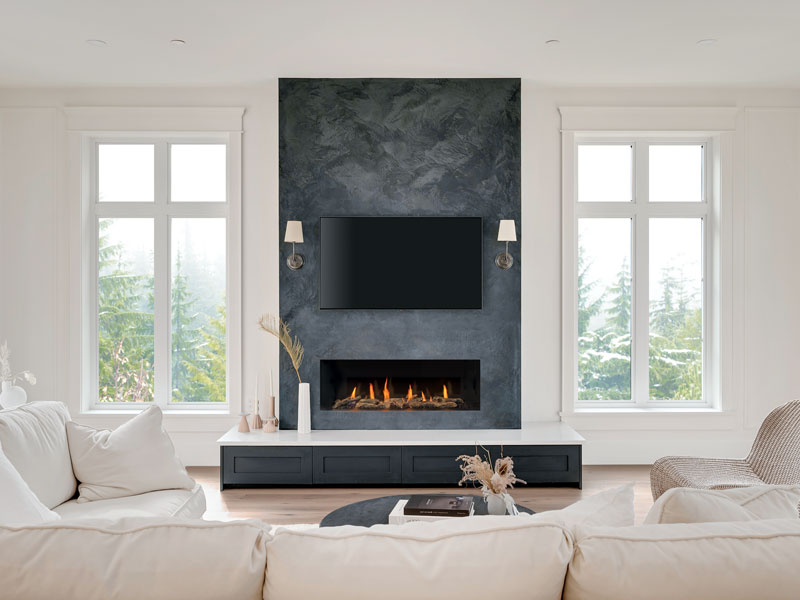
A well-built masonry fireplace with a proper flue, tight damper, and good habits can still be a safe and charming centerpiece. It just asks more of you. And if you like the work of it, that effort feels like part of the warmth.
What Real Efficiency Looks Like
When people talk about efficiency, they’re often mixing two different concepts: how much fuel energy gets turned into useful room heat, and how much of that heat stays in the house rather than getting pulled up the chimney or lost outdoors.
A typical open wood fireplace has a net efficiency that can sit in the single digits. You read that correctly. Yes, it’s producing heat near the fire, but it also drafts air aggressively. Even with a roaring fire, the net warming of the home is modest. By contrast, a modern gas fireplace insert often claims efficiency in the 60 to 80 percent range, sometimes more, depending on the model and whether you’re looking at steady-state or AFUE-style numbers. That gap shows up in the utility bills. In a 250 square foot den, a properly sized gas insert set to medium flame can keep the room comfortable without accelerating the furnace, while an open fire might still have you reaching for a sweater when the logs burn down.
If you want the look of wood with measurable heating performance, a wood-burning insert is the middle ground. These are sealed, gasketed boxes that sit in the same opening but burn wood more completely and circulate heat into the room. They require a stainless liner system and proper clearances. Many put out 30,000 to 70,000 BTU per hour and can carry a main floor once you learn their rhythm. They’re https://penzu.com/p/0114c468f50919e2 not the same as a traditional open fireplace, but they beat any open hearth for efficiency.
Safety and the Role of the Chimney
Fire safety isn’t a single choice, it’s a chain. With traditional fireplaces, the chain includes seasoned wood, correct loading, good draft, and a sound chimney. With gas fireplace inserts, safety depends on sealed combustion, correct gas supply pressure, tested venting, and properly installed liners.
If you stay with wood, regular chimney inspections paired with a reliable chimney cleaning service should be on your calendar. Creosote behaves differently in different chimneys. A tall flue can stay warmer and draft well, while a short, exterior chimney cools quickly and can encourage creosote condensation. I’ve seen homeowners with a pretty stone exterior who were surprised to learn that the cold chimney behind those stones was the reason their fires smoked in shoulder season. No amount of kindling tricks fixes a poor draft on a cold flue. An experienced sweep can advise on liners, top-sealing dampers, and smoke shelf corrections that make a real difference.
Gas inserts have a safety stack of their own. Because combustion is sealed and vented through liners, you avoid indoor smoke, but that means the liners must be intact and terminated correctly. A crushed or poorly connected liner can spill exhaust into the chimney cavity. Professional installers perform worst-case depressurization tests and combustion analysis where appropriate, verifying that carbon monoxide stays out of living spaces. In my practice, we always pair fireplace installation with a flue camera inspection, then document the liner size, termination, and clearances. Whether you work with a national brand or a local team like a west inspection chimney sweep outfit, make sure they give you a report, not just a receipt.
Cost, Maintenance, and What the First Two Years Look Like
Installation costs depend heavily on the structure you already have. Retrofitting a gas fireplace insert into an existing masonry opening often runs in a broad range from a few thousand dollars on the low end for a basic unit and simple liner, up to over ten thousand with premium trims, a complex chase, and gas line runs through finished spaces. A traditional fireplace, if it already exists, costs little to keep besides wood and maintenance, but if you’re building new, masonry construction is expensive and often requires engineered support and a proper foundation. In many modern homes, a true masonry chimney isn’t practical, which is why zero-clearance gas fireplaces and direct-vent units have become common in new construction.
Maintenance tells a more honest story than upfront cost. With a gas insert, expect annual servicing that includes cleaning the burner, checking the pilot assembly or ignition system, inspecting the gasket and glass, verifying vent integrity, and confirming gas pressure. Many homeowners schedule this at the start of the heating season. With a traditional fireplace, you’ll schedule chimney cleaning service and inspections, sweep ash, check the damper, and maintain screens, tools, and hearth protection. You’ll also store and season wood. If you burn a cord or two a year, you’ll want a dry, ventilated place to keep it off the ground.
Two years in, the surprises show up. A gas insert might reveal a tendency to short cycle on a thermostat if oversized for the room. That’s not dangerous, just inefficient and a little annoying. The fix is often to lower flame height manually or adjust the fan settings. With wood, the surprise might be a smoky room in mid-October when outside temperatures hover just cool enough to light a small fire, but the chimney still feels like a cold column. You learn to pre-warm the flue with a rolled-up newspaper held near the damper or to crack a nearby window for a few minutes to improve draft.
The Feel of the Flame Matters
People buy fireplaces for more than heat. In a long winter, we reach for comfort. Gas units have changed dramatically in the last decade. Ceramic logs now have better color and ember beds look more convincing, with LED accents that simulate coals. Flame patterns are steadier, with layered burners and reflective panels that build depth. Still, a gas flame has a signature. It’s smooth, predictable, and quick to respond to a remote. A wood flame feels wild by contrast, sometimes too wild if you load the grate wrong or open the air too much.
Some homeowners split the difference. They keep a traditional fireplace for occasional weekend wood fires and install a gas fireplace insert or an electric fireplace insert in another room for daily convenience. Electric fireplaces and electric fireplace inserts deserve a quick mention. They don’t require venting, solve tricky chase or chimney issues, and provide visual ambiance with modest resistive heat, usually in the 1,500 watt range. They can’t match the heating output of gas fireplaces, but they land where venting is impossible or where code restrictions limit combustion appliances. If your building has strict venting rules, an electric unit can create a focal point that satisfies the eye if not the thermostat.
Venting and Building Envelope Realities
Older homes breathe. Newer homes are tighter, with continuous air barriers and high-performance windows. A traditional fireplace in a tight home can starve for combustion air, smoke on windy days, or backdraft if a kitchen range hood or a clothes dryer competes for air. The tell is subtle: a smell of smoke when the dryer runs, a lazy flame, or soot staining near the opening. A dedicated outside air kit and a top-sealing damper can help, but the physics are unforgiving. Direct-vent gas inserts shine here because they bring combustion air from outside through one of the liners and exhaust through the other, isolating the fire from interior pressure swings.
In my experience, if you’ve done energy upgrades in the last five years, plan on gas if you expect regular use. If your home is leaky or has an oversized masonry chimney that drafts well, wood is more forgiving. Either way, a blower door test and a frank conversation with the installer about fans, hoods, and mechanical ventilation will save you headaches.
Reliability and Service Access
Any appliance you expect to use for a decade should be serviceable without deconstructing your living room. With gas inserts, look for models with front service access to valves, ignition modules, and fans, and ask how many parts are proprietary. Check whether your local dealer stocks common parts or relies on order-only fulfillment. A well-supported brand means a cold January fix is a day away, not a week.
Wood fireplaces are simpler but not maintenance-free. Dampers can stick, firebrick can crack, smoke shelves collect debris, and flue tiles can deteriorate. A video inspection during chimney inspections will catch problems early. Tuckpointing or relining a chimney is cheaper in year five than in year twelve when the damage travels farther.
Environmental Considerations That Actually Matter
Burning natural gas produces fewer particulates than burning wood in an open fireplace. Modern gas inserts are clean enough to operate during most winter air advisories. Wood produces more particulate matter, which is why some regions restrict open burning or require EPA-certified wood inserts. On the carbon side, the picture is nuanced. Natural gas carries a fossil fuel footprint. Wood is renewable if harvested responsibly, but its real-world emissions in urban air are still a concern. If your household goal is to reduce particulate emissions in a dense neighborhood, a sealed gas unit or even an electric fireplace insert paired with a green electricity plan makes sense. If you live on acreage and have access to well-seasoned hardwood, a high-efficiency wood-burning insert used skillfully is a defensible compromise.
A Practical Way to Decide
The best test is to walk through a few real scenarios and see which one fits your life.
A retired couple in a 1970s ranch. They want a warm family room through winter evenings, don’t want stacks of wood, and already upgraded insulation. A gas fireplace insert with a variable-speed fan and thermostat will deliver cozy heat without fuss. Schedule annual service with a reputable provider, keep carbon monoxide detectors current, and enjoy instant ambiance.
A family in a 1920s brick home with a deep hearth they’ve always loved. They use it mostly on weekends and entertain with the fireplace as a focal point. Since the house breathes, a traditional fireplace can work if the chimney is sound and maintained. A team that handles chimney inspections can confirm whether a top-sealing damper, improved cap, or partial relining would improve draft and reduce odors. If they want real heat out of it, a wood insert is the next step.
A downtown condo with no viable vent path. A direct-vent gas unit may be impossible. An electric fireplace insert creates the look without risking building code violations. It won’t heat like gas, but it fills a design need and avoids venting disputes with the HOA.
A mountain cabin used intermittently. Gas is convenient if the local utility is reliable or if you have a properly installed propane system with safe tank placement. If the cabin sits on a windy ridge, a direct-vent gas unit with a well-designed cap resists blowouts better than older models. For off-grid or limited gas delivery, a wood-burning insert paired with seasoned on-site wood makes sense, but plan on diligent maintenance and a stout chimney cap to keep snow and critters out.
Installation Notes That Separate Good From Great
Details make or break a fireplace installation. I’ve revisited many jobs where a small oversight created years of annoyance. Gas line sizing is one of them. If the insert shares a line with a tankless water heater, range, and furnace, pressure can dip at high demand. That shows up as lazy flame at the fireplace or ignition delays. A competent installer will size the gas line based on total BTU load and run length, not just what’s easy to pull.
On the vent side, flexible liners must be properly supported and insulated where needed. A sagging liner can pool condensate and collect debris. The termination cap matters more than it looks. A poor cap can whistle in the wind or let rain drive into the chase. Inside the room, clearances to combustibles, mantel deflectors, and approved hearth materials keep heat where it belongs. I’ve seen a beautiful reclaimed wood mantel discolored in one winter because the unit’s heat shield kit was “optional” on paper but essential in practice.
If you’re staying with wood, the damper seal and smoke chamber parging are unsung heroes. A smooth smoke chamber reduces turbulence and improves the path to the flue, which reduces smoke roll-back into the room. If your chimney sweep suggests parging, it isn’t an upsell. It’s a fix with measurable results.
Using Professional Services Wisely
Most homeowners benefit from aligning with a local expert who does both inspection and installation. That continuity matters. When a single company handles your chimney inspections, your annual gas insert service, and any masonry or liner work, they build a record of your system and catch small issues before they become urgent. Whether you call a large regional firm or a neighborhood shop, look for technicians who can explain draft theory in plain language, show you camera footage during a west inspection chimney sweep visit, and give you options with pros and cons rather than a single scripted answer.
When you schedule a chimney cleaning service, ask for a written report with photos, note flue size, liner type, damper style, and any clearance concerns. If you’re installing a gas fireplace insert, expect a load calculation for the room, venting plan, and gas sizing documentation. If a contractor treats these as extras, keep looking.
Frequently Overlooked Comfort Factors
Noise and control matter more than shoppers expect. A blower makes a gas insert more effective at moving heat, but a loud fan ruins a quiet evening. Better units allow variable fan speeds with soft starts and rubber isolation mounts to reduce vibration. Pilot options also affect everyday comfort. Standing pilots provide quick light but waste a small amount of gas year-round if left on. Intermittent pilot systems save fuel but may click or spark during ignition, which can wake a light sleeper if you’re using the bedroom unit on a cold night. Pick your trade-off with your actual habits in mind.
Glass heat is another surprise. The front glass of a sealed gas unit gets very hot. If you have young children or pets, add an approved screen or barrier. Don’t rely on a random aftermarket screen that can trap heat improperly. Manufacturers test specific barriers to keep glass temperatures within safety ranges. It’s the kind of detail you want resolved before the first cold snap.
When Electric Is the Right Answer
I don’t put electric fireplaces in the same category for heat, but they deserve credit for solving architectural problems. If your home lacks a chase and exterior vent termination isn’t feasible, an electric fireplace insert offers the look and a touch of warmth with minimal maintenance. Electric fireplace inserts typically provide about 5,000 BTU equivalent of heat from a standard 120-volt outlet. That takes the edge off a room but won’t heat a large space in deep winter. On the plus side, installation is straightforward, there’s no combustion byproduct, and the flame effect can run without heat for summer ambiance. For apartments, tight building codes, or second homes where simplicity is king, electric can be the right call.
So, Which Is Best?
The better choice emerges once you clarify your priorities.
- If you want dependable, efficient heat with minimal upkeep, a gas fireplace insert wins. It’s clean, fast, and friendly to modern, tight homes. Pair it with annual professional service and enjoy steady comfort all season. If you cherish the ritual, have ready access to seasoned wood, and accept the maintenance, a traditional wood-burning fireplace remains a beautiful feature. It won’t heat like gas unless you move to a wood insert, but it offers a kind of warmth that’s hard to quantify. If your space or building rules make venting impossible, an electric fireplace insert provides a convincing flame effect at low complexity and cost.
Whichever path you take, line up the right expertise. A thoughtful fireplace installation, checked by thorough chimney inspections, avoids the headaches that make winter feel long. A good installer will right-size the unit, match venting to your home, and leave you with documentation that makes future service straightforward. Those are the unglamorous pieces that keep the pretty flame doing its job.
If you’re on the fence, visit a showroom where multiple gas fireplaces and fireplace inserts are burning side by side. Bring a notepad. Listen for fan noise. Watch how the flame moves across different log sets. Stand at a few distances and pay attention to your skin. Then go home and look at your chimney cap, your mantel clearances, and your utility bills. You’ll know more than enough to choose well.