
On a Thursday afternoon, a widower in a small town props his tablet on a cookbook stand at the kitchen table he once shared with his partner. The house is quiet, winter light sifts in, and his dog curls under the chair. He clicks a link, waits, and a therapist’s face appears. For an hour, they speak between sips of lukewarm tea. He cries freely, and when words stall, the therapist suggests they both glance to the right and name five green things in view. The man laughs at the ivy that refuses to die and then, softer, names the empty chair. This session happens over video. The grief is not smaller because of the screen.
People seek grief counseling because loss scrambles time, memory, sleep, appetite, and identity. Some want a clear map: what is normal, what is not, how long this will last. Others need a place where their story is held without any fixing. Telehealth has become the front door for many of these conversations. The question is simple and practical. Can video, phone, or chat based care meet the needs of grieving people with the same depth and safety as an office visit, and when might it fall short?
What grieving people need from therapy
Grief counseling is not a single technique. It is an attentive relationship that can flex between education, ritual, and focused interventions. In the first months, many clients need help naming what is typical for acute bereavement. Intrusive images, surges of anger, trouble concentrating, and waves of yearning often ebb and flow. Sleep and appetite can swing. Making room for all of that is part of the work.
A good therapist tracks pacing. When a client tips from tears into panic, we slow down, reorient to the room, and bring the body back online. When someone feels numb, we introduce a memory or a symbol to thaw emotion without flooding. For clients with complicated grief or prolonged grief disorder, we may shift into structured approaches that weave exposure to memories, meaning reconstruction, and behavioral activation. Attachment therapy informs this work, because loss rips at the bond system. The therapist offers a steady, responsive presence that helps the nervous system relearn safety in connection.
None of these goals require a leather chair in a city office. They require attunement, clear agreements, and an environment that supports regulation. Those can exist at a kitchen table, a car parked under a maple tree, or a quiet porch.
What the research suggests, and what clinicians see
Across mental health, video based therapy shows outcomes comparable to in person care for depression, anxiety, and post traumatic stress, especially when therapists are trained in the method they deliver. Grief specific research is smaller but points in the same direction. Clients report high satisfaction with telehealth grief counseling, and symptom reductions look similar over eight to twelve sessions. In clinical practice, I see that telehealth can be as effective as office work when three things are present: a stable connection, a private setting, and a therapist who adapts methods to the medium.
The screen changes some cues. You may not notice a clenched foot, but you will spot microexpressions on the face more easily. Tears on camera can feel surprisingly intimate. Latency can clip the ends of sentences, so therapists learn to pause a beat longer. Some clients need more direct coaching in how to set boundaries at home. If a roommate can hear you through the wall, you might censor the story you want to tell.
Phone sessions, while more limited, still work well for clients who form strong connections through voice or who find the camera overstimulating. Chat based grief support can help people who freeze when asked questions out loud, or who want to pace disclosure. Still, for most grief counseling that moves into deeper trauma therapy, video offers the best balance of accessibility and human presence.
Telehealth and trauma woven into grief
Many losses carry trauma. If you found your brother after an overdose, or sat through a code blue that failed, your system may be trapped in loops of reliving. Trauma therapy aims to restore a sense of safety and choice, then gently process the event so the story can be remembered rather than re experienced. Online, we begin with stabilization. I teach clients to track their window of tolerance, recognize early signs of overwhelm, and use sensory resources that are physically present in their space. A favorite sweatshirt, a photo that calms, a weighted blanket, a scented candle, or even the feel of a tiled floor under bare feet.
When we process traumatic aspects of grief, we often work in brief, titrated slices. On video, I watch breath, color changes in the face, and shifts in voice. I ask for feedback often. Are we going too fast, too slow, is the scene clear, are you still here with me. If dissociation is a risk, we keep anchors visible, like an agreed upon object on the desk, and we plan for what we will do if the call drops mid exposure. People can and do resolve traumatic grief components online, but the therapist must build more redundancies and collaborate closely.
The body still matters on a screen
Somatic therapy does not stop because there is a webcam. In fact, having clients in their own homes can help. When I ask someone to sense into their back and notice support, they can lean into their actual couch. If their chest tightens when we mention the memorial service, I might invite a hand to the sternum and ask them to track both the pressure of the hand and the emotion under it. For many, a minute of slow exhales can lower arousal enough to continue.
Movement therapy elements translate too, with a few tweaks. We might do gentle shaking of the arms, slow neck circles, or standing weight shifts to discharge activation. On camera, I model the movement and keep my voice low and steady. If the client feels silly, we name that honestly and keep the movements tiny, almost imperceptible, until the body says yes. Some clients like a ritual walk and talk using a phone and earbuds in a quiet park. For those, we plan ahead to avoid traffic noise and to find a spot to pause if big feelings surface.
One of my clients, a former dancer who lost a parent suddenly, could not sit still and talk about the hospital corridor without spiraling. On video, we stood, feet hip width, and matched a slow sway as she described two seconds at a time. When her breath hitched, we paused, pressed palms into the countertop for counterpressure, then returned to the sentence. After six sessions, she could watch a home video with the sound on. The grief did not vanish, but the terror unhooked from it.
The attachment frame in online grief work
Attachment therapy helps explain why some people feel unmoored after loss. The person who died may have been the primary regulator of your nervous system. In their absence, your body looks for the rhythm it knew. Online sessions can be a reliable heartbeat. We keep the same day and time when possible. We open and close deliberately. If the client wants, we use transitional objects, like a candle lit at the start and blown out at the end so the body marks time. If a session must move, we name the feelings around that shift instead of glossing over them. Small acts of repair matter to the grieving nervous system.
Being in your own space can deepen attachment work. Your home contains the textures of the bond. The coffee mug your partner favored can be part of a memory exercise. The dog who shared the bed can sit with you on camera while we talk about the first night alone. A therapist may ask for a brief tour, with consent, of a shelf or a corner, not to intrude, but to help your nervous system make sense of the environment that keeps triggering you. In a clinic, these details would be stories. Online, they can be shared in real time.
When telehealth shines, and when a clinic is wiser
Telehealth solves practical problems. People who are caregiving, immunocompromised, working shifts, or living far from specialists get access without the friction of travel. Many clients actually open more in their kitchen than they ever would in a waiting room suite. Yet there are limits.
Here is a short checklist that can help you decide whether telehealth grief counseling is a good starting point for you:
- You have a private, quiet space where you can speak freely without being overheard. Your internet connection and device are reliable enough for a stable video call. You feel at least neutral about being on camera, or open to trying phone if video feels too intense. You are not in an active crisis that needs in person medical or safety support. You can set aside the session time without managing children, deliveries, or other interruptions.
Some situations call for in person care, at least initially. If you have recently attempted suicide, if you are in an environment with ongoing violence or coercive control, or if you experience dissociation so severe that you regularly lose time or collapse, face to face support allows for more direct safety planning and containment. For clients with limited tech literacy, severe cognitive changes, or unaddressed sensory needs, a physical room can reduce barriers.
The nuts and bolts that make online sessions work
Set up shapes outcome. I encourage clients to test their platform a day in advance and to place their device at eye level. Good lighting helps us read each other. Headphones with a mic reduce echo and protect privacy. If your space is not safe for frank talk, consider a parked car with tinted windows and a data plan during daylight hours. Keep water and tissues handy. The body speaks through thirst and tears, and pausing to drink can be its own intervention.
We also agree on protocols for the unexpected. What will we do if the call drops. Can you keep your ringer on so I can call back. If your power goes out, do we switch to phone. If I notice you are shutting down, what is our first step. A glass of cold water, standing and pressing feet into the floor, naming five objects you can see. We collect these tools early so they are there when the story gets hot.
Confidentiality is different at home. A therapist will ask who else can hear you, whether your device is shared, and if there are smart speakers nearby that might record. You can use a white noise app outside a door. You can type sensitive details in the chat window rather than speak them out loud. Sometimes I schedule early morning sessions so a client can talk freely before others wake.
Online rituals, memorials, and meaning making
Grief counseling often includes ritual. On video, rituals become more personal. I have invited clients to write a letter to the person who died, read parts aloud, then fold it and place it in a box on camera. One client lit a birthday candle for her father at the end of our sessions for a month, letting it burn while she made dinner, a small practice of remembrance.
Meaning making can be very ordinary. The question is not why this happened, which no therapist can answer, but how you will carry the love and the pain in a life that continues. That might look like joining a charity walk, learning the recipe your partner mastered, or taking a class in the season your child loved most. We talk about ambivalence, because moving forward can feel like betrayal. The screen does not blunt that conflict. If anything, seeing your own face in a small square while you say, I laughed today and it hurt, invites a new kind of honesty.
Group grief counseling online
Online groups can be surprisingly potent. Shared loss binds quickly, and video allows participants from different cities and backgrounds to hold each other’s stories. Good groups keep cameras on when possible to retain nonverbal connection, use clear turn taking, and build in grounding breaks. Breakout rooms can let two members share a memory more deeply. The leader sets norms about privacy, language, and what to do if emotion spikes.
Group telehealth is not ideal for everyone. Some feel exposed with multiple squares watching. For others, the weekly rhythm and the chorus of, me too, lowers shame and isolation in a way individual sessions cannot. I have watched people swap recipes their loved ones cooked, then months later post photos of those meals to a shared chat. The grief remains, but it gains witnesses.
Children, teens, and elders on video
Children grieve in bursts. For them, telehealth works best when sessions are active. Show and tell, drawing together, scavenger hunts for items that represent feelings, and brief movement breaks keep them engaged. Parental involvement is not optional. We coach caregivers between sessions in how to answer hard questions and how to watch for regressions or sleep changes. Teens often prefer hybrid formats, alternating video with phone so they can walk while they talk.
Older adults may need help with setup and a slower pace. Vision and hearing challenges change how we present material. Larger text on shared screens, closed captioning, and a willingness to repeat can preserve dignity. Many elders appreciate starting with a few minutes of check in about daily routines, then moving into memory work.
When telehealth is not enough
There are times when the best clinical judgment is to add https://spiralsandheartspacehealing.com/movement-therapy local support. Here are clear signals that in person care or a higher level of care should be considered:
- You have persistent, active thoughts of suicide with intent or a plan, or you have recently made an attempt. You cannot secure a private, safe space for sessions, and you feel watched or controlled at home. You experience frequent dissociation with safety compromises, such as wandering, falls, or blackouts. You have medical symptoms related to grief or trauma that require examination, like chest pain or severe weight loss. Substance use has escalated to daily intoxication or withdrawal, and you lack local medical oversight.
If any of these fit, your therapist can help coordinate with a primary care provider, a local crisis team, or an intensive outpatient program. Telehealth can remain part of the plan once safety is re established.
Cost, licensure, and finding a fit
Practical details matter. Many therapists are only licensed to practice in certain states or provinces. Before you book, confirm that your therapist can legally work with you where you physically are during sessions. Insurance coverage for telehealth varies, though many plans reimburse video care at the same rate as office visits. Sliding scales exist, and nonprofit grief centers often offer low cost or free groups.
Look for someone who lists grief counseling explicitly and who can articulate how they approach both grief and co occurring trauma. Ask how they integrate somatic therapy or movement therapy if your body carries a lot of the pain. If attachment therapy resonates, ask how they work with loss and attachment injuries. You are allowed to interview two or three therapists before deciding. Pay attention to how it feels to tell your story and to how the therapist tracks you. Do they rush, fill silences, or seem comfortable with emotion. Do you feel respected. Therapy is not a one way expertise transfer. It is a collaboration.
A brief vignette from online practice
A client in her forties lost her mother after a long illness. She lived three hours from the nearest city and could not leave her father alone for more than an hour. We met on video weekly. Early sessions were mostly education and permission. She believed she should be stronger and was embarrassed that grocery shopping triggered tears. We built a simple plan. She would text a friend before entering the store and put one hand on the cart to feel the firmness of the handle. If she felt a wave, she would step into an empty aisle and name five shapes in her visual field.
Midway through our work, intrusive images from the final hospital day hijacked her sleep. We did trauma therapy in small pieces. She kept a quilt on her lap and pressed her feet into the floor while we revisited thirty seconds at a time, then paused to orient to the room. The laptop occasionally froze for half a second, which we planned for by summarizing after each slice. Over three months, she returned to a stable sleep window and began sorting her mother’s sewing notions. Attachment threads ran through our sessions. We lit a candle the week of her mother’s birthday and she taught me, on camera, how to thread a bobbin. It was not a technique as much as a way to hold the bond while letting new routines form.
Integrating specialized modalities online
Some readers ask directly about named approaches. Somatic therapy adapts well, as described. Eye movements or bilateral stimulation can be done with on screen prompts, hand taps, or audio panning if a trauma protocol is appropriate. Movement therapy, kept gentle, helps discharge agitation and reconnect people to a sense of agency. Attachment based work is foundational in grief and benefits from the consistent cadence telehealth can provide. None of these erase grief. They ease the stuck parts so the natural mourning process can move.
I am cautious not to over promise. Trauma therapy is not a shortcut around sorrow. It is a way to reduce suffering layered on top of loss. Grief counseling is not about forgetting or getting over. It is about building a life that can carry what happened, without drowning in it.
Final thoughts for those considering telehealth
If you have lost someone and the days feel unstructured and loud with silence, you do not need to wait for a perfect office with soft lighting. If you can find a corner of your world that feels private, if you can meet a therapist who listens closely, telehealth can hold you while you learn to live around the absence. For many, the rhythm of opening a laptop, settling into a chair where the person you lost once sat, and speaking their name into a connection that reaches across miles is not a compromise. It is exactly right.
If you are unsure, try two or three sessions. Notice how your body feels after you close the app. Lighter, heavier, steadier, raw but clearer. Therapy is a craft, and grief is honest. Together, even through a screen, they can help you remember, feel, and step again into a life that honors the person you love.
Name: Spirals & Heartspace
Address: 534 W Gentile St, Layton, UT 84041, United States
Phone: 385-301-5252
Website: https://spiralsandheartspacehealing.com/
Hours:
Monday: 9:30 AM - 7:00 PM
Tuesday: 9:30 AM - 7:00 PM
Wednesday: 9:30 AM - 7:00 PM
Thursday: 9:30 AM - 7:00 PM
Friday: 9:30 AM - 7:00 PM
Saturday: Closed
Sunday: Closed
Open-location code (plus code): 326F+5G Layton, Utah, USA
Map/listing URL: https://maps.app.goo.gl/M1jmgkhNyaMPCCJ8A
Embed iframe:
"@context": "https://schema.org",
"@type": "ProfessionalService",
"name": "Spirals & Heartspace",
"url": "https://spiralsandheartspacehealing.com/",
"address":
"@type": "PostalAddress",
"addressLocality": "Layton",
"addressRegion": "UT",
"addressCountry": "US"
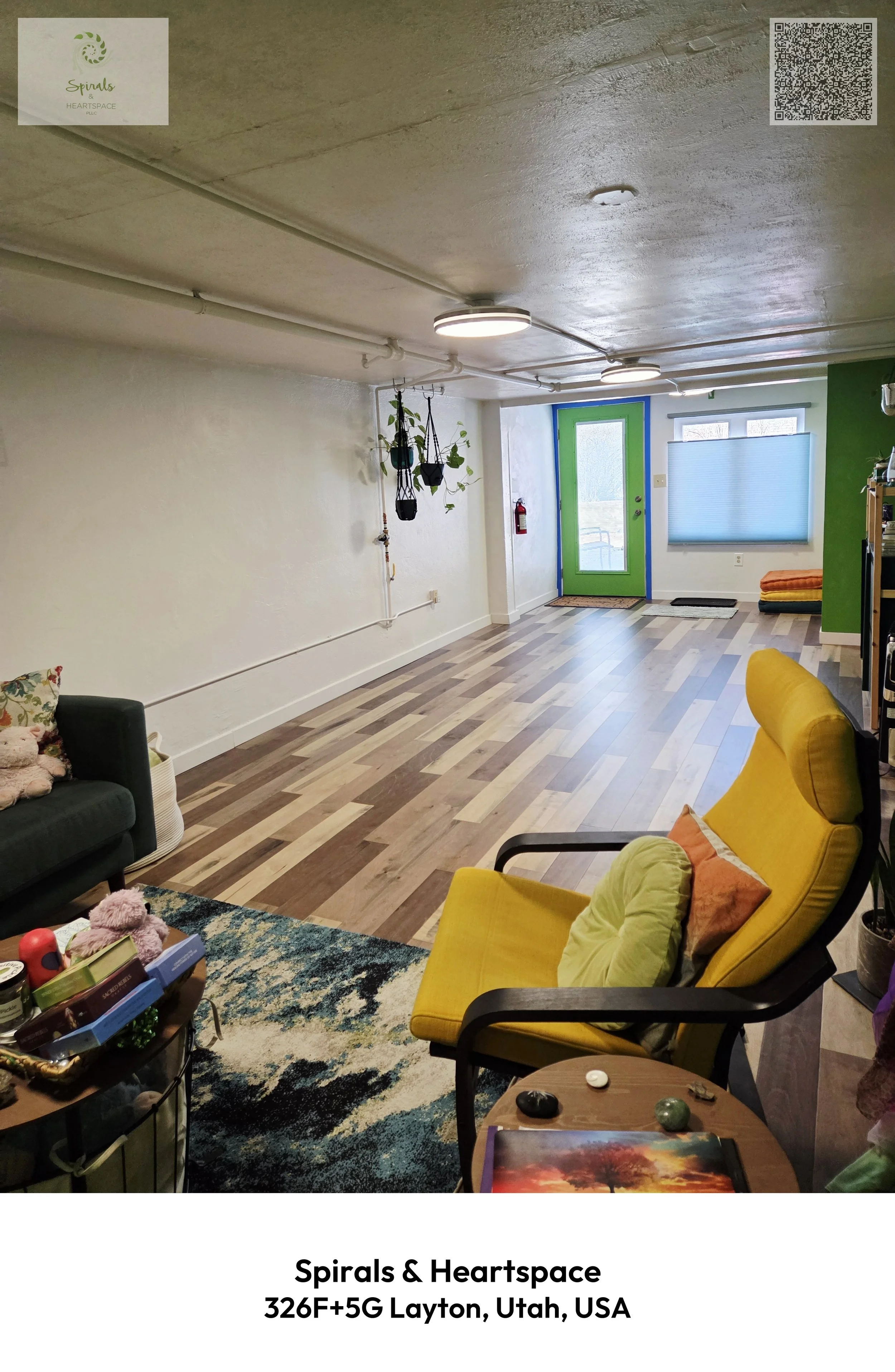
Spirals & Heartspace is a Layton therapy practice offering somatic, trauma-informed support for adults who feel stuck in survival mode.
The practice focuses on trauma therapy, somatic therapy, grief counseling, movement therapy, and attachment therapy for clients looking for deeper healing work.
Based in Layton, Utah, Spirals & Heartspace offers therapy for adults in the local area and notes that both in-person and online sessions are available.
Clients who feel exhausted, disconnected, or trapped in long-standing patterns can explore a body-based approach that goes beyond traditional talk therapy alone.
The practice also offers coaching, consultation, and authentic movement for people seeking personal growth or professional support in related healing work.
For people searching for a psychotherapist in Layton, Spirals & Heartspace provides a local Utah base with services centered on trauma recovery, nervous system awareness, and attachment healing.
The official website identifies Layton and the surrounding Davis County area as the local service region for in-person care.
A public map listing is also available as a reference point for business lookup connected to the Layton area.
Spirals & Heartspace emphasizes a warm, embodied, creative approach designed to help clients reconnect with truth, clarity, and a more grounded sense of self.
Popular Questions About Spirals & Heartspace
What does Spirals & Heartspace help with?
Spirals & Heartspace offers support for trauma, grief, attachment wounds, emotional overwhelm, and body-based healing through somatic and movement-oriented therapy.
Is Spirals & Heartspace located in Layton?
Yes. The official website has a dedicated Layton, Utah location page and describes the practice as serving Layton and surrounding communities.
What therapy services are offered?
The website highlights trauma therapy, somatic therapy, grief counseling, movement therapy, and attachment therapy. It also lists coaching, consultation, and authentic movement.
Does Spirals & Heartspace offer online sessions?
Yes. The Layton location page states that both in-person and online sessions are available.
Who leads Spirals & Heartspace?
The official site identifies Ande Welling as the therapist, coach, movement facilitator, and guide behind the practice.
Who is a good fit for this practice?
The site is geared toward adults who feel exhausted from old survival patterns, complicated family dynamics, grief, self-abandonment, or unresolved trauma and want a deeper, body-aware approach.
How do I contact Spirals & Heartspace?
You can visit https://spiralsandheartspacehealing.com/ and use the contact form to inquire about therapy, coaching, consultation, authentic movement, or speaking.
Phone: 385-301-5252
Landmarks Near Layton, UT
Layton – The practice explicitly identifies Layton as its local base, making the city itself the clearest location reference.Davis County – The Layton page says the practice serves individuals throughout Layton and Davis County, so this is an important regional service-area landmark.
Wasatch Mountains – The location page directly references Layton as sitting against the Wasatch Mountains, making this a natural local landmark for orientation.
Northern Utah – The site describes Layton within northern Utah, which is useful for people comparing nearby therapy options across the region.
Surrounding Layton communities – The official location page says the practice serves Layton and surrounding communities, which supports broader local relevance without overclaiming exact neighborhoods.
If you are looking for a psychotherapist in Layton, Spirals & Heartspace offers a local Utah therapy practice with in-person and online options for adults seeking trauma-informed support.