
There is a moment I see in the room, again and again, when a client realizes their nervous system is not a character flaw. Shoulders drop. Breathing softens. The story shifts from “what is wrong with me” to “what is happening in me.” That pivot underpins somatic therapy, and it is the foundation of emotional regulation that lasts.
Somatic work links emotions to physiology, sensation, posture, micro-movement, and breath. It borrows from trauma therapy, draws insights from attachment therapy, and adapts readily to grief counseling and movement therapy. It is not a single technique, but a framework for learning the language of the body in context. Skills that stick are simple enough to practice daily, specific enough to measure, and flexible enough to use under stress.
What we regulate when we regulate
Emotional regulation lives in the nervous system as much as the mind. You can observe it in heart rate changes, muscle tension, startle response, and how quickly your body returns to baseline after an upset. In many clients, dysregulation shows up as either chronic hyperarousal, the jittery upshift of anxiety and vigilance, or hypoarousal, the downshift of collapse, numbness, and shut down. Some ping pong between them.
Regulation is not a flatline. Healthy variability includes the ability to mobilize when needed, connect when safe, and settle when the task ends. I ask clients to picture a window that can widen over time. Inside that window, you can feel strong emotions and still choose actions that match your values. Outside it, the body either hits the gas or the brakes so hard that choice narrows. Somatic therapy offers ways to notice the edges of that window in real time and to widen it with practice.
Skills that build from the body up
Most clients expect to start with thoughts. We start with orientation. Turning the head to note the shape of the room, the color of a chair, the weight of your hips on the cushion, gives the brain fresh data that says, you are here, not there. It sounds almost silly, yet a one minute orientation often lowers visible tension in the face and neck.
From there, we build:
Sensation mapping. Label location, quality, and intensity. For example, “a tight band across the chest, at 6 out of 10, with heat.” Labeling precisely does not amplify distress, it contains it. Clients who enter the room saying “I feel horrible” leave saying “I have a churning in my belly that eases when I lean back.” That specificity opens choices.
Pendulation. Shift attention between a difficult sensation and a neutral or pleasant one. The nervous system learns it can visit intensity without drowning. It is like weight training, one controlled rep at a time. For panic clients, this might mean visiting the chest tightness for two breaths, then shifting to the cool air on the cheeks.
Titration. Adjust the dose of exposure. We do not dive to the bottom of the lake, we put a toe in and watch the ripples. Trauma therapy often fails when the dose outpaces the body’s capacity. Small slices, well digested, change more than big catharses that leave you wrung out.
Breath as lever, not blunt tool. Some bodies fight deep breathing. For clients prone to hyperventilation, I use smaller, slower exhales or nasal breathing to cue the parasympathetic system. For shutdown states, I may start with breath holds of two seconds to nudge alertness.
Micro-movements. The urge to push, curl, reach, or brace is information and sometimes medicine. Let the arms complete the push you could not do during an invasive moment years ago. Let the feet press into the floor to finish a flight response that froze. When movement completes safely in the present, the physiology that was stuck in an unfinished loop often unwinds.
These are not abstract concepts. They are practiced during sessions and stitched into daily routines, which is where the stickiness comes from.
A morning minute that reshapes the day
Clients who practice for one to three minutes, two to three times a day, gain far more than clients who aim for twenty minutes and do none. One minute is enough to wake up sensory channels and set expectations that the body is included in https://spiralsandheartspacehealing.com/authentic-movement your plans. Here is a simple sequence that I teach often.
Sit or stand. Let your gaze sweep the room slowly left to right, noticing three objects that interest you.
Name three body sensations without judgment. For example, “right calf has a buzz, shoulders feel heavy, breath is cool at the nostrils.”
Lengthen your next three exhales by one second each. Do not force the inhale.
Press your heels into the floor for two seconds, release, then your palms into your thighs for two seconds, release.
Ask, “what changed by 5 percent or more?” Small shifts count. You are training attention to notice movement, not perfection.

Most clients report that this minute lowers tension by a notch or two. More importantly, it builds a reference point for regulation that they can return to during conflict or grief spikes.
Trauma therapy through a somatic lens
Many trauma narratives live not only in memory, but in body habits that formed for good reasons. A client who survived an assault might keep their jaw clenched and head forward to scout threat. Telling a new story does little if the body is still braced for the old one. In trauma therapy I often sequence work in a pattern that respects physiology:
First, stabilization. Practice orientation, breath modulation, and micro-movements until they feel available even on a hard day. If someone dissociates, we slow down and anchor through temperature shifts, textured stimuli in the hands, or brief standing movement to bring energy back online.
Second, resourcing through attachment. If safe relationships feel foreign, we build internal representations of supportive figures, living or imagined, that your nervous system can actually receive. Attachment therapy here means allowing warmth to land in the body, not just the mind. I might ask, “where do you feel her kindness?” If there is no felt sense, we do not force it. We try a pet, a place in nature, or a memory of competence, and look for the first 1 to 2 percent of warmth or ease.
Third, titrated processing. Instead of replaying the worst moment, we identify the thresholds. For example, “the slam of the car door” or “the smell of antiseptic.” We approach a threshold in tiny steps while tracking breath, muscle tone, and micro-movements that want to happen. If a trembling shows up, we allow it within a safe window. That shaking is the nervous system metabolizing activation it did not have room to complete before.
Fourth, integration. We test the new regulation in daily life. One client practiced her exit plan for difficult meetings three times a week: shoes on, keys in hand, walk to the door, name three blue objects. By the time a volatile meeting happened, her legs already knew the path to safety. Habituation made it stick.
This work is slow by design. I would rather see a client sleep through the night after a small session than cry hard and collapse into two days of fog. The aim is not catharsis, it is capacity.
Grief has its own physiology
Grief is not a disorder to cure, and yet it still taxes the nervous system. Breath shallows, appetite shifts, and sleep breaks. People alternate between waves of pain and stretches of numb competence. Somatic therapy helps clients surf those waves more cleanly.
I often invite a posture for grief that lets the chest fall and the spine round, then pair it with a hand on the back of the neck to cue containment. If tears come, we let them travel in sets, three or four exhales at a time, then check what needs support. In grief counseling, clients sometimes fear that if they really start, they will never stop. Titration proves that the body can cry, pause, sip water, orient to the room, and return to tears. That rhythm reduces the secondary fear of emotion, which is what keeps people stuck.
There is another layer in grief, the body’s absence of the other. If a partner used to sleep to your left, your nervous system learned a pattern of weight and warmth. I ask clients to recreate a fraction of that input with a weighted blanket over the left thigh for fifteen minutes in the evening, or to lie on the left side with a pillow behind the back. It is not a replacement. It is sensory intelligence meeting attachment patterns.
The role of movement therapy
When sitting heightens agitation, movement therapy gives regulation room. I use short bouts of patterned movement to up or downshift states. For hyperarousal, I prefer slow, rhythmic movements with long exhalations, such as side to side swaying while humming, or walking at a pace where you can keep your mouth closed and breathe through the nose. For hypoarousal, brief accelerations help, like marching in place for 30 seconds, then pausing and noticing sensations.
Strength also matters. Clients who can produce a clear, contained push or pull often report better boundaries in conversation. A simple drill: stand facing a wall, palms on the wall, and push for five seconds at 60 percent effort. Rest. Repeat two times while breathing out. The point is not fitness, it is the nervous system learning that you can mobilize without tipping into panic.
Attachment patterns and the body
Attachment therapy often lives in stories about caregivers and beliefs about worth. The body keeps a parallel record. Anxious attachment may show in a forward reach, eyes scanning for cues, breath high in the chest. Avoidant attachment often carries a subtle pull away, tight diaphragm, or a bias to look past the therapist rather than at them. Disorganized attachment can toggle between approach and recoil in rapid cycles, often with sudden changes in temperature or posture.
Somatic work does not pathologize these patterns. It helps you see them and make room for alternatives. If anxious clients learn to feel the sensation of yearning in the throat and soften the back of the tongue as they exhale, panic lowers. If avoidant clients practice receiving contact by letting their back rest against a chair with a sense of weight for 90 seconds, their bodies experiment with support without the exposure of eye contact. We keep the dose modest, and we check what parts of the body say yes and which say not yet.
This is also where co-regulation lands. Many clients grew up without nervous systems around them that could down shift on contact. In session, I track my breath and posture as much as theirs. A grounded therapist becomes an external regulator for a while. Over time, we internalize that rhythm.
When somatic tools backfire, and what to do
Every tool has edge cases. Clients with significant dissociation may report no sensations at first, or they might disappear mid exercise. For them, visual focus on high contrast objects or using scent can anchor attention more reliably than internal scanning. If breath work triggers dizziness or panic, skip it and use contact points, like feet on the floor or hands on a cool surface. If orienting triggers hypervigilance in someone with a history of stalking, we orient to non visual cues such as the hum of an air vent or the feel of a watchband.
Chronic pain complicates the picture. Asking someone to sit with pain can feel like a trap. We distinguish pain from distress. If a sensation signals tissue danger, we respect it. If it is the brain’s overprotective amplification, we use graded exposure through tiny movements and novel inputs. A client with back pain might start with five seconds of pelvic tilt while exhaling, paired with a mental image of gliding on water. The pairing of movement and soothing imagery often reduces the brain’s alarm.
ADHD adds another wrinkle. Stillness may be the enemy of attention, not its friend. I often let ADHD clients regulate while standing, using a fidget, or rocking. Goals stay the same, but the route bends toward motion.
Making progress visible
Sustainability improves when clients can see improvement. I ask for concrete markers:
How fast do you fall asleep on average during the past week?
How long does it take to feel your shoulders drop after a startle?
How many times did you feel the impulse to lash out and chose a different action?
What is your average resting breath rate during a two minute sit?
How many minutes per day did you practice orientation or micro-movements?
These are not moral scores. They are data points. When a client’s startle recovery drops from two minutes to forty seconds over a month, they can feel it in their life. That kind of win keeps them practicing.
A vignette: panic in the grocery aisle
A man in his thirties came in with panic attacks that hit hardest in big stores. He had tried positive self talk and apps. He understood the content of his thoughts and still ended up sweating by the freezer section. In session, his eyes darted and his jaw pulsed.
We skipped breath work at first. We practiced orientation on a micro scale. Head stays mostly forward while the eyes travel left and right. He named four blue items in my office without moving his neck. Then we worked on the jaw. He pressed his tongue gently into his molars on the exhale to reduce clenching. The trembling in his hands increased slightly, then settled.
We built a grocery rehearsal. He stood, pressed his feet into the floor for three seconds, walked a slow rectangle in the room, and named one cool sensation and one warm one. Two weeks later, he walked into a small store for five minutes and left on purpose before he felt overwhelmed. Over a month, we shaped up to a full grocery run during a quiet hour. He still felt surges, but he had handholds to climb back to baseline. He was not cured. He was skilled.
Grief in the body of an executive
A senior leader lost her father and returned to work too fast. Tears ambushed her in one on ones. She clenched her pelvic floor constantly. Sitting in my office, she crossed her arms not as a barrier, but as a container. We honored that. I asked her to add a second container: both feet flat, heels heavy.
We set a daily ritual. She would close her office door at 12:05, sit back in her chair, and let her head tip forward for 90 seconds while her hands cupped the back of her neck. She would breathe out through pursed lips, like blowing out a candle gently. Then she would stand, look at the photos on her shelf, and name one sentence of gratitude or anger. The whole ritual took three minutes.
Two weeks in, the surprise crying episodes dropped by half. The ritual did not numb her, it gave grief a time and place to be held, which reduced spillover.
Integrating somatic work with talk therapy and medication
Somatic therapy is not a competitor to cognitive or psychodynamic work. In my practice, the best results arrive when we stitch them together. Insight helps clients steer their lives. Somatic skills help them steer their bodies during the moments insight goes offline. If a client takes medication for anxiety or depression, we note how physiology responds and adjust exercises accordingly. For example, if a beta blocker reduces heart rate spikes, we might lean more on movement for activation during low energy days to prevent sliding into lethargy.
I also stay in touch with prescribers and other therapists with the client’s consent. A five minute update every few months keeps care aligned and avoids mixed messages. The question is always the same: what increases capacity without increasing overwhelm?
Telehealth adaptations that work
Remote sessions pose challenges and offer gifts. Cameras flatten depth, and some clients default to their “screen face.” I ask them to position the camera so that I can see their torso and hands, not just the face. I also normalize movement. If a client needs to stand or walk during hard parts, they do.
For clients who live with others and lack privacy, sensory inputs can still anchor. A cold drink within reach, a textured object like a coin, a weighted lap pad, or a timer set to two minutes for practice bouts, all add structure. I send a brief handout that describes three micro-practices we will use so they have cues in writing. Simple beats fancy.
When to pause, and when to refer
Somatic interventions are generally gentle, but there are moments to reassess. If a client reports increased self harm urges linked to body scanning, we dial back internal focus and co-create a safety plan. If flashbacks worsen despite careful titration, we shift toward stabilization and consider adjunctive supports.
Keep an eye out for these red flags that merit consultation or a change in approach:
Frequent dissociative blackouts that increase during somatic practice
New or escalating suicidal ideation tied to trauma processing
Unexplained medical symptoms that worsen with movement or breath work
A history of psychosis where internal focus appears to intensify symptoms
Somatic therapy is a toolset, not a creed. Use judgment. Your task is to do the least necessary to unlock the most relief.
Cultural and personal context matters
Bodies learn from culture as well as from events. A client taught to minimize emotion may need permission to feel warmth or anger in the chest without shame. Another taught that stoicism equals strength may benefit from framing tremors as completion of a protective reflex, not weakness. Ask what gestures are comforting or loaded. For some, a hand over the heart feels spiritual. For others, it feels like exposure. Curiosity keeps the work honest.
Language matters too. I rarely say “relax.” I say “soften,” “let the shoulders drop by two percent,” or “see if the jaw wants to unclench a little.” Exact words land in nervous systems differently.
What makes skills stick over months and years
The features of sticky skills are unglamorous:

They are brief, repeatable, and adaptable in public. You can do orientation in a meeting without looking odd.
They link to cues you already encounter. For instance, every time you wash your hands, you let your exhale run one second longer.
They produce immediate, if small, feedback. A 5 percent change teaches the brain this is worth doing.
They match your attachment patterns. If receiving is hard, bias toward exercises that build capacity to take in support. If boundaries are hard, bias toward contained pushes and “no” practice in the body.
They are tracked. A two line daily note that says “practiced twice, shoulders softened in 40 seconds” quietly rewires your identity toward someone who can self regulate.
Two to three skills are plenty. Depth beats variety.
Bringing it together
Emotional regulation is not an abstract goal, it is a set of bodily capacities trained over time. Somatic therapy gives you levers that are available even when language jams or thoughts spiral. In trauma therapy, it anchors processing to physiology so that change holds. In grief counseling, it lets waves move through without drowning. Movement therapy adds mobility and strength where stillness fails. Attachment therapy enriches the work with co-regulation and the embodied experience of support.
If you are starting out, begin tiny. One minute, twice a day. Notice three objects. Name three sensations. Exhale a second longer. Press into something solid. Ask what changed by 5 percent or more. The body will answer. Over weeks, it will answer faster. Over months, it will answer before the storm hits.
This is not about never feeling big emotions again. It is about trusting that when the wind picks up, your rigging knows what to do.
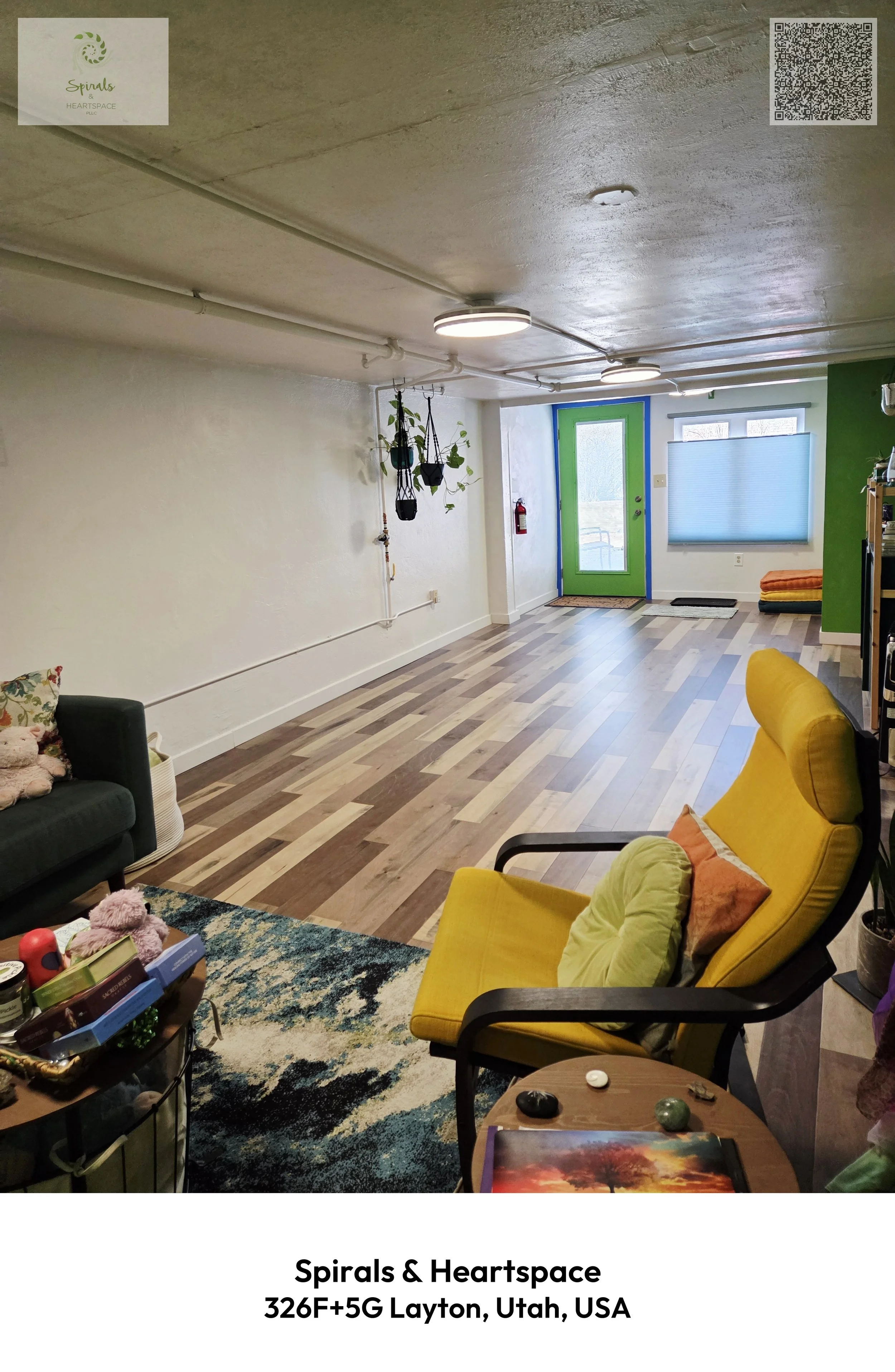
Name: Spirals & Heartspace
Address: 534 W Gentile St, Layton, UT 84041, United States
Phone: 385-301-5252
Website: https://spiralsandheartspacehealing.com/
Hours:
Monday: 9:30 AM - 7:00 PM
Tuesday: 9:30 AM - 7:00 PM
Wednesday: 9:30 AM - 7:00 PM
Thursday: 9:30 AM - 7:00 PM
Friday: 9:30 AM - 7:00 PM
Saturday: Closed
Sunday: Closed
Open-location code (plus code): 326F+5G Layton, Utah, USA
Map/listing URL: https://maps.app.goo.gl/M1jmgkhNyaMPCCJ8A
Embed iframe:
"@context": "https://schema.org",
"@type": "ProfessionalService",
"name": "Spirals & Heartspace",
"url": "https://spiralsandheartspacehealing.com/",
"address":
"@type": "PostalAddress",
"addressLocality": "Layton",
"addressRegion": "UT",
"addressCountry": "US"
Spirals & Heartspace is a Layton therapy practice offering somatic, trauma-informed support for adults who feel stuck in survival mode.
The practice focuses on trauma therapy, somatic therapy, grief counseling, movement therapy, and attachment therapy for clients looking for deeper healing work.
Based in Layton, Utah, Spirals & Heartspace offers therapy for adults in the local area and notes that both in-person and online sessions are available.
Clients who feel exhausted, disconnected, or trapped in long-standing patterns can explore a body-based approach that goes beyond traditional talk therapy alone.
The practice also offers coaching, consultation, and authentic movement for people seeking personal growth or professional support in related healing work.
For people searching for a psychotherapist in Layton, Spirals & Heartspace provides a local Utah base with services centered on trauma recovery, nervous system awareness, and attachment healing.
The official website identifies Layton and the surrounding Davis County area as the local service region for in-person care.
A public map listing is also available as a reference point for business lookup connected to the Layton area.
Spirals & Heartspace emphasizes a warm, embodied, creative approach designed to help clients reconnect with truth, clarity, and a more grounded sense of self.
Popular Questions About Spirals & Heartspace
What does Spirals & Heartspace help with?
Spirals & Heartspace offers support for trauma, grief, attachment wounds, emotional overwhelm, and body-based healing through somatic and movement-oriented therapy.
Is Spirals & Heartspace located in Layton?
Yes. The official website has a dedicated Layton, Utah location page and describes the practice as serving Layton and surrounding communities.
What therapy services are offered?
The website highlights trauma therapy, somatic therapy, grief counseling, movement therapy, and attachment therapy. It also lists coaching, consultation, and authentic movement.
Does Spirals & Heartspace offer online sessions?
Yes. The Layton location page states that both in-person and online sessions are available.
Who leads Spirals & Heartspace?
The official site identifies Ande Welling as the therapist, coach, movement facilitator, and guide behind the practice.
Who is a good fit for this practice?
The site is geared toward adults who feel exhausted from old survival patterns, complicated family dynamics, grief, self-abandonment, or unresolved trauma and want a deeper, body-aware approach.
How do I contact Spirals & Heartspace?
You can visit https://spiralsandheartspacehealing.com/ and use the contact form to inquire about therapy, coaching, consultation, authentic movement, or speaking.
Phone: 385-301-5252
Landmarks Near Layton, UT
Layton – The practice explicitly identifies Layton as its local base, making the city itself the clearest location reference.Davis County – The Layton page says the practice serves individuals throughout Layton and Davis County, so this is an important regional service-area landmark.
Wasatch Mountains – The location page directly references Layton as sitting against the Wasatch Mountains, making this a natural local landmark for orientation.
Northern Utah – The site describes Layton within northern Utah, which is useful for people comparing nearby therapy options across the region.
Surrounding Layton communities – The official location page says the practice serves Layton and surrounding communities, which supports broader local relevance without overclaiming exact neighborhoods.
If you are looking for a psychotherapist in Layton, Spirals & Heartspace offers a local Utah therapy practice with in-person and online options for adults seeking trauma-informed support.