



As for your introduction, keep it simple,such as "Roswalle, nice to meet you." More elaborate explanations about yourself or your background can wait until later in the conversation. Don't be afraid to get the ball rolling with a question to the other person. Something as simple as "what brought you here?" "do you often attend these events?" or "what did you think of the presentation?" are sufficient as a conversation starter. Rather than yes/no questions, ask open-ended questions. Pick something relevant to the event you are at, in- stead of something random or seemingly unrelated.
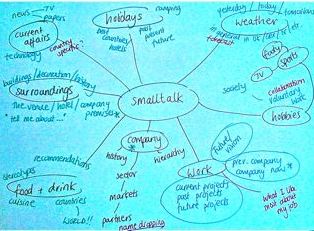 Small talk is a good way to get to know someone, especially if your venue is a business lunch or dinner, or you are just chatting before or after a meeting. In addition to displaying your overall charm and communication skills, small talk helps you get to know a person better, and discover things that you have in common, which helps build the business relationship. When making small talk,steer clear of personal or sensi- tive topics such as religion, finances, politics, race, etc. Don't ask someone's age or marital status. For Japanese, it's best to stay away from stereotypical questions like "do you like Japanese food?" or "can you use chopsticks?" Good conversation topics for small talk include the following: Sports. Americans love to talk about sports, particularly baseball, football and basketball. Asking about the local team is sure to get some kind of reaction.
For example, ask any Chicagoan if they are a Cubs fan or a Sox fan, and you are sure to have plenty to talk about. Hobbies. Find out what the person likes to do in their spare time. This might be a participant sport, such as golfing, tennis, fishing or running. Or it might be some other activity. If you happen to find out that they share an interest with you, that's the perfect bonding opportunity. Note, however, that native English-speakers seldom use the word "hobby" in conversation. It's more natural to ask "What do you like to do in your spare time?"
Local highlights. If you are visiting somewhere, ask about local sightseeing destinations. "What should I be sure to see while I'm here?" or "What restaurants do you recommend around here?" are good gambits. Children. If the other person has mentioned that they have children, this can be a good topic. Ask about their ages and what activities they are involved in. If you have children, you can share about yours.

