
Stamped concrete turns a plain slab into a surface that reads as stone, brick, or wood at a fraction of the installed price of masonry. People call asking why one 400 square foot patio quote is 6,800 dollars and another is 12,000, both labeled “stamped.” The short answer is that stamped work is a package of concrete, color chemistry, patterning, protection, and risk. Each variable nudges cost up or down. The long answer, the one that helps you plan and budget intelligently, looks at how contractors actually build these projects and why certain decisions add dollars.
I have spent years walking yards with homeowners, chalking curves, coaxing finishers through hot pours, and coming back seasons later to see how a slab held up. The math of stamped concrete is not mysterious once you see what drives it. Think in layers, from ground to sealer, and you can predict most of the Price of concrete patios before the first stake is set.
The base slab is a structure first, art second
No imprint can mask a weak subbase. If the soil pumps under your feet, it will move under concrete. Earthwork sets the stage, and it is usually the first big variable. A straightforward backyard with firm native soil might need a 4 inch slab over 4 inches of compacted crushed stone. In expansive clay or fill, I may call for 5 inches of concrete, a geotextile separator, and a thicker compacted base. That thicker section shows up directly in materials, ready mix, and labor. A single extra inch on 400 square feet adds roughly 1.2 cubic yards of concrete. At a typical delivered price of 140 to 180 dollars per yard for standard mix, or 170 to 220 for mixes with integral color, that inch costs real money.
The mix itself matters. Most stamped work specifies 3,500 to 4,500 psi. I bump to 4,500 if we expect frequent deicing salts, heavy grills, or vehicular load on a driveway apron. Higher strength mixes often include more cement and occasionally admixtures for set control or water reduction. They finish differently and give you less open time for stamping in heat, which means a larger crew or an early start. Labor, not just materials, moves with this decision.
Reinforcement is part insurance, part control. Welded wire fabric helps limit crack width but only if it ends up near mid depth, which takes support chairs and attention. Many crews prefer #3 rebar on a 24 inch grid, or fiber reinforcement in the mix. Rebar pushes material cost modestly, but more than that, it slows placement as the crew routes the chute. Slower placement pushes schedule, and schedule feeds into cost.
Edge scenarios can add structure. Steps from a door, grade beams over soft soils, thickened edges at transitions, or a haunch where a hot tub will sit, each consumes crew time and form lumber. I have built patios where a third of the budget lived in a 10 foot run of curved stairs that looked simple on paper.
Access, site conditions, and demolition set the tone
The least glamorous line items often control the final number. If a ready mix truck can back within 10 feet of the forms, concrete lands efficiently. If we have to wheel 50 yards through a gate in January, or pump over the house, you will see it in the proposal. A 47 meter pump with an operator can run 900 to 1,400 dollars in many regions. Wheelbarrowing adds a full day and extra laborers. That is before any old concrete or pavers come out. Demolition and disposal vary wildly with access and local dump fees. Breaking and hauling a 300 square foot patio may be 1,200 in one town, 2,500 in another, purely because of trucking and landfill rates.

Trees and roots create choices. You can either remove the roots and bridge with base, or redesign the layout to clear the critical root zone. Sawing a clean edge around a root flare saves a tree, but sometimes means an S curve in the formwork and more hand work. Curves are lovely in stamped concrete, yet they cost because every curve resists standard 8 foot forms and calls for flexible materials and more stakes.
Weather is a silent line item. Hot, dry wind forces evaporation control, more release powder, faster stamping, and often a retarder in the mix. Cold demands blankets and a longer cure cycle before sealing. I have covered a slab with insulated tarps for three nights to protect a late October pour, then returned a week later to stamp a border band cut in relief. That protection was the difference between a tight surface and dusting, and it added hundreds to the job.
The color system drives material and labor complexity
Color enters stamped concrete by two main routes. Integral color powders or liquids go into the ready mix at the plant, tinting the entire slab. Color hardener gets broadcast by hand onto the fresh slab, then troweled in to create a colored, denser top. Both work, and both change cost.
Integral color is simpler from a labor standpoint. The truck arrives with consistent hue. You place and finish normally. Materials cost more upfront, often 25 to 50 dollars per yard for medium doses. For a 10 yard pour, that is 250 to 500 dollars added. It reduces the visible contrast of chips or future abrasion, since the color goes deep. It also means touch ups of surface spalls will not be lighter gray.
Business Name: LEANDER STAMPED CONCRETEBusiness Address: 15901 Ronald Reagan Blvd, Leander, TX 78641
Business Phone: (512) 545-3879
LEANDER STAMPED CONCRETE offers free quotes and assessment
LEANDER STAMPED CONCRETE has the following website https://leanderstampedconcrete.com
Color hardener requires skill and time. We wait until bleed water dissipates, then broadcast evenly in two or three passes. Each pass is floated and worked in. The result is a wear layer that takes imprint well and can sharpen detail, especially on textures like slate and ashlar. It also creates dust during application, and crews need masks in still air. Material cost ranges with brand and coverage rate, often 0.80 to 1.50 dollars per square foot, and labor climbs because you have extra steps before stamping. I reach for hardener on busy patios where chairs drag daily, or on dramatic Stamped concrete designs where crisp texture matters.
Release agents give stamped concrete its variegation and keep the mats from sticking. Powdered release produces the classic shaded grout lines and darker low spots. Liquid release is cleaner, controls dust, and works well when we plan to stain post cure. Powder needs cleanup the next day, often with a light wash and careful scrubbing to leave color in recesses. That cleanup is labor. Choose powder when you want strong antiquing and a traditional look. Choose liquid for subtler contrast or where runoff control matters.
Secondary color, either by antiquing wash or water based stain, can add depth but also hours. I have had projects where the base integral tan looked fine, and the homeowner wanted a band that read as saddle leather. A day of masking, staining, and careful sealing delivered the look, and it added a measurable sum to the contract.
Pattern complexity sets the crew count
Patterns are not equally demanding. A random stone or seamless slate reads forgivingly and can move quickly. A compass medallion inset, a 45 degree herringbone, or a cobble fan demands more layout time, more mat swapping, and more attention to repeat avoidance. The mats themselves are an asset. A crew that owns a full set of 10 to 12 mats in a given pattern moves faster and stamps evenly. If we have to rent specialty mats or build custom skins, that cost flows straight into your estimate.
Two realities shape how contractors price complex patterns. First, every throw of a mat needs alignment, pressure, and a walk around to check for trapped debris. Second, the stamping window is finite. Concrete sets from plastic to unstampable in an arc of one to three hours depending on mix, weather, and slab thickness. Complicated layouts require a larger crew to keep pace. That is where you see a bid jump, not in materials but in the number of finishers on site for a compressed window.
Borders are worth their mention. A band around the field creates visual order and protects edges. It may be stamped in a different texture, saw cut after cure, or formed as a separate pour. Separate pours mean rebar dowels and cold joints, and a return visit for the second placement. I generally price a 12 to 18 inch border at an extra 6 to 12 dollars per linear foot depending on method. That line item surprises people until they watch the care it takes to keep the band straight and clean against a random field.
Forming, joints, and the rhythm of the pour
Formwork looks like carpentry because it is. Straight runs set quickly with staked 2x4s or steel forms. Curves take flexible form boards or hardboard and patient bending. Steps demand careful rise and run, nosing details, and sometimes custom liners if we want stone faces. Each stair tread is a mini project. When a homeowner asks for a sweeping three step staircase with a textured front, I count crew hours and materials as if I am building a piece of furniture we will also pour.
Control joints deserve plain language. Concrete cracks. Our job is to choose where. Stamped surfaces complicate joints because you want them to disappear into pattern. We either tool them while the slab is plastic, hiding lines in grout, or saw cut early the next morning, then chase and color the cut to blend. Early entry saws are one of the Modern tools for concrete jobs that reduce random cracking, and they pay for themselves on tight schedules. They also require a straight path and a steady hand, which takes time.
I like to think of a pour as a choreography. The dispatcher confirms a 7 am delivery at 4 inch slump with integral color B-12. The crew grades and sets. The first truck arrives, the pump primes, and the slab places in bays to allow standing room for stamps. Float, bull float, edge, wait, broadcast hardener or not, check the sun, prep release, stage mats. Once sealing is on the calendar, you can cost this dance. A complicated dance has more steps and more dancers, and the number on the paper reflects that.
Sealer is not an afterthought, it is a system
Sealer protects color, adds gloss or satin sheen, and resists stains. Exterior stamped concrete commonly receives solvent based acrylic at 20 to 25 percent solids. Two light coats, not one heavy, avoid solvent entrapment and whitening. Good sealers cost more and perform better. Cheap sealers look milky, peel, and trap moisture. I have stripped and resealed slabs that hazed after a humid day’s application and it is work no one wants to repeat. Stripping adds cost, solvent disposal adds liability, and the original budget grows.

Anti slip traction matters on glossy surfaces. We often broadcast a fine polypropylene additive into the second coat to give texture without sandpaper feel. It is inexpensive material, yet it must be applied evenly. In shaded or north facing patios, mold resistance and vapor permeability become part of the spec. A breathable sealer reduces white blush in damp climates.
Maintenance is part of the life cycle cost of Stamped Concrete. Plan for resealing every two to three years in sunny or high traffic areas, every three to five in gentler conditions. Budget 0.80 to 1.50 dollars per square foot for a professional clean and reseal, more if repairs or recoloring are involved. If deicing salts touch the slab, choose salt safe products and rinse after storms. Surface scaling from salts can undo an otherwise perfect installation over two winters.
What regional markets and contractor capacity do to pricing
Concrete work is intensely local. Ready mix pricing, aggregate sources, finishers’ wages, insurance, even permit fees set the baseline. Urban markets with union rates and high insurance premiums produce higher bids than rural areas with lower overhead. The cycle of demand matters. In a hot building season, Concrete Contractors book out eight to twelve weeks, and the premium for a compressed schedule shows up on the quote. Conversely, a shoulder season project might price better if weather cooperates and a crew wants to keep busy.
Liability and warranty practices affect the number quietly. A contractor who carries full general liability and workers’ comp, pays for continuing education on sealers and admixtures, and trains staff on safe handling of color hardener dust, will not be the cheapest. They also return your call in two years if a joint spalls. That difference is hard to see in a line item, yet it is real value.
Typical cost ranges, with context
People like numbers, and they help, as long as you treat them as ranges that flex with the variables above. For a simple stamped concrete patio using a seamless texture, integral color, 4 inch slab, good access, and two coats of acrylic sealer, I regularly see installed costs between 13 and 20 dollars per square foot in many mid cost regions. In higher cost urban markets or with extensive prep, 20 to 28 is realistic. Add a border band in a contrasting texture and color, and you might add 3 to 6 dollars per square foot averaged over the area, or figure per linear foot as mentioned earlier.
Move from a seamless texture to a hand set ashlar pattern with powder release antiquing, and labor grows. Expect 16 to 24 dollars per square foot in mid cost regions under standard conditions, and 24 to 35 in high cost or difficult access jobs. Medallions, staircases with stamped risers, and heavy color work can push totals higher. Driveways ask for thicker slabs and more jointing. A 700 square foot stamped driveway at 5 inches thick with 4,500 psi mix and rebar might run 18 to 30 dollars per square foot depending on teardown, base, and access.
Small jobs have minimums. Mobilization, delivery, and setup weigh the same on 120 square feet as on 400, so you will see per square foot pricing look high on tiny projects. This is not a trick. It is the math of trucks, pumps, saws, and four people in a yard for eight hours.
When clients ask about the Price of concrete patios versus pavers or natural stone, I walk through both first cost and maintenance. Stamped often undercuts stone installed, sometimes by half, and compares favorably to high end pavers. It comes with periodic sealing. Pavers bring joint sand maintenance and occasional resetting. Stone brings beauty, higher unit costs, and more forgiving maintenance. None is wrong. Stamped suits large areas when you want pattern and color continuity, tight budgets, and quick installation.
Where money hides in the details
Edges, corners, drains, and transitions are not where eyes linger on Instagram, yet they soak time. A flush mount drain set into a pattern without awkward half stones can take an hour to plan and another to execute. A door threshold that sits 3 inches above grade invites either a stoop or a recessed slab that manages water. Either path requires extra excavation, gravel, and finishing finesse. If your yard pinches equipment access to a 36 inch gate, laborers carry everything by hand. If we can swing a mini skid steer in, half the prep time evaporates. Every site has one or two spots where a thousand dollars lives. Good proposals call them out explicitly.
Repairs and overlays read differently than new work. Stamping an overlay on a sound https://leanderstampedconcrete.com but ugly slab is viable with polymer modified toppings. They cost more per square foot than new flatwork because surface prep and primers are meticulous, and the margin for error is small. You gain thickness savings and avoid demolition, but you trade into skilled labor and material systems that price at a premium. A 600 square foot overlay stamped with a flagstone pattern and stained might land in the 10 to 18 dollars per square foot range for materials alone, with labor taking the installed price well above simple new work. I only propose overlays when movement and moisture issues are controlled.
Estimating, the way a contractor actually does it
Homeowners often ask for a quick number over the phone. I can give a bracket, but a real estimate rests on a short checklist and a site walk. The questions I ask are the ones that put dollars on paper accurately and avoid change orders.
- How many square feet, and what is the shape, including steps or raised edges What is access like for trucks or a pump, and are there overhead lines or tight gates What soil are we on, and do we need excavation, base, or drainage improvements What color system, integral or hardener, and what release method or secondary color What pattern, with or without border bands, and do we need jointing disguised
Notice what is not there, a broad promise to “do stamped concrete” without content. Once we agree on these items, the rest is arithmetic. I price subbase, formwork, reinforcement, ready mix with color, sealer, consumables like release, saw blades, anti slip additive, and then I price labor hours by phase. I include mobilization, cleanup, and a follow up visit for sealing if we break the work into two days. Then I add overhead and reasonable profit. Transparent proposals track these categories, not just a lump sum, and that transparency helps clients compare apples to apples across different Concrete Contractors.
Modern tools change the curve, not the craft
The fundamentals of concrete do not change, but the kit on a good truck has improved. Early entry saws reduce uncontrolled cracking. Lithium based densifiers and penetrating sealers broaden finishing options in some climates. Sprayer systems lay down an even sealer coat with less overspray. Pump trucks reach awkward spots cleanly and save labor. GPS layout tools and laser levels speed forming on sloped yards and manage water flow precisely.
The phrase Modern tools for concrete jobs does not mean gadgets for their own sake. It means gear that makes a pour safer, faster, and more predictable. I carry moisture meters to confirm a slab is ready for sealer. We have microfiber pads ready to pull excess solvent if we see flashing. We own full mat sets to avoid pattern repetition and half mats to tuck against edges. Those choices reduce callbacks and keep the final surface tight and clean, and they do show up in price as capability rather than a separate fee.
Risk allocation, or why reputable bids sometimes feel higher
Stamped concrete exposes a contractor to variables most clients never see. A truck arrives with a hot load, the clouds part and the wind picks up, a neighbor’s sprinkler floods the subbase the night before a pour. Good crews build margin into bids to manage the unexpected without cutting corners. That margin pays for an extra set of hands on a big day, a batch of evaporation retarder, or a return visit to saw cut and color joints when a thunderstorm pushes stamping late.
Insurance and warranties are part of this. A contractor promising a three year workmanship warranty must stand behind color matching, sealer performance, and joint handling for years. Cheaper bids often simply exclude those responsibilities in fine print. When comparing the Price of concrete patios, read the scope, the exclusions, and the warranty line as carefully as the total. A slightly higher number with clear responsibilities is almost always the smarter purchase.
A sample scenario, numbers with reasoning
Consider a 18 by 22 foot patio, roughly 396 square feet, on a mild slope 10 feet out the back door. Access allows a truck to the driveway and a 50 foot pump line over lawn. The soil is firm loam. The homeowner wants a random stone pattern, integral sandstone base color with a charcoal powder release, a 16 inch border band in a darker tone, and two squared steps at the door.
I would specify a 4 inch slab, 3,500 psi mix with integral color, #3 rebar 24 inches on center, 4 inches of compacted 3/4 inch crushed stone subbase. Formwork includes a gentle curve on one long edge, two steps with 6 inch rise, 12 inch tread, and a slight pitch away from the house. We pump to keep the yard intact and move concrete efficiently.
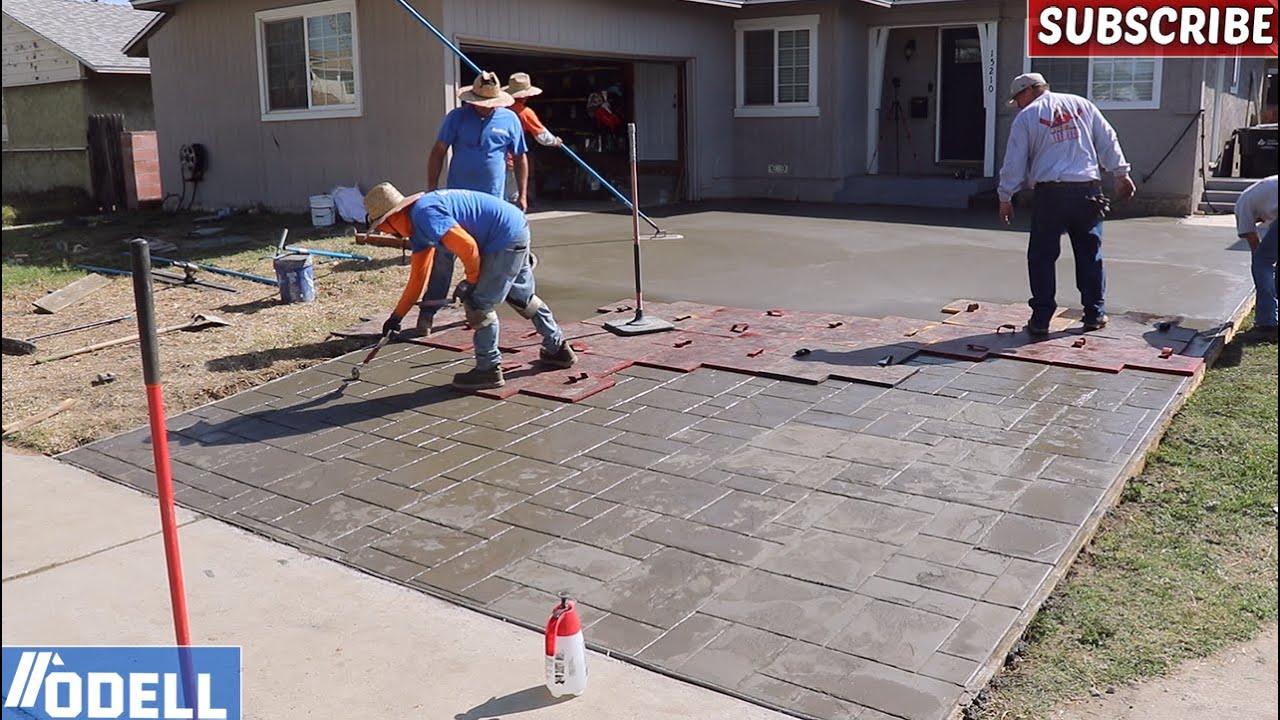
Material estimates might be 5.0 to 5.5 yards of concrete depending on steps and waste, integral color at 35 dollars per yard added, powder release at about 0.35 to 0.50 dollars per square foot, rebar, base stone by the ton, form lumber, stakes, sonotube or step liners if used, sealer at two coats of a quality acrylic, anti slip additive, and consumables. The pump is a fixed line item. Labor includes prep crew for a day, pour and stamp crew for a long day, and a half day for cleanup, wash, joint cutting if we cut, staining the border if needed, and sealing after proper cure. Toss in overhead and profit.
In many markets, such a project might price in the 7,000 to 10,500 dollar range, or roughly 18 to 26 dollars per square foot all in. A change from integral color to color hardener could raise labor and material by several hundred, yet improve surface durability. Eliminating the border might save 1,000 to 1,800 dollars. Swapping the pump for wheelbarrows could save the pump fee but risks finish quality if the pour drags. These are the trade offs I discuss with clients at the sketch stage.
How to keep control of cost without compromising quality
You can steer budget by focusing on decisions that earn their keep. Choose one strong design move, like a border or a switch in texture, rather than stacking three. Pick integral color plus liquid release for a cleaner process if antiquing is not essential. Keep shapes simple while fitting the yard. Spend on base prep and reinforcement, save on ultra intricate mats unless they tell the story you want. Ask your contractor whether the pattern you like stamps fast or slow, and what crew size it demands. Those answers feed cost far more than many people realize.
One more note on timing. Sealing a slab after a proper cure protects it for the first season. If you pour in late fall, discuss delaying sealer until spring when temperatures and humidity cooperate. That second mobilization might add a small fee, but it prevents sealer haze and extends life. Rushing to seal two days after a cold pour to hit a date rarely pays.
Questions to ask before you sign
- What exact slab thickness, base depth, and reinforcement are you bidding Which color system and release will you use, and how will you handle cleanup How will you disguise control joints within the pattern, tool or saw cut What sealer, at what solids content, with what non slip additive, and when will you apply it How are access, pumping, demolition, and disposal handled, and what are the allowances
Good Concrete Contractors answer these without hesitation. They show you mat sets, color charts, sample boards, and photos of jobs in your climate after two winters. They explain the maintenance schedule, including when to reseal and how to clean. They note that some deicers harm stamped surfaces and propose alternatives. They talk drainage, because water is the enemy of slabs that last.
Final thoughts from years on the slab
Stamped concrete earns its place when you want scale, pattern, and a continuous surface that handles furniture and foot traffic. The dollars you spend move with very tangible choices, not mystery. Subbase and structure make it last. Color systems shape material and labor. Pattern complexity and access set crew size. Sealer protects the investment, and maintenance keeps it looking sharp. The Modern tools for concrete jobs help a good crew work smoothly, yet they do not replace judgment. That still comes from the people who watch the cream rise on a hot day and know whether they have ten more minutes before the first mat lands.
If you understand how each decision touches cost, you can tune your design. You can read bids intelligently. You can ask for the right details in the scope and hold your contractor to them. That is how design becomes dollars, and how your patio looks good not just on day three, but on day 1,000.