
You know that feeling — a perfectly vivid image locked in your mind. Picture it: silver hair, a coat caught in the wind, and those barely-glowing blue eyes. Then you open a blank canvas and your hands completely betray you. 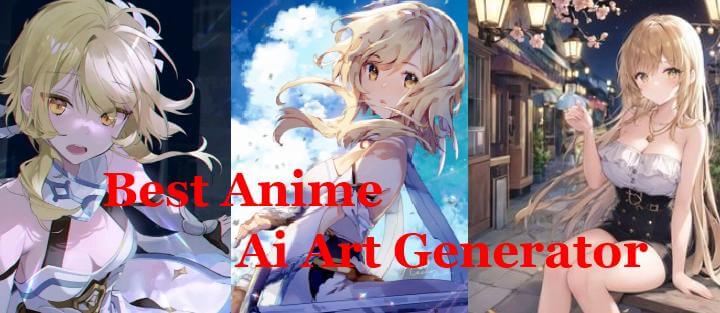 That gap between imagination and execution is precisely why anime AI generators broke the internet. They have zero concern for your failed high school art grade. Feed them a weirdly specific prompt like "sad kitsune girl, cherry blossom rain, Studio Trigger style" and they\'ll spit out a result in seconds that would take a freelance illustrator days to produce. Occasionally, the output is genuinely gorgeous. Sometimes your character mysteriously acquires extra fingers. Honestly, that's part of the charm. So how exactly do these generators function? Most anime AI generators are conditioned on massive libraries of existing anime art. We're talking tens of millions of images — Miyazaki classics to late-night Pixiv uploads from artists running on instant noodles and sheer devotion. The AI absorbs patterns: how hair moves in action sequences, how soft light falls on faces, why shojo manga eyes are comically oversized. Here's how diffusion models — the engine behind most of these tools — actually work: the AI begins with random visual static and gradually refines it into a coherent image based on your instructions. Each step removes noise and adds structure. Think of it as darkroom photography, except the darkroom is a server rack of GPUs and the photographer has consumed every anime in existence. The space has clear frontrunners: NovelAI, Niji Journey (Midjourney's anime-dedicated mode), and SeaArt, each with a distinct user base. NovelAI leans heavily into the Danbooru tagging system — those tags function like a cheat code. Niji Journey feels freer, sketchier, and more spontaneous. SeaArt strikes a middle ground — user-friendly without requiring an essay-length prompt. The thorniest problem in all of this? Character consistency. Run the same character through twice and you're likely to get two entirely different people — same outfit, different face. For anyone attempting real narrative work or a comic series, this inconsistency is maddening. LoRA models changed everything. A LoRA, or Low-Rank Adaptation, allows you to train the generator on as few as 20–30 images of your character. The model remembers them after training. Not flawlessly. But enough that your purple-eyed swordsman stays a purple-eyed swordsman instead of morphing into a green-eyed accountant. So who's really using these tools? More people than you'd expect. Indie game developers with no art budget. Webtoon and manga artists using generated frames as rough placeholders until hand-drawn finals are complete. Writers desperately wanting to see their fictional people rendered in some tangible form. And a sprawling social media hentaianime.video economy built around AI-generated characters — entrepreneurial venture or digital SOS, take your pick. Some artists are angry — and not without reason. Much of the initial training data was harvested without permission. That's a genuine ethical issue, not protectionism. Questions of attribution and artist compensation in the AI art space are nowhere near settled. Not remotely. Still, the tools are here. People are using them. Even professional artists are experimenting — using them for mood boards, client presentations, lighting references, and visual research that used to eat up hours. Crafting effective prompts is genuinely a learned craft. New users often don't grasp that hoping for a lucky result is like feeding random coordinates into a GPS and expecting a great restaurant recommendation. You'll arrive somewhere. Probably not the right destination. Good prompting has a consistent structure: style first (anime, detailed lineart, cel shading), then subject, mood, lighting, and finally a negative prompt specifying what you don't want. That last part is underrated. Telling the model "no extra limbs, no text, no watermark" does more heavy lifting than people imagine. And iteration is everything. Generate eight versions. Pick the closest one. Use it as an image reference. Generate eight more. This isn't a vending machine for masterpieces — it's a dialogue where one side communicates only through images. So what comes next? Video is the obvious next step, and it's already underway. Emerging platforms can bring a character to life in anime style — lip sync, gentle motion, blinking eyes. Results are inconsistent, particularly with hair and hands — hands are the eternal enemy of both AI and human artists — but the trend line is obvious. Real-time rendering is starting to become a reality. Several tools now let you draw a rough outline and watch it become finished anime art in real time. Think of it less as a replacement for artists and more as an AI assistant that works at lightning speed and occasionally goes off the rails. Whether that's exciting or terrifying probably depends on where you're sitting. But it's already happening, and the people enjoying it most have already moved past the debate — they're just out there creating.
- 前ページ
- 次ページ