
On a calm evening in Dubai Marina, the water mirrors a skyline stitched with light. Wooden hulls glide past penthouse balconies, oud music rises from the decks, and camera shutters click in quick bursts. The romance of a dhow dinner cruise is undeniable, but the full picture includes diesel fumes behind the galley, single-use plastics stacked near the buffet, and generators humming below deck. I have spent enough nights onboard to see both sides. The magic is real, yet the environmental tab can be, too. The good news is that the tide is turning. Operators are experimenting with cleaner fuel blends, rethinking food and waste, and finding practical ways to give passengers a top-tier experience while shrinking the footprint.
Sustainable sailing in a modern marina is not a contradiction. It is a set of deliberate choices. If you plan a Dhow Cruise Dubai marina experience, or you run boats in the harbor, the steps below translate high-minded ideals into workable routines.
The water we love, the pressures we add
Dubai’s coastline has grown in tandem with tourism, and the marina is a microcosm of that growth. High boat traffic stirs up sediments, and discharges add nutrients that trigger algal blooms during warm spells. Saltwater intake lines of chiller plants and greywater from vessels can compound the problem when unmanaged. On a crowded weekend, the marina can see dozens of cruising vessels cycling between the breakwater and the canal, with engines idling at staging points for boarding, dinner service, and photo stops.
One operator I worked with tracked fuel and idle time across a single month. The boats logged roughly 110 to 140 hours of operation each, and 15 to 25 percent of that was idle. That figure sits within norms for dinner cruises, yet shaved minutes add up. Small reductions, applied nightly, become liters saved and emissions avoided.
Plastic is the other habitual offender. It shows up through water bottles stacked in ice baths, cling film on canapés, and straw sleeves. After one holiday week, our crew filled an entire dock cart with only disposable drinks waste, and that was with a modest passenger count. These aren’t glamorous details, but they are fixable without depriving guests of comfort.
The dhow advantage, and its hidden cost
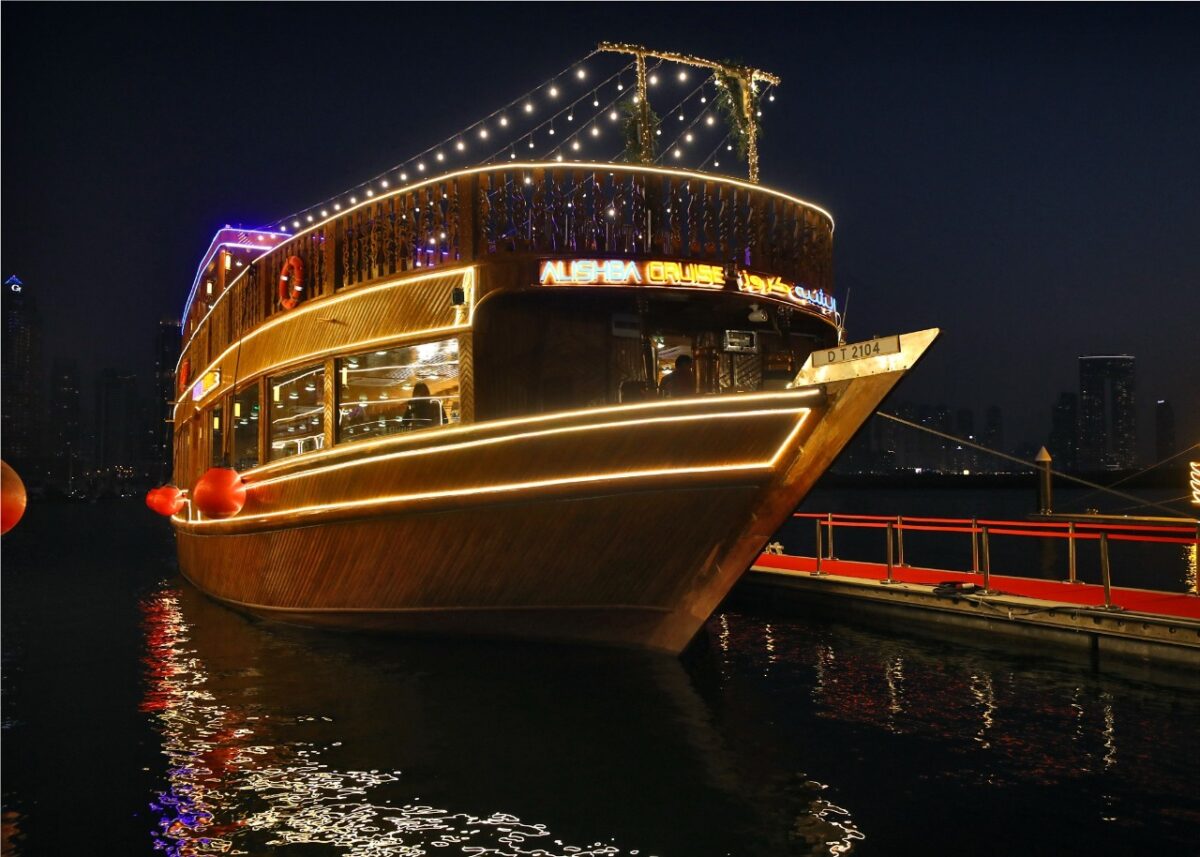
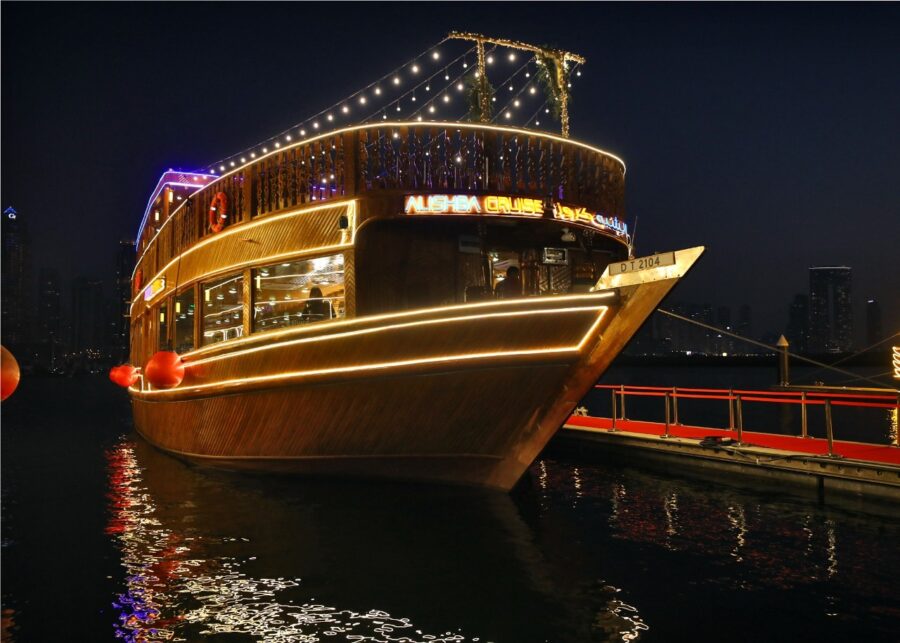
The classic dhow is built for romance. Timber decks, open railings, lanterns strung along the mast. The hull lines allow a smooth ride at low speed, and the ambiance sells seats. Yet most dhow engines are conventional marine diesels, sometimes older blocks retrofitted to new hulls. Fuel efficiency can lag behind modern fiberglass hulls with optimized props. The result is often higher emissions per passenger unless operators compensate with maintenance, speed discipline, and route planning.
This is not a reason to skip a Dhow Cruise Dubai marina outing. It is a prompt to choose operators who maintain their engines properly, publish basic sustainability aims, and implement small operational changes that matter. A dhow can be surprisingly efficient at dinner-cruise speeds when well tuned and loaded within its sweet spot.
Fuel choices that move the needle
The leap from diesel to fully electric is tempting, but not yet practical for every Dubai marina cruise. Battery weight, charging infrastructure, and regulatory alignment are still catching up, though hybrid conversions are on the horizon. The immediate win is cleaner liquid fuel.
A few operators have adopted B20 to B30 biodiesel blends during shoulder seasons when supply is reliable. These blends can curb lifecycle carbon emissions, albeit with variability based on feedstock. In practice, the switch demands diligent filter changes during the first weeks and clear labeling on fuel tanks, plus staff training that covers cold-flow behavior and microbial growth risks. When a crew treats biodiesel like a straight swap, they get gummed filters and blame the fuel. When they learn the quirks, performance stabilizes and emissions drop.
Even without biodiesel, a simple tune can cut consumption. Correct prop pitch, clean hull, and no overloaded generator circuits. I have seen 6 to 10 percent fuel savings just by syncing auxiliary power to the real demand curve. Chefs love running ovens early, DJs love cranking amps during boarding, and crews love leaving the top-deck lighting full blaze. With a load map and sequenced start-up, you avoid peak spikes that force oversized generators to run rich.
Waste streams: from mess to method
The onboard trash bin is a rearview mirror of your procurement, and it tells the truth. Sustainable practice starts at the point of purchase, not at the garbage hatch.
Glass bottles are easier to recycle locally than mixed plastics. If your bar program leans on single-serve plastic water, Dhow cruise Dubai you have a built-in loss. Some Dubai marina cruise teams have successfully shifted to filtered water stations with refillable carafes that match the dhow aesthetic. The key is presentation: tinted glass bottles, labeled with the boat name and cleaned in a dedicated cycle. Guests accept refills when the experience feels premium, not thrift.

Food waste is trickier. Buffet service pleases the eye but generates leftovers. Plate-up menus reduce waste but require precise pacing and larger galley staffing. One dhowside hack that works is a hybrid: small-plate stations where guests take modest portions and can return for seconds. When portions shrink, waste falls without denting satisfaction. Track plate returns and uneaten garnish, then adjust menu structure every two weeks. Over three months, one operator cut edible waste from roughly 18 percent to under 10 percent of prepared food weight, while food cost per guest fell slightly due to better forecasting.
Sorting on board is feasible if you design for it. Color-coded bins near the galley and bar prevent contamination. The challenge is what happens after docking. Partner with a marina-approved waste handler who can certify sorting and recycling. Keep a simple log: volumes by category, dates, and hauler signatures. Numbers keep everyone honest and help you tell a credible sustainability story to guests and regulators.
Sound, light, and the living harbor
The marina’s waterline is habitat. Fish aggregate around lighting and pilings, crustaceans cling to ladders, and seabirds scan the chop for small prey. The sensory footprint matters. Underwater noise from prop cavitation stresses marine life, though far less than heavy commercial traffic. Operators can mitigate by staying within efficient RPM bands and using propellers in good repair.
Lighting is another subtle stressor. Blue-white LEDs look modern but penetrate deeper and disrupt behavior. Warm-white LEDs with baffled housings reduce glare on the water, preserve the view out to the skyline, and lower insect draw near dining areas. On one refit, we replaced 54 deck bulbs and cut power draw by nearly 60 percent while improving ambiance. Photographers thanked us, and so did the moths that no longer carpeted the stern rail.
Music carries across the marina. Keep mains focused inward and avoid subwoofers that rattle hulls nearby. Guests will enjoy the sound more, and neighbors on balconies will complain less. That translates to longer-term goodwill, which matters for permits and brand reputation.
Supply chains that match the sea
A sustainable Dubai marina cruise spends its money like it spends fuel, intentionally. Food sourced within the region arrives fresher and with lower transport emissions. The trade-off is seasonal limits, especially on produce. Build a rotating menu that leans on what is abundant. For seafood, work with suppliers who trace species and catch methods. Many guests now ask where the hammour came from and whether it is farmed or wild. Have the answer ready.
Packaging is the quiet iceberg. If your supplier sends every ingredient wrapped thrice in plastic, you start behind. Negotiate returnable crates and bulk formats. House-made marinades and desserts are not only tastier, they also replace layers of disposable tubs. For buffet labeling, washable tags trump printed single-use cards. None of this will make headlines, but it will show up in your waste logs and guest perception.
Crew culture, the make-or-break factor
I have seen beautifully written sustainability policies fall apart because the team was not equipped or incentivized. Practice survives on the back of habit. Give the crew a short list of critical routines and recognize them when they stick to it. Engineers track generator hours and changeover times. Chefs monitor prep yields. Deckhands manage dockside hose usage and spill kits. Bartenders control straw and napkin policy.
Training should be practical. Fifteen minutes before the shift, demonstrate how the new rinsing nozzle cuts water flow by a third, then show the actual meter data next week. Numbers create buy-in. If you can tie a bonus to a specific reduction target that does not compromise safety or service, you will see compliance rise.
Guest education that respects the mood
People book a Dubai marina cruise for celebration, not lectures. That does not mean they are indifferent. The trick is to embed sustainability cues in the experience. Menus can note local dishes and the chef’s sourcing notes in one or two lines. The emcee can thank guests for using refill carafes and mention that the dhow runs on a cleaner fuel blend, then move on. QR codes at tables can offer a deeper read for those curious, including a simple dashboard of monthly savings: liters of fuel reduced, kilograms of waste diverted, and liters of water saved.
Do not scold. Invite participation. Offer a discount on a future sail if guests bring back the souvenir stainless cup. Provide a photo spot with a short caption about the dhow’s heritage and conservation partners. Done well, guests will share these moments, extending your message without dampening the mood.
Regulations and reality
Dubai’s maritime authorities have tightened environmental expectations in recent years, including restrictions on sewage discharge, requirements for oily water separation, and guardrails around refueling and maintenance on the dock. Good operators stay ahead by documenting procedures and training staff to spot violations before they occur. Spill response kits should be visible, not hidden away. Logbooks should be neat, legible, and reviewed weekly by a supervisor. If a bilge sensor is unreliable, replace it sooner rather than later. Enforcement visits are not rare during busy seasons.
Compliance alone is not a sustainability plan, but it sets the floor. When your paperwork is crisp and your systems work, you can spend more energy on enhancements rather than firefighting.
A practical roadmap for operators
If you manage or advise a Dhow Cruise Dubai marina operation, the following progression balances ambition with feasibility. Start with what you can measure and fund, then build.
- Map your baseline. Track fuel, waste by category, water usage, and generator hours for at least four weeks across typical cycles. Fix the fundamentals. Clean hull and prop, tune engine, set a speed cap, and sequence electrical loads to match service phases. Attack plastics first. Replace single-serve water with refill carafes, use compostable or reusable serviceware where hygiene rules allow, and shift to bulk mixers behind the bar. Pilot a better fuel. Test a biodiesel blend on one vessel, with clear maintenance protocols and a performance log. Learn before scaling. Share results visibly. Post simple monthly stats onboard and in booking emails, invite guest participation, and recognize crew contributions.
These five steps are not glamorous, but they yield reliable wins without risking the guest experience. The order matters. If you try to advertise bold sustainability claims before your house is in order, crews get cynical and guests notice inconsistencies.
Choosing a greener cruise as a guest
Passengers wield influence at the booking stage. When comparing a Dubai marina cruise, ask two or three pointed questions. What fuel do you use, and do you monitor idle time? How do you handle plastic water bottles? Do you publish any environmental metrics? A sincere operator will answer plainly, even if they are mid-transition. Beware vague promises without specifics. It is reasonable to reward transparency with your business, even if a boat is early in its journey toward best practice.
If you want the romance of a traditional vessel, a Dhow Cruise Dubai marina night can be both memorable and responsible. Look for signs: refill stations instead of plastic towers, glassware on tables, warm-white deck lighting, clear bin sorting near service stations, and staff who know the basics of their sustainability program. These are little flags that point to a serious effort.
Where tradition meets technology
Heritage and innovation can pull in the same direction. A dhow’s silhouette against the skyline remains iconic, but beneath that charm you can fit smart systems. Low-draw LED arrays can be tied to dimmers that respond to ambient light. Galley refrigerators with accurate door seals and digital thermometers prevent spoilage while saving power. A small solar array on the canopy will not run your engines, but it can cover house loads during daytime charters and pre-boarding, trimming generator use.
Condition-based maintenance brings data discipline to older fleets. Vibration sensors on engine mounts and shaft alignment checks stop performance drift before it builds. An operator in the marina shaved two percent off fuel use month over month simply by catching a misaligned prop early, a fix no guest ever noticed yet everyone benefitted from.
Food as a centerpiece, not a footprint
Dinner remains the center of most cruises. The menu is where sustainability and guest delight align or fall apart. In a place as cosmopolitan as Dubai, you can craft a compelling middle eastern and South Asian fusion menu built on regional staples: lentil and chickpea dishes with depth, grilled vegetables brushed with local herb oil, and seafood that shines without heavy sauces. Pair that with two star proteins that vary by season. Make portions satisfying but not oversized. Guests who want more can always ask for seconds, and you plan for that with partial back-up trays rather than overloading the buffet all at once.
Dessert is the stealth opportunity. Bite-size portions cut waste dramatically and encourage variety. Instead of full slices of kunafa, offer small cups. Instead of a full cake, plate mini basbousa. Less plate scrapings, fewer wasted napkins, and an easier cleanup.
Economics of greener cruising
A frank point: some upgrades carry upfront costs. LED retrofits, better refrigeration seals, and new bin systems are not free. Fuel experiments demand maintenance attention and supplier reliability. Operators run tight margins in the off-season and during shoulder months. The investment case hinges on three pillars.
First, efficiency savings are real. Fuel and electricity use drop when systems are tuned and behavior changes. Over a year, that covers small capital outlays. Second, guest preference shifts are measurable. Travelers are increasingly willing to pick a responsibly run operator, even at a modest premium, especially for private charters and corporate events that have their own sustainability mandates. Third, regulatory headwinds will not ease, and being ahead of the curve reduces risk and scramble when new rules arrive.
Not every change pays back fast. Solar on a canopy might be more about signaling and incremental gains than a hard ROI. Installing a greywater polishing system might be overkill if you are already compliant, unless it unlocks better routes or partnerships. Judgment matters. Focus where numbers and brand both benefit, then layer in the aspirational projects.
A marina-wide perspective
Individual boats can improve, but a coordinated effort across the marina multiplies impact. Shared recycling stations, standardized refueling protocols that reduce spill risk, and common education for crew across companies prevent the weakest link problem. If the dockside cafés reduce single-use plastic and offer refill options for passengers waiting to board, the experience becomes coherent. Event organizers can set sustainability criteria for multi-boat charters, nudging the market in one direction.
The marina authority can help by publishing simple benchmarks: average idle time per cruise, recommended speed zones for wake and noise control, and a list of approved waste handlers with transparent fees. Reward operators who report data and hit targets with better berthing slots or promotional visibility in official channels. Carrots work better than sticks once compliance is assured.
What a great night can look like
Picture a dhow lit in a warm glow. Guests board to chilled cloth napkins, not plastic-wrapped cutlery. The host offers a bottle of sparkling water in glass, plus refills from a polished carafe on every table. The chef is plating small, vivid dishes, and the buffet feels abundant without towering piles. Music carries well, a soft bass under a smiling violin, while the skyline slides past in crisp detail because the deck lights are set to a level that respects both eyes and water.
Behind the scenes, the generator cycles are staggered. The engine hums within an efficient band, and the logbook shows another night with idle time under target. A deckhand checks the sorted bins mid-service, not after. At the end of the sail, the captain notes the month’s cumulative fuel saving on a small screen near the gangway. Guests read it, snap a photo, and disembark with the sense that their celebration sat lightly on the sea.
That version of a Dubai marina cruise is not aspirational fluff. It is already happening, boat by boat, crew by crew, night by night.
Bringing it home
Sustainable sailing in Dubai Marina comes down to rigor wrapped in hospitality. Choose what you can measure. Teach the crew the why and the how. Tell the story to guests without hijacking their evening. Maintain engines, reconsider menus, reduce plastics, and set light and sound with intention. For the Dhow Cruise Dubai operator, these moves protect margins and reputation. For the guest, they elevate the experience. For the water under the keel, they make a difference that adds up over time.
Whether you book a Dhow Cruise Dubai marina dinner to mark an anniversary or you run a fleet of vessels that cross the canal twice nightly, the path is the same. Keep what makes the marina mesmerizing, remove what it does not need, and let the city’s glow be the brightest thing you burn.