
Colorado has some of the most coveted night skies in the country. On clear evenings above the Front Range, you can still pick out the Milky Way if you drive a little away from town. That is part of the reason many municipalities and neighborhoods around Denver, Boulder, the foothills, and the Western Slope have leaned into dark sky thinking. Even in the heart of the city, homeowners ask for yard lighting and architectural highlights that feel refined but not glaring. Good outdoor lighting in Colorado needs to do more than look pretty. It should respect neighbors and wildlife, work through snow and hail, stay stable in high UV, and comply with local rules that reference DarkSky International guidance.
I spend a lot of time on job walks from Wash Park bungalows to hilltop homes in Golden and conifers in Evergreen. The pattern is consistent. People want clarity on their steps, enough presence at the front door to feel safe, a touch of drama on a specimen tree, and comfortable gathering light on patios. Nobody wants the airport apron look. If you plan well, you can have crisp, safe lighting and a star friendly backyard. The trick is not brighter, but smarter.
What dark sky friendly really means
Dark sky friendly is not a brand or a single product. It is a set of practices that reduce light pollution while delivering usable illumination where you need it. The principles are straightforward.
First, shield the light source so you do not see the glare, only the effect on the ground or the wall. Full cutoff or properly baffled fixtures send light downward, not into your eyes or the sky.
Second, choose warmer color temperatures. Blue heavy light scatters more in the atmosphere. That is why a 2200 to 2700 Kelvin LED looks calm and does not wash your view of the stars as much as a 4000 K unit.
Third, control the hours and levels. Lights that dim late at night, turn off when not needed, or respond to motion prevent unnecessary glow.
Fourth, use the fewest lumens that still make the space work. Lighting that is well placed almost always beats lighting that is simply powerful.
You will see these ideas embedded in many Colorado outdoor lighting codes. Some mountain towns require fully shielded fixtures and cap the color temperature at 3000 K. Along the Front Range, neighborhood covenants often address glare and trespass. Denver’s zoning standards regulate light spill and brightness for commercial and multi family projects, and while single family homes are more flexible, you are still responsible for not aiming floods into a neighbor’s windows. If you follow the four principles, you will land on the right side of both courtesy and code.
The Colorado context: altitude, weather, and wildlife
Designing exterior lighting in Denver is not the same as designing in sea level humidity. The light is crisp at a mile high, UV exposure is intense, and storms roll in fast. Those facts affect fixture choice, installation method, and control strategy.
UV can yellow cheap lenses and degrade seals. Look for polycarbonate lenses with UV stabilization or glass lenses in higher exposure positions like soffit cans and path lights that face south. Powder coat finishes that survive freeze thaw cycles and hail are worth the small premium. I have replaced plenty of bargain fixtures after two winters when the finish chalked and the gasket hardened.
Snow dynamics matter. Path lights and low fixtures can vanish under a six inch storm. If your Denver pathway lighting sits four inches above turf in summer, it will be buried in January. I prefer 24 inch stems in snow zones and a spacing that keeps bright spots off the shoveled strip but washes the edges. On steps, recessed tread lights mounted into the riser stay clear of snow shovels better than surface mounts.
Wildlife is part of the story whether you live backing open space in Highlands Ranch or near riparian corridors in Arvada. Coyotes, foxes, owls, and migratory birds react to light at night. Warm, shielded lighting that stays low to the ground is gentler. Lights on motion for side yards and trash enclosures also avoid training nocturnal visitors to expect a lit buffet.
Getting color right: why 2200 to 2700 K feels better outdoors
If you only make one change to your exterior lighting, choose a warmer color temperature. LEDs now come in 2200 K, which has an amber tone close to candlelight, and 2700 K, which reads warm white. On stone, cedar, and brick common in Denver exterior lighting, those tones pull out texture and warmth. They also help your eyes adapt to the night. At 3000 K and above, the increased blue content scatters more in the thin Colorado air, which increases skyglow. It also throws cooler highlights across landscaping that can feel harsh.
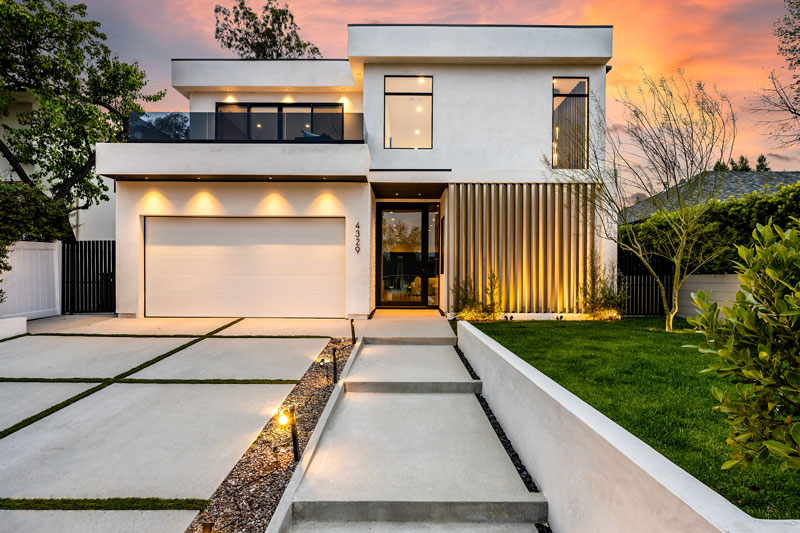
There is a place for 3000 K in specific cases, like modern stucco with steel accents where you want a crisp edge. Even then, consider using 2700 K for garden layers and keep the cooler tone for the architecture. Mixed temperatures in one view tend to look messy unless done intentionally. As a rule of thumb, pick one color temperature family for each contiguous scene. If you can dim or switch scenes for different uses, even better.
Shielding and optics: banish glare, keep the stars
Glare is the enemy of good outdoor lighting. It makes your pupils contract and your overall visibility drop. The cure is shielding and thoughtful optics. For wall packs and garage sconces, look for fixtures with a forward throw cutoff that hides the source above eye level. For downlights under eaves, choose a deep recessed trim or a black baffle, and keep the beam narrow enough to avoid throwing light across to a neighbor.
On the landscape side, choose spotlights with glare shields and louver options. Aim them shallowly to graze trunks and stone, not straight up into the canopy. If you want to show the top of a tall pine, do it from a distance with a tighter beam, and stop short of blasting light into open sky. On patios, pendant and string styles are popular in Denver’s outdoor lighting scene, but the wrong choice can create a glowing plane that competes with the night. If you love the look, run them dim and warm. Better yet, mix them with lower level lighting from table lanterns or integrated step lights so they do not have to carry the whole scene.
Lumens, not watts: how bright is bright enough
Many homeowners still shop by watts, but LEDs flipped that logic. You need to think in lumens, beam spread, and mounting height. For example, a typical front entry can feel composed with a pair of 400 to 800 lumen sconces at 2700 K on either side of the door when paired with a 300 lumen recessed downlight above the threshold. Compare that to a single 1,800 lumen coach light blasting sideways. The first scheme looks welcoming and lets you see faces at eye level without squinting.
Path fixtures in most Denver yard energy lighting projects work at 100 to 300 lumens each if they are well shielded and set 10 to 14 feet apart on curves. Piling them closer just creates a runway effect. For uplighting a feature tree, a 300 to 600 lumen spot with a 15 to 30 degree beam is typically enough for a 12 to 20 foot canopied tree. If you are tackling a 35 foot old cottonwood, you will need a stronger punch, but it can still be warm and controlled.
The lesson is simple. Lower lumens, used with precision, often outperform brute force. If you find yourself reaching for a 2,000 lumen flood in a residential backyard, you probably need to rethink placement and beam angles.
Controls that serve people, not just energy targets
Smart controls help Colorado outdoor lighting blend into the rhythms of the evening. Astronomical time clocks that track sunset and sunrise remove the need to tweak schedules every month. Motion sensors on side yards, drive edges, and alley gates give you light on demand. Dimmers let you set scenes, high for gatherings and lower for quiet late hours. The better you dial these in, the less you run lights full blast when nobody is out there.
In Denver outdoor lighting, I often split controls by zone. Front facade and entry on an astronomical timer, steps and pathways on the same schedule but dimmed to 50 percent after 11 p.m., patio and grill task zones on manual control, and side yard floods on motion. That pattern covers most needs with minimal wasted light. If you want app control, choose a brand with a solid local override, not one that relies completely on a cloud server to turn your porch light on. Winter storms and spotty Wi Fi in older brick homes can make overly clever systems feel brittle.
Pathways and steps: clarity without the runway
The most valuable light in any yard is the light that keeps you on your feet. In Colorado winters, ice and snow shift daily. For Denver pathway lighting and steps, aim for a soft wash that defines edges and risers rather than bright dots. Recessed riser lights or slim linear grazers mounted under treads avoid glare and snow shovels. Bollards can be beautiful, but low glare models with a hidden source are worth the search. On curved flagstone walks, alternate sides and space by effect, not by tape measure. If the stone texture is bold, a wider, softer beam reduces scalloping shadows that can read as tripping hazards.
Architectural accents: honest light on material
Colorado homes use a lot of real material, from moss rock to reclaimed beams to hand troweled stucco. The right lighting makes those textures read true. For stone, grazing from 12 to 18 inches off the wall with a narrow beam shows relief without flattening it. On cedar, a softer wash with a wider beam avoids hot spots. For modern stucco and metal, downlights tucked into soffits make the plane float. Keep sconces scaled to the wall, a common miss on Denver exterior lighting is installing fixtures that are too small. As a rule, the fixture height should be roughly one quarter to one third of the door height for a balanced look. That rule bends for very tall entries, which may need a pair of fixtures or layered light rather than one giant lantern.
Trees and gardens: build scenes, not billboards
Landscape lighting Denver clients love typically mixes a few touches rather than lighting every plant. Pick your heroes. A sculptural aspen grove, a twisting juniper, a boulder with interesting lichen, or the water surface of a small pond can each earn a fixture. If you light everything, nothing stands out. Keep beams controlled to the canopy edge, and let the background fall into gentle shadow. On vegetable beds and pollinator gardens, avoid constant night lighting altogether. Many moths and pollinators rely on dark cues. If you want occasional evening sparkle, use lanterns or low garden stakes on timers that go off early.
Hail, wind, and snow: installation that survives
When I plan lighting installations in Denver, durability shapes many details. Conduits should be deep enough to avoid the tip of a shovel. Direct burial cable needs a solid trench path and slack for ground movement. In areas that get plowed or shoveled aggressively, keep fixtures back from the edge. Brass and copper landscape fixtures survive hail and patina gracefully, which can be handsome against native grasses. Powder coat aluminum is fine when well made, but cheap housings dent and pit faster. Mount junction boxes with in use covers on vertical walls, not facing up to catch water. For decks, use screws and sealants rated for freeze thaw. Where we have heavy clay, I drill drainage holes in uplight wells and set pea gravel under fixtures to prevent sitting water.
Altitude also toughens drivers and LEDs. Heat sinks matter. In a high UV, wide temperature swing environment, low cost drivers die early. If a fixture has a suspiciously light weight and thin casting, skip it. Replacing a $40 bargain every other year costs more than buying a $140 professional grade piece once.
Safety without stadium brightness
People often equate bright with safe, but that is not how your eyes work at night. Glare creates deep shadows and blind spots. Aim for balanced layers. Soft fill on the ground plane, a bit of vertical light at faces, and contrast control at transitions produce better safety than one blinding flood. Keep garage lights warm and controlled. If you need camera friendly light for video doorbells or security cameras, ask for fixtures that play well at low levels with your specific camera model, then test at night. Cameras can often see with much less light than you do, which is perfect for maintaining a dark sky vibe.
Codes, HOAs, and neighborhood norms
Colorado does not have a single statewide dark sky law, but many jurisdictions reference DarkSky International guidance in ordinances. Some mountain and Western Slope communities require fully shielded fixtures and limit color temperature. Along the Front Range, municipalities regulate light spill and glare in commercial and multi family zones, and HOAs often adopt their own stricter standards for residential blocks. Denver outdoor lighting for single family homes is flexible, but you should still aim lights to stay on your property and avoid trespass. If you are in a historic district, fixture style and placement may have additional review.
Before you order fixtures, check your HOA guidelines and your municipality’s online code portal. If you are doing larger landscape lighting Denver projects with a contractor, ask them to handle a quick compliance review. It usually takes an hour, and it prevents surprises later.
Retrofitting existing homes: where to start
Most Denver homes already have a few fixtures, typically a pair by the garage and one at the front door, plus maybe some solar stakes scattered in the lawn. You can make a huge improvement by replacing these with fully shielded, warm LED models and adding two or three well placed pieces.
Start with the front door and approach. Swap any clear glass box that shows a naked bulb for a lantern that hides the source. Change the temperature to 2700 K or 2200 K. Add a recessed downlight at the threshold if the soffit allows. Next, address steps and the main path. Replace solar stakes with wired path lights that shield the source and run on a timer. Finally, add a single tree accent or a wall grazer for character if the budget allows.
Most of the time, that is enough to transform the experience. You can layer in patio and backyard zones later, with the same principles.
Budget tiers that actually make sense
Homeowners often ask what it costs to do outdoor lighting in Denver. Prices swing widely, but there are some practical ranges. A focused tune up with three to five new fixtures and new controls, using existing wiring, often falls in the low four figures. A modest front yard package of 8 to 12 fixtures, wired and installed, typically lands in the mid four figures, depending on fixture quality and site conditions. Full front and back yard lighting with 20 to 35 fixtures, good controls, and a few higher end architectural accents often runs into the low five figures. Brass and copper landscape fixtures, custom path bollards, and complex mounting add cost, but they also add longevity.
Watch for false economies. Spending a little more for shielded, field serviceable fixtures with replaceable LEDs saves you later. Cheap integrated fixtures that fail as a unit are wasteful. In our climate, buy once, cry once fits.
A simple, dark sky friendly plan for a Denver home
- Pick a single warm color temperature, 2200 K for ultra warm or 2700 K for classic warm white, and stick to it for each scene. Choose fully shielded or cutoff fixtures, hide the source, and aim light only where needed, especially at property edges. Size lumens to the task, 100 to 300 lumens for paths, 300 to 600 for most tree accents, 400 to 800 per entry sconce, then adjust with dimmers. Use smart controls, an astronomical timer for on off, late night dimming, and motion only where utility matters like side yards. Build in durability, UV stable lenses, solid finishes, proper drainage, and protection from shovels, hail, and sprinklers.
Follow those steps and you will be well ahead of most installs I am asked to fix.
Common mistakes I see in the field
The bright white mistake is everywhere. A homeowner buys 4000 K fixtures because the box says daylight, thinking it will look cleaner. Outside, it looks clinical and produces more skyglow. The second common error is naked bulbs behind clear glass. You may love the lantern shape, but if the LED filament stares back at you, the glare ruins the scene. Third, too many path lights bunched too close. One every six feet turns your walk into a runway. Back off, pick quality optics, and let darkness breathe between pools of light. Fourth, blasting a beautiful spruce straight up with a wide flood. It makes a beacon for pilots and wastes most of the light. Use a tighter beam, aim to the canopy, and stop at the top.
Two quick case notes from the Front Range
A Wash Park bungalow, brick and timber, had four mismatched coach lights and a handful of solar stakes. We swapped to 2700 K, fully shielded wall fixtures at the front door and garage, added a single 2200 K recessed downlight in the porch ceiling, and ran a new path circuit with three brass shielded fixtures spaced by effect. For character, we grazed the low stone plinth with two 300 lumen spots. The homeowner texted a photo that night. The porch glowed warmly, the steps read clearly, and the house looked cared for without shouting. We had cut total lumens by about 40 percent compared to the old setup, yet visibility improved dramatically.
In Golden, a foothills property backed open space. The owner loved the star field and wanted barely there light. We chose 2200 K across the board. Steps got recessed riser lights, barely 1.5 watts each, aimed down. A small patio used a dimmable overhead, set low after 10 p.m. We lit a single ponderosa from 12 feet away with a narrow beam so the top breathed into darkness. Side yards went on motion only. From the street, you could not see a source, just gentle definition at the entry and path edges. Owls still hunted, and the clients kept their night sky.
Working with pros and products in Denver
There are excellent local contractors who specialize in landscape lighting Denver wide, and a lot of electricians who can install boxes and runs cleanly. For a cohesive, dark sky friendly result, look for someone who asks about your use patterns, walks the property at dusk if possible, brings sample fixtures for a night mockup, and talks in lumens and beam spreads instead of watts. If you are calling around for outdoor lighting services Denver offers a range of firms, from design build specialists to maintenance focused crews. Check that they carry shielded options, offer 2200 K, and can integrate astronomical timers or smart controls you trust.
For products, shop beyond the big box if you can. Many professional lines used by outdoor lighting solutions Denver contractors feature tighter optics, better finishes, and proven drivers. If you prefer DIY, be picky. Avoid fixtures that advertise extreme brightness. Look for integrated baffles, louvers, and easy to adjust knuckles that hold aim after a windstorm. Test a few at night before buying the whole lot. Most reputable dealers will let you demo a couple of heads and a path light.
Where rebates and energy rules fit
Colorado utilities sometimes offer incentives for exterior lighting why not find out more controls on commercial projects. Residential rebates shift year to year. If you are upgrading a larger property or a multi family building in the city, check current programs for occupancy sensors, photocells, and networked controls. Even without rebates, the operational savings from dimming and shorter run times are real. More importantly for our focus here, controls reduce unwanted light, which is the goal.
Tying it back to Denver neighborhoods
Different parts of the metro have different feels. In older tree lined blocks, softer 2200 K lighting quietly honors the character. In new modern infill with metal cladding and crisp lines, 2700 K with clean cutoff optics maintains the architectural intent without becoming stark. In foothill edges, less is more. If you can stand at your property line and not see a bare LED, you are doing your neighbors a favor. On busy streets, tighten beams and keep fixtures slightly dimmer than you think you need. Your eyes adapt. Passing drivers do not need your help lighting the road.
This is also where keywords often show up in online searches. People will type outdoor lighting Denver or landscape lighting Denver, then worry they will get the same bright catalog look everyone else has. You do not have to. The best denver exterior lighting, denver garden lighting, and denver pathway lighting solutions are quiet, warm, and well aimed. They let your materials sing, guide your steps, and leave the sky dark. Whether you are shopping denver outdoor fixtures for a quick refresh or planning full outdoor lighting installations Denver homeowners can phase over time, the same principles carry through.
A short maintenance rhythm that keeps things perfect
- Once each spring, wipe lenses, clear mulch from fixtures, and re aim anything nudged by snow or pets, then check timers for daylight shifts. Before winter, lower any seasonal decor cords, trim plants away from hot lenses, check gaskets, and verify motion sensor ranges after leaves drop.
These two passes a year keep systems performing like new. LEDs last years, but dirt and plant growth still change the look.
The payoff
Colorado outdoor lighting earns its keep when it disappears into experience. You feel the front walk is safe, the patio is comfortable, the garden has depth, and the night sky remains intact. You can achieve that with modest lumen levels, warm color, careful shielding, and smart controls that suit the way you live. If you take one test drive before committing, do a night mockup. Set a few sample fixtures at 2200 or 2700 K, aim them softly, and let your eyes adjust for ten minutes. The right approach will be obvious.
Done well, denver’s outdoor lighting does not fight the stars. It works with them. It respects neighbors and wildlife, stands up to hail and snow, and makes your home look cared for without shouting. That is the sweet spot for outdoor lighting in Denver, and across Colorado.
Braga Outdoor Lighting
18172 E Arizona Ave UNIT B, Aurora, CO 80017
1.888.638.8937
https://bragaoutdoorlighting.com/