
 The term bunion as it is popularly used describes a variety of deformities involving a painful prominence and swelling at the base of the big toe. Orthopaedists use additional terms to describe the different deformities. The condition in which the big toe deviates from the normal position toward the direction of the second toe is referred to as hallux valgus. The word bunion refers specifically to the prominence made of bone and at times an inflamed bursa. This bursa develops on the first metatarsal head at the base of the big toe because of this bony prominence. Although a bunion may develop without hallux valgus, for the purposes of this discussion, the term bunion will include both. Dorsal bunions, are a separate entity, in which the prominence appears on the top of the base of the toe-often the result of an arthritic joint.
 Causes
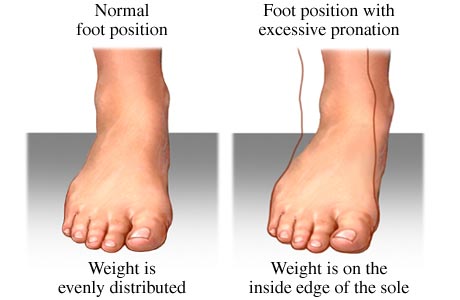
Bunions develop when excess pressure is placed on the tendons and joints of the foot. As a result, the joints can become deformed and unstable. After years of pressure, the MTP joint suffers, leading to abnormal movement and bunions. Bunions are symptomatic of poor foot development (which can be genetic), walking habits, shoes, foot type and other reasons. Women often develop bunions as a result of tight shoes that squeeze the toes together. Bunions can also result from foot injuries, congenital deformities and neuromuscular disorders. Flat foot and low arch problems are often precursors to bunions, as are problems with serious arthritis or inflammatory joint disease. An overlap of the first and second toes often causes irritation and corns and can eventually lead to bunions. Poor motion of the big toe can also be a factor.
Symptoms
Alteration in alignment of the first toe. Pain in the 1st toe joint with movement. Restriction in range of demi pointe. Inflammation of the 1st toe joint. Rotation of the big toe so that the nail no longer faces upwards. Occasionally bruising of the toe nail occurs.
Diagnosis
Your doctor will be able to diagnose a bunion by asking about your symptoms and examining your feet. You may also have blood tests to rule out any other medical conditions, such as rheumatoid arthritis or gout, although this is rare. Your doctor may refer you to a podiatrist or chiropodist (healthcare professionals who specialise in conditions that affect the feet).
Non Surgical Treatment
Wearing the right shoes, using shoe inserts (orthoses) and padding, and taking painkillers can all help to ease your symptoms of a bunion. However, these treatments can?t cure a bunion or stop it getting worse. If you have severe pain or discomfort from a bunion, you may be advised to have an operation to correct it. One of the most important things you can do is to wear the right footwear. You should try to wear flat, wide-fitting shoes with laces or an adjustable strap that fits you properly. You may also want to place a bunion pad over your bunion to give it some protection from the pressure of your shoes. You can usually buy these pads from a pharmacy, or get them from your podiatrist or chiropodist. He or she may also recommend a shoe insert, which can be moulded specifically to your foot. Shoe inserts aim to reduce the pain of your bunion by improving how you walk. You can take over-the-counter painkillers, such as paracetamol or ibuprofen, to help relieve the pain and inflammation of your bunion. Always follow the instructions in the patient information leaflet that comes with your medicine. Medicines give temporary relief but they won?t be able to cure your bunion or prevent it from getting worse. If you have a bunion as a result of underlying arthritis, your doctor may prescribe specific medicines to treat this.

Surgical Treatment
If the above simple measures do not make you comfortable, an operation may improve the situation. An operation will not give you an entirely normal foot, but it will correct the deformity of the big toe and narrow your foot back towards a more desirable shape. There are a lot of different operations for bunions, depending on the severity of the deformity, the shape of your foot and whether arthritis has developed in the big toe joint. An orthopaedic surgeon who specialises in foot & ankle surgery can advise you on the best operation for your foot. However, an operation may not make your foot narrow enough to wear tight shoes, nor can it fully restore the strength of the big toe.
Prevention
The simplest way to reduce your chance of developing foot bunion or bunionette problems is to wear good-fitting shoes. Avoid high heels as they push your feet forwards to the front of the shoe where they get squashed. Also avoid narrow fitting shoes, especially those that are pointed at the front with a narrow toe box as again, these place pressure through the toes pushing them inwards. Shoes should be comfortable and leave enough room for you to wiggle your toes. Remember, bunions rarely affect non-shoe wearing people. Exercising your feet can also help. By strengthening the foot muscles you can improve your foot position which can help reduce foot bunion problems. Simple exercises like picking up small objects with your toes can help.