
Teenagers often measure themselves against a moving target. Growth spurts change their bodies month to month, peers comment without thinking, and a small rectangle of glass sends an endless stream of sharpened images. Body image and eating concerns are common in this landscape. A meaningful percentage of teens wrestle with appearance anxiety or disordered eating patterns at some point, and a smaller subset develop full eating disorders that carry medical risk. The gap between a teen who occasionally skips lunch and a teen whose heart rate drops from malnutrition is wide. Skilled teen therapy bridges that gap by catching problems early, treating them decisively, and pulling family, school, and medical partners into the work.
When concern becomes a problem
Every clinician sees a range. A teen might decide to stop drinking soda for soccer season, then return to regular habits without much fuss. Another starts counting every gram of sugar, refuses family dinners, and insists on running even when lightheaded. Many parents ask, what is typical and what is a red flag?
There are patterns I watch for. Rapid weight loss or stalled growth during a time the body should be gaining, a shrinking list of accepted foods, avoidance of social meals, increasing time spent analyzing the mirror, and rituals that dominate the day. Mood often shifts too. Irritability climbs, flexibility drops, and friendships thin out. Purging or laxative misuse can hide in plain sight with elaborate bathroom routines. For some teens, binge eating episodes appear on the heels of restriction, usually alone and followed by shame.
The body tells its own story. Dizziness on standing, cold intolerance, hair shedding, fatigue that doesn’t match activity, stress fractures, amenorrhea or delayed menstruation, constipation, enamel erosion, parotid swelling. I take any sign of syncope, chest pain, or persistent vomiting as urgent.
There is also the quiet problem of body image. A teen may maintain a medically normal weight yet spend hours pinching skin, comparing thighs, or avoiding swimming because classmates will see their stomach. They might scroll hundreds of images and feel smaller with each thumb swipe. Even without a formal diagnosis, this level of preoccupation steals attention from school, family, and joy.
Why teen therapy is different
Adolescents are not simply small adults. Their brains are still building the networks that underpin planning, reward sensitivity, and impulse control. If we frame therapy around insight alone, we miss the developmental truth: many teens know they are stuck but cannot yet steer out of the rut by themselves. Effective teen therapy leans on concrete structure, consistent coaching, and the presence of caring adults who hold boundaries when motivation wavers.
Two broad approaches show up often in my practice. One, we teach the teen to notice unhelpful thoughts, reduce rigid rules, and practice eating in a steady, flexible way. Cognitive behavioral therapy for eating disorders, acceptance and commitment strategies, and elements of dialectical behavior therapy fit here. Two, we enlist parents and caregivers to lead the charge on nutrition and interrupt damaging behaviors, especially when a teen is medically compromised or deeply entrenched. Family therapy that follows the family‑based treatment model can be powerful in those cases, because it meets the reality that a starving brain struggles to make choices in its own best interest.
Neither path happens in a vacuum. A registered dietitian skilled in adolescent care designs meals that match growth needs and sport demands. A pediatrician monitors vitals, growth charts, and any medical risk. If symptoms are moderate to severe, a psychiatrist joins to manage anxiety, depression, or compulsive features. The team agrees on a plan, tracks progress in numbers and in lived life, and adjusts based on feedback from the teen and family.
First steps: assessment that sees the whole picture
An intake for body image and eating concerns should feel thorough but humane. I ask about growth and puberty timing, medical history, athletic participation, and family patterns around food and bodies. I want a detailed eating picture, not to pry but to understand the rules at play. What gets skipped, what feels safe, what triggers panic. We review exercise, sleep, social media use, and how school stress intersects with meals.
On the medical side, I collaborate with a pediatrician for a current weight and height to plot on the teen’s own growth curve, resting heart rate and blood pressure including orthostatics, and basic labs if indicated. Growth charts often correct misperceptions. A teen who looks lean to one set of eyes may be far below their expected curve for their unique body, and the opposite can be true.
Screening tools can support, not replace, clinical judgment. Brief questionnaires like the SCOFF or longer measures of eating psychopathology can help identify severity. I also consider depression and anxiety screens. When there is a pattern of impulsivity, disorganization, or academic inconsistency that predates the eating concerns, ADHD testing becomes relevant. Untreated attention difficulties show up in the kitchen and at the table. Teens with ADHD can swing between long periods of not noticing hunger and intense binge episodes late in the day. They may struggle with planning meals, transitioning away from screens to eat, or tolerating slow, structured weight restoration. Clarifying whether ADHD is present guides how we pace therapy and whether to bring in specific skills or medications, always with careful attention to appetite effects.
Risk assessment is constant early on. I ask directly about self‑harm, suicidality, and the function of the eating symptoms. Sometimes restriction is a way to manage numbness or to create a sense of achievement. Sometimes purging follows rage or panic. Understanding these links points us toward safer alternatives that meet the same need.

A brief story from the room
A high school junior, track athlete, arrived after a knee injury benched her midseason. In three months she had lost about 12 percent of her body weight, presented with low energy and a resting heart rate in the low 50s, and had cut entire food groups. She denied a problem. Her parents were split, one worried and one praising her discipline. At school, teachers noted slipping concentration. Socially, she had stopped going to team dinners.
We started with medical stabilization at home, with close pediatric oversight and weekly vitals. Family therapy sessions focused on parents taking charge of meals, serving three meals and three snacks, and pausing exercise. This was not a punishment but a medical boundary until her body could support training. We expected pushback and coached the family to hold steady. The athlete returned to eating enough to meet growth and repair needs, then gradually reintroduced training with a sport dietitian setting specific fueling targets before, during, and after workouts. We practiced distress tolerance around the scale, perfectionism around grades, and the awkwardness of eating with peers again. Social media curation became a real task. She deleted two accounts, replaced them with content that showed diverse bodies and strengths, and noticed her urge to compare drop over time.
The work took months, not weeks. There were relapses during exam periods and after an offhand comment from a coach. Each stumble taught us something. By late fall, menstruation returned, her weight sat comfortably on her earlier growth curve, and her parents shifted control of meals back to her with a standing agreement: if vitals dip or meals get chaotic, they step in early.
The family’s role, whether therapy is individual or not
Even teens who want help benefit when parents are aligned. What does alignment look like? Consistent mealtime support, a shared language about bodies, and agreement about exercise boundaries while recovery is underway. I discourage families from running their own nutrition experiments. One parent adding protein shakes while the other praises fasting sends mixed messages. Instead, bring questions to the team and adjust together.
Siblings deserve attention too. They hear the arguments, notice the locked bathroom, and feel the tension at the table. I involve them cautiously, to prevent them from policing their brother or sister, and to help them keep their own relationship with food free from guilt and secrecy.

Family therapy is not about blaming parents for causing an eating disorder. It is about handing them a role they are uniquely positioned to fill. They control the pantry, set the schedule, and can convey care in the most concrete way possible: by preparing, plating, and insisting on enough food, repeatedly, until their teen’s brain and body stabilize.
School and sport partnerships that actually work
Many teens with eating concerns remain in school, and that is often protective. The day has rhythm, meals are social, and counselors can keep an eye on stress. I collaborate with school teams to create reasonable plans. A teen might need a lunch pass to eat in a quieter space with a trusted adult, an accommodation for makeup work during early weight restoration, or limits on physical education if medically unsafe. Some families pursue a 504 plan to formalize supports.
Athletes require extra coordination. Return‑to‑play should not hinge on weight alone. We look for medical stability, normalized labs if previously abnormal, evidence of consistent fueling including pre‑ and post‑workout nutrition, and restored menses for female athletes when applicable. Coaches can help by focusing on performance metrics that reflect adequate fueling, like recovery times and strength improvements, not appearance.
Social media, filters, and the quiet pull of comparison
It is hard to overstate how many hours a teen can spend inside algorithmic feeds. Even kids who know a photo is edited absorb the message. I avoid blanket bans unless content is clearly harmful. Instead, we audit. Which accounts make them feel small or panicked? Which ones show a variety of bodies, foods, and activities without moralizing them? Many teens benefit from setting app timers and keeping phones out of rooms during meals and at night. A simple, concrete shift like following strength training accounts that focus on function over look can ease pressure. So can expanding the feed beyond fitness to art, music, comedy, or nature, reminding the brain it is more than a body.
Culture, identity, and language that fits the teen
Body ideals differ across cultures and communities. A teen raised in a family that celebrates hearty shared meals might feel shame if a therapist labels those meals as excessive. Another teen, navigating gender dysphoria, may restrict to mute anxiety about developing secondary sex characteristics. Boys are often overlooked because we equate thinness concerns with girls, yet I see boys fixate on leanness or muscle in ways that erode health just as quickly. Nonbinary teens may need different markers of recovery than cisgender peers, and conversations about body trust must respect that landscape.
Food insecurity complicates the work. Telling a family to buy more calorie‑dense foods when the budget is tight can land poorly. Creative planning matters: school meal programs, community resources, and cost‑efficient staples that still deliver balanced nutrition. Culturally preferred foods should remain in the plan. Recovery is stronger when it happens inside one’s lived culture, not outside it.
The nuts and bolts of nutrition rehabilitation
No treatment moves without fuel. Early stages often require a predictable pattern: three meals and two to three snacks, eating at roughly the same times daily. This routine supports the gastrointestinal system, which can feel sluggish after restriction, and helps the brain trust that food is coming. Some teens prefer numbers and exchange systems. Others do better with plated meals and visual cues. I aim for gradual increases that account for refeeding risk, which is low in many outpatient cases but not negligible, especially after significant weight loss or prolonged malnutrition.
We plan for problem times. Morning classes can swallow breakfast. After school is a danger zone for binge episodes. Late nights pull teens into mindless snacking or avoidance. I like to set anchor points with specific, realistic options stored at school, in a backpack, and at home. We pair eating with structure, like sitting at the table without screens for 20 minutes, to counteract impulsive grazing or meal skipping.
Weighing can be fraught. Blind weights in the pediatrician’s office, with numbers shared only with parents and clinicians, reduce fixation for some teens. Others prefer to see the number consistently to desensitize. The choice depends on the function of the behavior. Vitals, energy, school focus, and social reengagement often tell the truest story of progress.
Medications and how they fit
Medication is never a substitute for adequate nutrition, and it is not a universal remedy. That said, targeted use can ease co‑occurring conditions. Selective serotonin reuptake inhibitors can help with depression and anxiety that persist after weight restoration or in cases without significant malnutrition. Atypical antipsychotics like low‑dose olanzapine have been used to reduce ruminative thoughts and agitation in restrictive eating disorders, particularly when fear of weight gain blocks progress. Their metabolic side effects require careful monitoring.
For teens with binge eating patterns, lisdexamfetamine has FDA approval in adults. In adolescents, any stimulant must be considered cautiously, especially if restriction or low weight is present, as appetite suppression can worsen the core problem. This is where solid assessment and, if needed, ADHD testing come in. When ADHD is confirmed and treatment is indicated, clinicians can choose medication types and dosing schedules that minimize appetite impact, pair them with explicit fueling plans, and intensify meal support during initial titration. Sometimes nonstimulant medications are a better fit.
Levels of care: knowing when outpatient is not enough
Most teens start therapy in an outpatient setting. The majority, with consistent family involvement, do well there. But there are clear thresholds that prompt a higher level of care. Worsening vitals, rapid weight loss, inability to complete meals at home, frequent purging, or persistent suicidality are common triggers. Intensive outpatient programs offer several therapy hours in the late afternoon or evening and supervised meals. Partial hospitalization programs provide full‑day structure with medical oversight and multiple meals. Residential treatment is 24‑hour support in a nonhospital setting, helpful when the home environment cannot currently interrupt the illness. Inpatient hospitalization is for acute medical stabilization or imminent risk.
Families sometimes worry that stepping up care is a failure. It is not. It is using the right tool at the right time. The best programs bring parents in early, teach concrete skills, and plan for step‑down so gains hold at home.
What progress looks and feels like
Recovery is not a straight line. Still, it leaves footprints. Energy returns first for many teens, even before full weight restoration. They laugh more, tolerate changes to the plan with less panic, and say yes to a friend’s invitation to get food after school. Personal hygiene often improves as depression lifts. For menstruating teens who lost their period, its return is an important marker of internal health. Athletes notice that practices feel easier and injuries fewer when fuel is consistent. Perfectionistic rules soften. A teen who once demanded only one brand of yogurt at exactly 7 a.m. Can now choose from several options and eat at 6:45 or 7:30 without spiraling.
Setbacks teach. A comment from a relative at a holiday meal may sting and lead to a missed snack. A tough exam week can tempt the old bargain of skipping lunch to study. We build relapse prevention plans around these moments, not in spite of them, including language https://telegra.ph/What-Not-to-Say-Before-ADHD-Testing-Avoiding-Bias-04-08 to use with others and self‑checks that redirect quickly.
Choosing a therapist or clinic you can trust
Finding the right fit matters as much as the model. Credentials help, but you also want a clinician who can speak plainly, coach parents without shaming them, and respect a teen’s voice even when setting limits. Use this short checklist when you interview providers:
- Ask about their specific experience with adolescent eating disorders and body image concerns, including typical caseload and outcomes. Clarify how they involve parents and whether they collaborate with a dietitian and pediatrician. Inquire about how they decide on level of care changes and how they coordinate school or sports needs. If ADHD or anxiety is on your radar, ask whether they can provide or refer for ADHD testing and integrated treatment. Request a clear plan for measuring progress that includes behavior, medical markers, and quality of life.
Practical things families can do this week
Perfect conditions are rare. Start with what is in reach and scale up. Here are five actions that often move the needle:
- Set consistent meal and snack times, then sit with your teen while they eat, keeping conversation neutral and supportive. Remove triggers you control, like bathroom scales or fitness trackers, if they fuel obsession rather than health. Coordinate with your pediatrician for vitals and a growth chart review, and share those data with your therapist and dietitian. Audit your teen’s social media together and curate a feed that broadens their world instead of shrinking it. Create a simple school plan for lunch and snacks, including where they will eat and what backup options are available if the first plan fails.
The edge cases that keep us honest
Some teens will insist they simply want to eat clean and perform at their best. They might have labs in normal ranges and a body that does not read as underweight. Yet their life grows narrow. Others present with binge eating without any body dissatisfaction they can name, driven instead by sensory seeking, boredom, or loneliness. A few say they feel most themselves when they are hungry, a feeling linked to trauma or control. One group avoids eating because of nausea or fear of vomiting, not weight concerns at all, pointing us toward ARFID and a modified approach.
These edge cases remind us to listen closely and to tailor the plan. A teen with sensory sensitivities may need exposure work that respects texture aversions while building tolerance. An athlete with a deadline to return to play may need a carefully staged reintroduction of training that requires daily fuel logs for a short window, then a quick fade to avoid fixation. A teen exploring gender identity may need a therapist who can hold nuanced conversations about body changes and dysphoria while still tackling unsafe restriction.
What helps therapy stick
Change sticks when it shows up not just at the table but across a teen’s world. I anchor therapy goals to moments that matter to them. Eating enough to hike with friends without fearing a fainting spell. Building strength to play an instrument for an entire rehearsal without shaky hands. Having breakfast before an exam so the mind can actually use the studying they did. Bringing back family pizza night not as a test but as a pleasure. The more concrete and personal the goals, the less abstract the work feels.
Consistency is the real engine. Parents who hold boundaries with warmth. Teachers who discreetly check in. Clinicians who avoid power struggles and keep files, not secrets, sharing information with permission so the team can adjust quickly. And for the teen, practicing skills even when they resent them. Many later say the skills became second nature after repetition, not after a single insight.
Where to go from here
If your family sees pieces of this in your home, reach out. Start with your pediatrician to rule out medical risk and get a baseline. Contact a therapist or clinic that specializes in teen therapy for eating and body image concerns. If attention challenges complicate meals or routines, ask about ADHD testing and how results will inform the treatment plan. Bring one another to the table, literally and figuratively. Recovery grows from the ordinary done steadily: breakfast on a Tuesday, a snack packed even when the bus is late, a parent who sits quietly through the storm and stays present.
The finish line is not a shape in the mirror. It is a life with enough room for school, friends, family meals, sport or art, rest, and the sort of confidence that does not depend on a number. Families, clinicians, teachers, and coaches can help a teen get there together, step by step, with patience that matches the pace of a body and brain healing in real time.
Address: 1190 Suncast Lane, Suite 7, El Dorado Hills, CA 95762
Phone: (530) 240-4107
Website: https://www.everyheartdreamscounseling.com/
Email: counseling@everyheartdreams.com
Hours:
Monday: 9:00 AM - 8:00 PM
Tuesday: 9:00 AM - 8:00 PM
Wednesday: 9:00 AM - 8:00 PM
Thursday: 9:00 AM - 8:00 PM
Friday: 9:00 AM - 8:00 PM
Saturday: Closed
Sunday: Closed
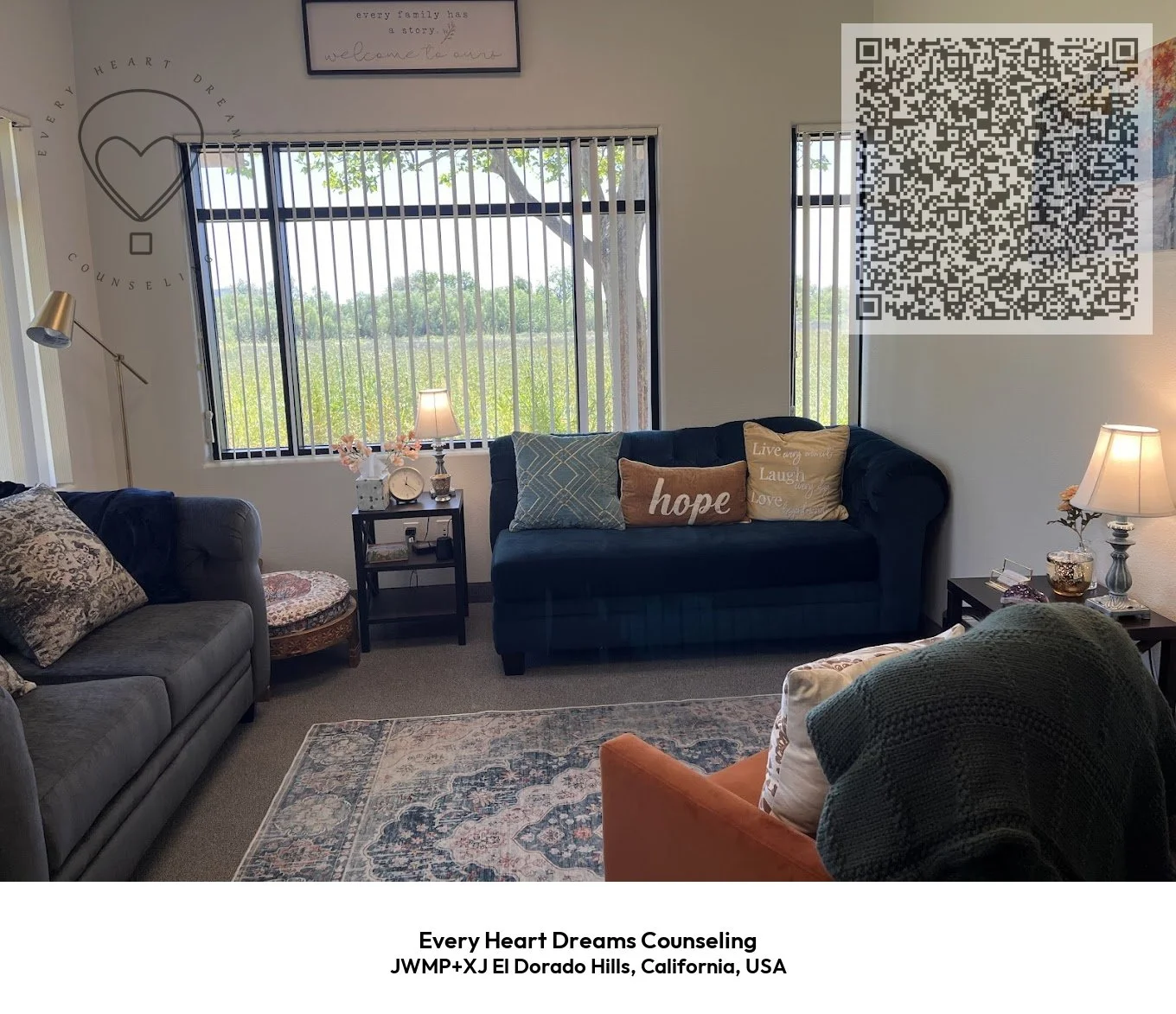
Open-location code (plus code): JWMP+XJ El Dorado Hills, California, USA
Map/listing URL: https://maps.app.goo.gl/QkM4GXutsKBynwmB9
Embed iframe:
Socials:
https://www.instagram.com/erinneverhartlmft/
https://www.facebook.com/everyheartdreamscounseling/
The practice works with children, teens, young adults, adults, couples, and families who need support with trauma, anxiety, depression, relationship struggles, emotional immaturity, and major life stress.
Clients in El Dorado Hills can explore services such as family therapy, teen therapy, adult therapy, child therapy, ADHD testing, cognitive assessments, and personality assessments.
Every Heart Dreams Counseling uses an integrated trauma treatment approach that may include DBT, EMDR, Brainspotting, IFS, and trauma-informed yoga depending on client needs.
The practice offers both in-person sessions in El Dorado Hills and telehealth options for clients who prefer added flexibility.
Families and individuals looking for trauma-focused counseling in El Dorado Hills may appreciate a practice that combines relational support with behavioral and somatic approaches.
The website presents Every Heart Dreams Counseling as a compassionate group practice led by Erinn Everhart, LMFT, with additional support from Devin Eastman.
To get started, call (530) 240-4107 or visit https://www.everyheartdreamscounseling.com/ to request an appointment.
A public Google Maps listing is also available for location reference alongside the official website.
Popular Questions About Every Heart Dreams Counseling
What does Every Heart Dreams Counseling help with?
Every Heart Dreams Counseling helps children, teens, young adults, adults, couples, and families with trauma, anxiety, depression, relationship conflict, emotional immaturity, self-injury concerns, and related mental health challenges.
Is Every Heart Dreams Counseling located in El Dorado Hills, CA?
Yes. The official website lists the office at 1190 Suncast Lane, Suite 7, El Dorado Hills, CA 95762.
Does the practice offer in-person and online sessions?
Yes. The contact page says sessions are currently available in person and via telehealth.
What therapy approaches are listed on the website?
The website highlights integrated trauma therapy using DBT, EMDR, Brainspotting, IFS, and trauma-informed yoga.
Does the practice provide testing and assessment services?
Yes. The website lists ADHD testing, cognitive assessments, and personality assessments.
Who leads the practice?
The official website identifies Erinn Everhart, LMFT, as Clinical Director and Owner.
Who else is part of the team?
The site also lists Devin Eastman, LPCC, PsyD Student, as part of the practice.
How can I contact Every Heart Dreams Counseling?
Phone: (530) 240-4107
Email: counseling@everyheartdreams.com
Instagram: https://www.instagram.com/erinneverhartlmft/
Facebook: https://www.facebook.com/everyheartdreamscounseling/
Website: https://www.everyheartdreamscounseling.com/
Landmarks Near El Dorado Hills, CA
El Dorado Hills Town Center is one of the best-known local destinations and a practical reference point for people searching for counseling nearby. Visit https://www.everyheartdreamscounseling.com/ for service details.
Latrobe Road is a familiar local corridor that helps many residents place services in El Dorado Hills. Call (530) 240-4107 to learn more.
US-50 is the main regional route connecting El Dorado Hills with nearby communities and is a useful reference for clients traveling to appointments. Telehealth sessions are also available.
Folsom is closely tied to the El Dorado Hills area and is a common reference point for people looking for therapy in the broader region. The practice serves individuals and families in person and online.
Town Center Boulevard is another recognizable landmark area for local residents seeking nearby mental health services. More information is available on the official website.
El Dorado Hills Business Park corridors help define the broader local setting for professional services in the area. Reach out through the website to request an appointment.
Promontory and Serrano neighborhoods are familiar community reference points for many local families in El Dorado Hills. The practice offers child, teen, adult, couple, and family therapy.
Folsom Lake is one of the region’s most recognizable landmarks and helps place the practice within the larger El Dorado Hills and Folsom area. The website explains the therapy approach and specialties.
Palladio at Broadstone is another useful point of reference for people coming from nearby Folsom communities. Every Heart Dreams Counseling offers trauma-informed support with both office and telehealth options.
The El Dorado County and Sacramento County border region makes this practice relevant for families seeking counseling in the greater foothill and suburban Sacramento area. Visit the site for current intake details.