
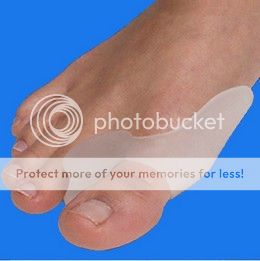
Overview  The best thing to say about the natural history of bunions is that they are unpredictable. This is both in terms of whether the bunion deformity will progress, and also whether the bunion will become painful (if it is not already painful). It would probably however be true to say that once a previously painfree bunion has started to become painful it is not common for the bunion to go back to being entirely pain-free. Causes The causes of bunions are "multifactorial". In other words generally many things contribute to their occurence. Shoewear per se is a contributory factor but it isn't possible to say that the type of shoewear is necessairily relevant. Often there is a hereditary component with other family members also suffering with the same condition. SymptomsAlteration in alignment of the first toe. Pain in the 1st toe joint with movement. Restriction in range of demi pointe. Inflammation of the 1st toe joint. Rotation of the big toe so that the nail no longer faces upwards. Occasionally bruising of the toe nail occurs. Diagnosis The doctor considers a bunion as a possible diagnosis when noting the symptoms described above. The anatomy of the foot, including joint and foot function, is assessed during the examination. Radiographs (X-ray films) of the foot can be helpful to determine the integrity of the joints of the foot and to screen for underlying conditions, such as arthritis or gout. X-ray films are an excellent method of calculating the alignment of the toes when taken in a standing position. Non Surgical Treatment Most bunions can be treated without surgery. The first step for treating bunions is to ensure that your shoes fit correctly. Often good footwear is all that is needed to alleviate the problem. Shoes that are wide enough to avoid pressure on the bunion are the obvious first step. Look for shoes with wide insteps and broad toes and definitely no high heels. Sometimes, you can get your existing shoes stretched out by a shoe repairer. Seek advice from a podiatrist. Pads and toe inserts. Protective bunion pads may help to cushion the joint and reduce pain. Toe inserts are available that splint the toes straight. It may be recommended that you wear some orthotics to improve your foot position when walking. Medicines. Some people find anti-inflammatory medicines, such as ibuprofen or aspirin, or paracetamol help ease the pain of their bunions.
  Surgical Treatment The most simple procedure is reducing the bump, and while there will be a little pain and swelling afterwards and your mobility will be restricted, the recovery time is short (ie a few weeks), but it may not fix the underlying cause. More serious ops might involve lasers, robots, cutting bone in the foot and trying to reposition it, and/or inserting pins or wires. It can take months to recover fully and you might need a cast. Mike O?Neill recommends seeking an NHS consultant surgeon who specialises in bunion removal to ensure the best possible outcome. The type of anaesthetic, local or general, will depend on the procedure, but most are day cases and the surgery will take from less than 30 minutes to a couple of hours. Waiting times vary but from your first outpatient appointment to the op would be a minimum of a few months. Private treatment (preferably by an NHS consultant surgeon) is likely to cost thousands of pounds. A new less, invasive procedure called surgical correction of hallux valgus that makes a small incision in the bone has recently been approved for use in the NHS but there is still no conclusive evidence on how effective it is and it is not widely available. Prevention Because bunions develop slowly, taking care of your feet during childhood and early adulthood can pay off later in life. Keep track of the shape of your feet as they develop over time, especially if foot problems run in your family. Exercising your feet can strengthen them. Learn to pick up small objects, like a pencil or pebble, with your toes. Wear shoes that fit properly and don't cramp or pinch your toes. Women should avoid shoes with very high heels or pointed toes.
- 前ページ
- 次ページ