
こんにちは、azrocksです。
英文を効率よく和訳したいので、ネットで調べてみました。
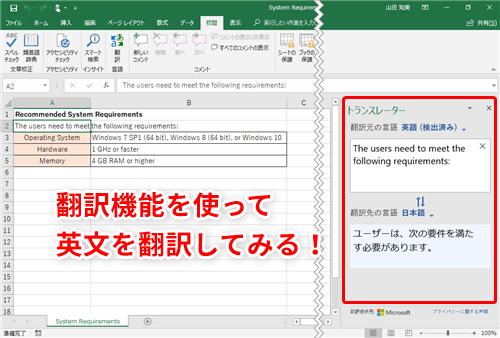
すると、Excelの校閲を使った翻訳や

GoogleシートのGoogleTranslate関数を使った翻訳があることがわかりました。

両方とも各セルが数秒で翻訳されるので、とても効率!
ただ一応意味を理解はできるのですが、翻訳の精度・流暢性は残念なレベルでした。
特にGoogleTraslate関数はGoogle翻訳と同じかと思いきや、Google翻訳の方がはるかに優れものでした。
DeepL関数もあるらしいのですが、、試行錯誤してもうまくいきませんでした。IT能力高い人が羨ましい…
今日の翻訳
The Banded Iron Formation (BIF)
縞状鉄鋼層(BIF)
A special kind of stratified jasper is associated with the Banded Iron Formations. These formations are huge deposits of layered hematite or magnetite alternated with jasper. They are found in almost all continents and dated from 3.5 billion to 1.8 billion years ago.
特殊な層状ジャスパーは、縞状鉄鋼層(Banded Iron Formations)と呼ばれる。これらの地層は、ヘマタイトやマグネタイトがジャスパーと交互に層状になった巨大な堆積物である。ほぼすべての大陸に分布し、35億年前から18億年前のものとされている。
At the beginning of the history of planet Earth, the atmosphere did not contain oxygen and was instead made up mostly of methane, carbon dioxide and other poisonous gases. The greenhouse effect at the time was a much more serious phenomenon than today and the seas were extremely acidic. The high acidity of the seawater was responsible for very high concentrations of dissolved iron and silica. It was this post-nuclear environment that caused the oceans’ conversion into the largest bacterial culture ever: the primordial soup. From this soup developed the first forms of life and since there was nothing more to eat, some found support from the reduction of methane and others even from iron. Still others created photosynthesis. All these processes produce oxygen as a gaseous waste and so it is thanks to these early organisms that Earth very, very slowly turned into a livable planet.
地球史の初期、大気は酸素を含まず、代わりに大部分がメタンや二酸化炭素などの有毒ガスで構成されていた。当時の温室効果は現在よりもはるかに深刻な現象であり、海は強い酸性だった。強酸性の海には非常に高濃度の鉄やシリカが溶解していた。このあたかも核戦争後の環境が、海を史上最大の細菌培養物である「原始スープ」に変えた。このスープから最初の生命体が誕生した。もう食べるものがなかったため、ある生命体はメタンから栄養を得、また別の生命体は鉄から栄養を得た。また、光合成を行う生命体もいた。これら全てのプロセスでガス状の廃棄物として酸素が生成され、地球がとてもとてもゆっくりと住みやすい惑星に変わっていったのは、このような初期の生命体のおかげである。
However, for the first 1700 million years all oxygen produced was oxidized, mostly from iron which was laid on the seafloor. In strongly acidic conditions, the solubility of silica is very high and, therefore, a lot of dissolved silica was present in the seawater, leading to its deposits on the seafloor. The result are the Banded Iron Formations. It has been calculated that the oxygen content in all the known Banded Iron Formations 1s at least twenty times greater than all the oxygen currently in the atmosphere. When the BIFs end to be deposited, the formation of the atmosphere with oxygen begins. This was initially a deadly poison, but some organisms learned how to exploit it.
しかし、最初の17億年の間、生成された酸素はすべて消費された。海底に堆積した鉄がその大部分を消費した。強酸性条件ではシリカの溶解度が非常に高いため、海水中に高濃度のシリカが溶解し、その後海底に堆積した。その結果が縞状鉄鉱層である。現在知られている縞状鉄鉱層の全酸素量は、現在の大気中の酸素量の少なくとも20倍以上と計算されている。(17億年かけて)BIFの堆積が終了すると、酸素による大気の形成が始まった。これは当初は生物にとって猛毒であったが、一部の生物はこれを利用する方法を学んだ。
Today, the BIF itself is intensely exploited for extraction of iron in Australia, South Africa and Minnesota. In all these places, there are banded red jaspers interlayered with hematite. From these formations also originates most of the Tiger’s Eye and the Pietersite.
現在BIFは、オーストラリア、南アフリカ、ミネソタなどで鉄の抽出によく用いられる。これら全ての場所で、ヘマタイトにはさまれた層状の縞模様赤色ジャスパーが見られる。タイガーズアイやピーターサイトの大部分もこれらの地層で形成される。


上の翻訳で内容を伝えきれているか不安なので、補足します。
強酸性の原始の海には高濃度の鉄とケイ素が溶けていました。海中のシアノバクテリア等が酸素を放出するようになると、酸素は鉄やケイ素と結びついて沈殿して海底に堆積しました。海水の温度やpH等の影響で、酸化鉄が沈殿しやすい環境と酸化ケイ素が沈殿しやすい環境が交互に訪れたようで、鉄鉱物とシリカ鉱物が交互に層構造を作る縞状鉄鋼層が形成されたようです。
ジャスパーの中で起源がダントツで古い(35億~18億年前)のが縞状鉄鋼層なのです。