
Safety is not a slogan with injectables. It is a mix of science, regulation, product integrity, injector skill, and the right patient for the right treatment. I have treated executives who want a quiet refresh, new parents who are sleeping four hours a night, powerlifters with masseter tension from bruxism, and a violinist who could not play through chronic migraines. Across those faces and stories, one question always sits at the center: is Botox safe when used for cosmetic or medical reasons?
Botox is a brand name for onabotulinumtoxinA, a neuromodulator that temporarily relaxes specific muscles by blocking acetylcholine, the neurotransmitter that tells a muscle to contract. In the right dose, placed into the right layer, it softens dynamic lines and manages certain overactive muscle or gland problems. Safety depends on respecting those variables.
What FDA approval actually covers
The U.S. Food and Drug Administration does not approve broad ideas like “wrinkle relaxer.” It approves specific indications at studied doses. For Botox:
- In 1989, the original approvals were for eye disorders such as strabismus and blepharospasm, then cervical dystonia. In 2002, Botox Cosmetic was approved for moderate to severe glabellar lines, the vertical “11s” between the eyebrows. Later approvals followed for axillary hyperhidrosis, chronic migraine prevention, upper and lower limb spasticity, and cosmetic crow’s feet. In 2017, approval expanded to horizontal forehead lines when used with glabellar treatment.
That matters for a simple reason. FDA approval means the product, dose ranges, technique, and safety profile were studied for that use. Physicians often use Botox off label when data and experience support it, for example for “bunny lines” on the nose, a subtle brow lift, a “lip flip,” chin dimpling, jawline slimming in hypertrophic masseters, platysmal neck bands, or for TMJ symptoms and teeth grinding. Off label does not mean unsafe, but it does mean you should ask your injector how many of those cases they do, what dose they use, and what complication rate they see.
Other brands exist. Dysport, Xeomin, and Jeuveau are also FDA approved neuromodulators, each with its own formulation. Units are not interchangeable. Twenty units of Botox Cosmetic are not equal to twenty units of Dysport, and dose conversion is injector dependent.
How Botox works in the body
At the injection site, the toxin binds to the neuromuscular junction and prevents release of acetylcholine. The muscle does not get the “contract” message as strongly, so it rests. Nerves sprout new terminals over time, and muscle function returns. That is why Botox results are temporary.
It does not fill, lift, or replace volume. Botox is not a filler. Hyaluronic acid fillers add structure and contour. Botox treatment relaxes movement. Patients sometimes arrive asking for “Botox filler” because they want both. An experienced injector will separate these tools. If the issue is a deep etched line plus deflation, the plan may include both a wrinkle relaxer and a filler, staged and dosed for a natural result.
Common myths I hear, and what the evidence shows
A toxin sounds scary. The word itself invites myths. A few come up so often that they deserve clear answers.
Frozen face happens when dosing and placement ignore the anatomy of animation. The best Botox results look like you on a good day, not like a wax figure. Preserving frontalis function laterally helps you lift your brows to express surprise. Under-treat the depressor anguli oris and your smile can stay symmetric. It is art informed by anatomy.
Botox makes wrinkles worse if you stop. No. When effects wear off, your muscles work as they did before treatment. The lines resume their baseline progression, which still reflects your age and sun history. Many people notice a net benefit over time because months of reduced creasing allow the skin to remodel.

Toxin spreads all over the body. At cosmetic doses and with proper technique, diffusion is measured in millimeters, not inches. Rare cases of systemic effects have occurred in high dose medical cases or in vulnerable patients. The FDA includes a boxed warning to underscore the importance of correct dosing and patient selection, especially in children treated for spasticity. Cosmetic doses for frown lines, crow’s feet, or forehead lines are far below those levels.
You cannot get Botox if you are athletic or “strong.” You can, but dosing differs. Men, weightlifters, and people with naturally hypertrophic muscles often need higher Botox units for the forehead or masseters than a petite, low muscle tone patient. The goal is functionally relaxed, not weak.
Botox fixes under eye bags. Not really. The under eyes are an area where a few superficial units can reduce a twitchy orbicularis or smooth a crinkle, but true bags involve fat pads, laxity, and often require a different plan. This is where the “Botox near me” search meets the reason to see a specialist who will not oversell a tool for the wrong job.
Who is a good candidate, by age and anatomy
I treat a lot of first timers in their late 20s and early 30s who are thinking about preventative Botox. If your lines are still only visible during expression, low dose “Baby Botox” or “Micro Botox” can soften the crease pattern without changing how you look at rest. Think 6 to 10 units in a forehead with very horizontal lines, or 8 to 12 units across the crow’s feet in a patient who squints.
By the 40s and 50s, collagen has thinned, sun and time have etched in static lines, and strategy shifts. You can still treat the dynamic component, but skin quality, volume loss, and gravity enter the chat. Combining neuromodulator treatment with medical grade skincare, sun protection, and in some cases collagen-stimulating procedures makes more sense than chasing higher and higher Botox doses.
For men considering “Brotox,” the conversation is similar. Stronger muscles mean higher doses and wider injection grids. The aesthetic target is different too. Many men prefer to keep more lateral forehead movement and avoid any lift that curves the brow into a feminine arc.
People with neuromuscular disorders, active skin infections, uncontrolled autoimmune disease, or those who are pregnant or breastfeeding should avoid Botox. A careful history matters. I ask about aminoglycoside antibiotics, anticoagulants, prior eyelid surgery, dry eye, and headaches, because each can change risk or technique.
The Botox session, from mapping to minutes
A proper Botox appointment starts with a consultation where you animate. I want to see the frown strength in your glabellar complex, how your frontalis lifts, what your orbicularis does when you laugh, and whether your brow is already low or asymmetric. In patients with low set brows, over-treating the forehead can drop the brows and crowd the eyes. In those patients I treat the 11s and tails of the brows and go lighter centrally.
Dosing is not a secret, and ranges help you sanity check a plan. For glabellar lines, 15 to 25 units of Botox is standard in women and 20 to 30 in men. Forehead lines often take 6 to 20 units depending on width and strength. Crow’s feet may need 6 to 12 units per side. Bunny lines may soften with 2 to 5 units per side. A lip flip uses 4 to 8 units total to relax the upper lip purse, while vertical lip lines might need a few microdroplets. The chin’s “orange peel” texture, from mentalis activity, responds to 4 to 8 units. A subtle brow lift is achieved by relaxing brow depressors laterally with 2 to 4 units per point. Platysmal neck bands can take 20 to 60 units across multiple bands. Masseter Botox for jaw slimming or bruxism usually ranges from 20 to 40 units per side, staged over sessions for a gentle contour shift. For axillary hyperhidrosis, 50 to 100 units per underarm is common. For chronic migraine prevention, the FDA approved protocol uses 155 units across fixed head and neck sites every 12 weeks. For overactive bladder, urologists may use 100 to 200 units, placed cystoscopically, which is outside the scope of a cosmetic clinic.
Most Botox injections take under 15 minutes. I use an insulin syringe, a fine needle, and clean technique. You may feel two seconds of sting, then nothing. Ice helps with comfort and bruising risk. Topical anesthetic is rarely needed for the face, more often for sweaty underarms during hyperhidrosis treatment.
What you feel and see after the procedure
You can go back to work. Makeup can go on after a few hours if the skin is intact. Most patients see nothing but faint redness at the injection points for 20 to 60 minutes. Small bruises happen in a minority, especially when we treat close to vessels at the crow’s feet or under eyes. A light headache the first day occurs in some forehead treatments. The “heavy” feeling is more likely if your frontalis is over-relaxed or if a low set brow had its lift removed. Careful mapping reduces this.
Results begin to appear within 2 to 3 days. The full effect shows at about 10 to 14 days. I schedule a two week follow up for first time Botox patients, or anyone with a change in plan, to fine tune asymmetry with a small touch up if needed. That check-in is where you learn what dose and pattern your face enjoys.
How long does Botox last? For the upper face, three to four months is average. Athletes or very expressive patients may metabolize closer to 10 to 12 weeks. Crow’s feet and glabellar lines often stay soft longer than the forehead. Masseter treatment lasts 4 to 6 months, and the contour change can persist if you have muscle atrophy over time. Hyperhidrosis relief commonly lasts 4 to 9 months, depending on dose and baseline sweat levels. For migraines, the 12 week schedule is standard because the goal is to prevent a threshold of attacks.
Real risks, not scare stories
Every medical tool carries risk. With Botox injections, the common side effects are brief and manageable: redness, small bruises, swelling, a dull headache, or tenderness. Less common but impactful effects include eyelid ptosis, brow heaviness, smile asymmetry, dry eye, diplopia when injecting near the crow’s feet in susceptible patients, or dysphagia when treating neck bands. Ptosis rates for glabellar treatment are low, often quoted around one to three percent, and technique matters. Avoid massaging the area after treatment, do not press where product could track inferiorly, and respect anatomy around the levator palpebrae.
Systemic side effects are exceedingly rare at cosmetic doses. Still, patients with neuromuscular junction disorders or on medications that affect transmission, like aminoglycosides, must be counseled carefully or advised to avoid treatment. I will not inject pregnant or breastfeeding patients due to lack of safety data. Allergic reaction to onabotulinumtoxinA is rare but possible. If you feel short of breath, weak, or develop difficulty swallowing after treatment, you should seek care promptly.
Aftercare that actually helps
I hand the same simple instructions to every Botox beginner and every long term patient. They keep the product where it belongs and reduce avoidable problems.
- Stay upright for 4 hours, and avoid pressing or rubbing the treated areas that day. Skip heavy exercise, hot yoga, and saunas for 24 hours. Keep skincare gentle that evening. No facials, microcurrent, or aggressive devices for 3 to 5 days. Make natural expressions. Light movement can help the product settle evenly, but do not “work it in.” Call if you notice eyelid droop, double vision, or trouble swallowing in the days that follow.
Downtime is minimal. If you are planning Botox before a wedding or on-camera event, I recommend doing it at least three weeks in advance so any touch up can settle.
What good Botox looks like, and how to get it
I keep photographs of subtle transitions to show patients. One is a man in his early 40s who works in finance and speaks to a trading floor all day. His “11s” were deep from brow knitting. We treated the glabellar complex with 20 units, and added 6 units to the brow depressors laterally to relax the pull. At two weeks he still looked like himself, but the edge softening made him seem well rested. His forehead lines remained, by design, since he did not want to trade lift for glassy stillness.
Another patient, a 28 year old dental hygienist with early crow’s feet and a gummy smile, wanted to stay expressive. We treated 8 units per side at the crow’s feet and 2 units per side at the lateral nasalis for her gummy smile. Her laughter still crinkled, but did not etch, and her gum show dropped by a couple of millimeters without freezing the upper lip. Those tiny changes read as fresh, not “done.”
Good Botox is not invisible because nothing happened. It is invisible because everything still moves, just a touch less.
The money question: price, units, and “deals”
How much does Botox cost? Practices price per unit or per area. In the United States, the Botox price per unit ranges from about 10 to 20 dollars, depending on region, injector experience, and practice overhead. An area like the glabella might be quoted as a flat fee that assumes 20 units. A full upper face, glabella plus forehead plus crow’s feet, can range from 300 to 800 dollars or more, again depending on dose and geography.
If you see “Cheap Botox” or “Botox deals” that look too good to be true, ask questions. Counterfeit or diluted product exists. Botox must be ordered through authorized channels, shipped cold, and stored properly. Units should be documented. A “Botox special” can be perfectly legitimate when a practice runs a promotion or participates in a manufacturer rewards program. “Affordable Botox” comes from fair pricing and right dosing, not from cutting corners on safety.
Choosing the right injector
Credentials matter, but so does repetition. Your best Botox provider is someone who performs neuromodulator treatments daily, understands facial anatomy in three dimensions, and can explain risks and alternatives without sales pressure. Dermatologists, plastic surgeons, facial plastic surgeons, oculoplastic surgeons, and experienced nurse injectors working under physician supervision all perform excellent work. A boutique Botox med spa can be outstanding if it is well led and well trained.
Here are focused questions that help you evaluate any clinic or Botox clinic:
- How many Botox sessions like mine do you perform in a typical week, and who will inject me? What Botox dose and units do you plan for each area, and how do you adjust for my anatomy? What is your touch up policy at two weeks, and is there a fee? What Botox side effects do you see most in your practice, and how do you manage them? If I eventually want Botox and filler, how would you stage that plan and why?
Photos help, but ask for images that match your age, sex, and animation pattern. The “Best Botox provider” for a 25 year old influencer who wants a reflective forehead may not be the same injector for a 55 year old trial attorney who needs a calm brow that still lifts.
Botox vs Dysport vs Xeomin vs Jeuveau
All four are wrinkle relaxers in the same therapeutic family. Dysport often has a slightly faster onset in my hands, sometimes by a day, and a bit more spread at the same injection volume, which can be helpful or not, depending on the area. Xeomin is a “naked” toxin without complexing proteins, which some injectors prefer for patients who are concerned about antibody formation, though clinically relevant antibody resistance is rare in cosmetic dosing. Jeuveau performs similarly to Botox in most faces I treat. Some patients simply “like how one brand feels” or find that one lasts a week longer for them. Units do not translate 1 to 1 across brands, and an injector’s comfort with a product is as important as the product itself.
Special cases: masseters, neck bands, migraines, and sweat
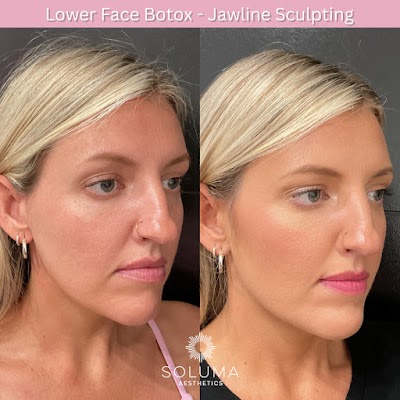
Botox for jawline slimming works by reducing masseter bulk. This is not for everyone. If your wide jaw is bone dominant, toxin will not change the shape. If you chew gum constantly or grind at night, the masseter can be powerful. I start with 20 to 30 units per side and reassess at 8 to 12 weeks. Over-treating risks chewing fatigue or a hollow look at the angle. Patients who want both strength and slimness may like staged, conservative treatments plus a night guard for bruxism.
Platysmal neck bands soften with multiple small injections directly into the bands. The goal is to weaken the vertical pulls that stripe the neck and drag the jawline. If skin laxity is significant, a neuromodulator alone will not lift. We pair it with skin tightening strategies or refer for surgical options when appropriate.
For migraines, the protocol is different from cosmetic Botox treatment. It follows a fixed-site, fixed-dose pattern across corrugator, procerus, frontalis, temporalis, occipitalis, cervical paraspinals, and trapezius muscles. Many neurologists deliver this care, and the reduction in monthly headache days can be life changing.
Hyperhidrosis treatment involves mapping sweat with starch iodine in some clinics, or simply following the hair bearing area in the axillae. The injections are shallow and numerous. Most of my sweaty palms and underarm patients say the brief pinches are worth the months of dry shirts and improved grip.
Baby Botox, Micro Botox, and when less is more
These trendy terms describe smaller units placed across a wider grid to reduce movement without stopping it. They are useful for first time Botox patients who fear looking “done,” for lips that need a gentle flip rather than a projection change, and for oily T zones where microdroplets can decrease sebum and pore appearance. Results can feel a touch shorter in longevity, but the benefit is subtlety. I avoid microdroplet techniques near the central lower face in patients with a gummy smile or thin upper lip to keep speech and smile dynamics natural.
Planning beyond one session
Botox maintenance is a rhythm. Most people return every 3 to 4 months for the upper face, twice a year for masseters, and as needed at longer intervals for hyperhidrosis depending on dose and season. A Botox touch up at two weeks is a precision step, not an excuse to under-dose the first pass. If you go longer between sessions because of life or budget, that is fine. Wrinkle relaxer injections are optional. Stopping does not damage anything. You pick up where you left off.
Photograph your face at rest and in expression before your first treatment. Botox before and after photos teach you what works on your features. They also help your injector hone the plan over botox FL time, which is how you move from “good” to “this quietly looks like me, just less tired.”
A note on safety behind the scenes
Patients rarely see the box, the vial, or the reconstitution. You should feel free to ask. A fresh vial should show the brand name, lot number, and expiration date. Botox is reconstituted with sterile saline to a concentration that fits the injector’s technique. Some prefer 2.5 units per 0.1 mL for the forehead, others 4 units per 0.1 mL for the glabella. There is no single correct answer, but consistency matters. Cold chain integrity matters. If I travel to teach, I do not throw vials in a tote. I order them to the site, stored correctly, and use them the same day.
Counterfeit product exists. Reputable clinics buy directly from the manufacturer or authorized distributors. If a “Botox clinic” offers a price no one in the region can match, that is not proof of malfeasance, but it is a reason to ask polite, specific questions.
When Botox is not the right answer
Lines carved in like paper folds, heavy lids from skin redundancy, volume loss in the temples or midface, deep nasolabial folds caused by sagging rather than movement, or etched smoker’s lines above the lip may not respond to more Botox. Those patients do better with a mixed plan: skincare that improves texture, lasers or microneedling for collagen, fillers for structure, and in some cases surgery. The ethical move is to say so. A non-surgical facelift with injectables is a helpful idea, but it is not a literal lift, and it cannot fix everything.
Final thoughts grounded in practice
Is Botox safe? In the right hands, for the right indication, at the right dose, yes. FDA approval gives a floor of evidence. Real world experience raises the ceiling. The work is not about chasing a number of Botox units or copying a celebrity’s forehead. It is about reading your anatomy, your job, your sport, your tolerance for movement, and your calendar. It is also about clarifying terms. Botox cosmetic treatment is not a filler, and “Botox facial” is a marketing phrase, not an injection protocol recognized by regulators.
If you are a first time Botox patient, schedule a proper Botox consultation, ask the questions that matter, and give yourself two weeks before any event. If you have had a bad experience, it does not mean you cannot try again. It means you and your injector need a better map. The best Botox treatment I deliver feels like a small exhale when you look in the mirror. You, still you, with a little less crease where you do not want it, and the same spark where you do.