
Chronic illness has a way of rearranging the furniture of a life. What used to fit no longer does, and the pieces you relied on, stamina, predictability, even the face you meet yourself with in the mirror, shift under chronic pain, fatigue, or medical routines. Identity is not a static thing, it is a living, improvisational process. When the body becomes a site of uncertainty, that process speeds up and gets messy. Art therapy offers a place to slow it down, to see and touch what is changing, and to find continuity inside the flux.
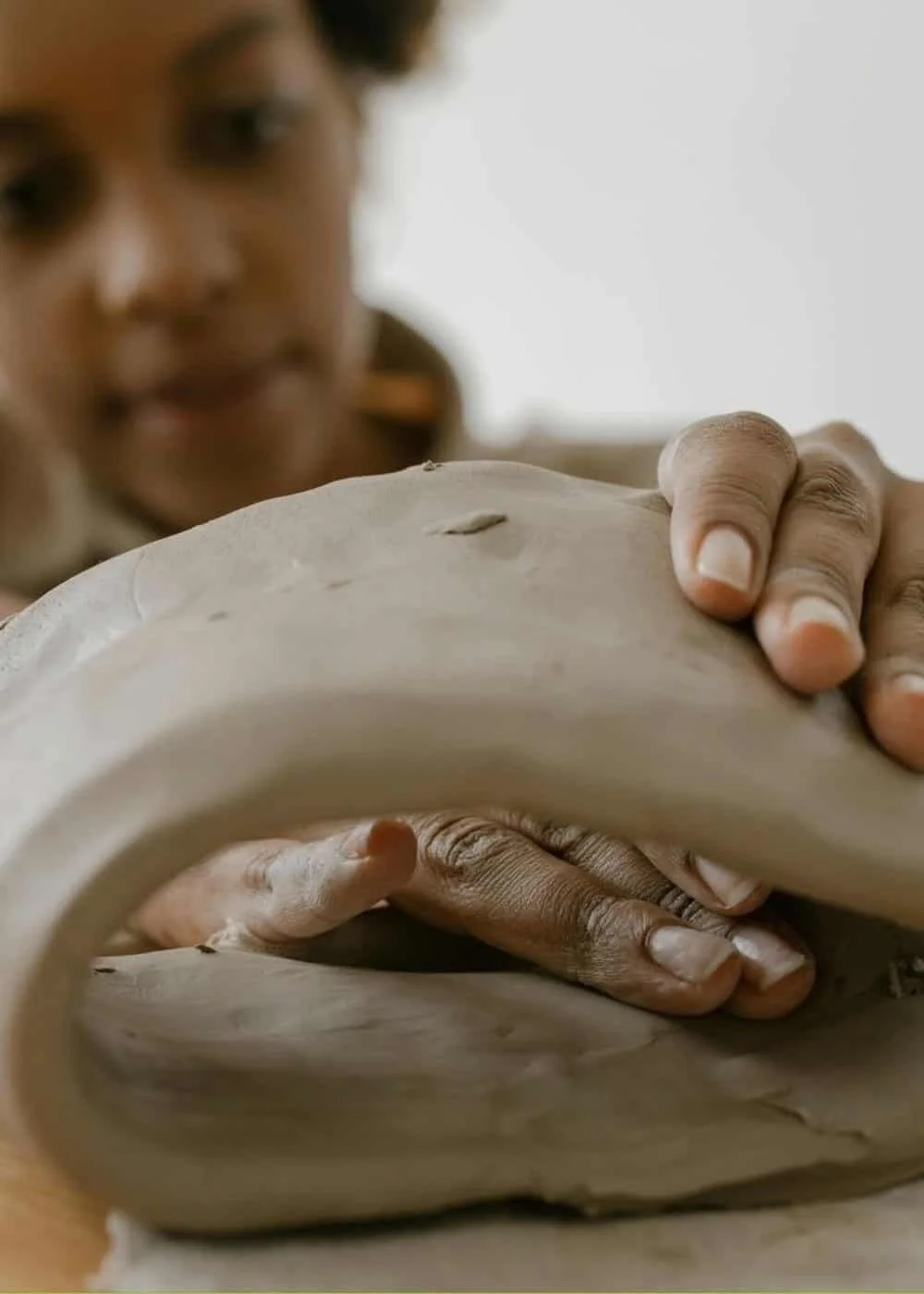
I have watched people who felt unrecognizable to themselves pick up a pencil and begin again. The act of choosing color, pressing charcoal into paper, or building a small sculpture with soft clay gives shape to realities that the best clinical language cannot hold. It is not that art fixes illness. It doesn’t. Art gives room to the parts of life that medicine touches only indirectly, grief and hope, fury and love, dread and humor. Those are identity’s raw materials.
When words can’t carry the weight
Many people come into art therapy apologizing. They say they are not artists, or they are too tired to think, or their hands do not cooperate like they used to. The apology makes sense. Illness can make us feel like guests in our own bodies. Verbal therapy asks for a strong narrator. Chronic illness often erodes narrative clarity, not because a person lacks insight but because the experience itself is jagged and cyclical. Pain spikes, energy dips, medications cloud memory. The story refuses a clean arc.
Images do not demand a tidy plot. The hand can circle a shape until it feels true. Scribbles can hold fear in a way a sentence cannot. A watercolor bleed can mirror what fatigue does to time better than any explanation. When I work with a client who lives with migraine, we keep a visual diary of aura patterns and postdrome colors. Over months, a palette emerges that becomes both data and poetry. That palette then becomes a way to talk to family about what an oncoming episode means, and a way to talk to self about what remains possible on a blue gray day.
In neurologic and pain conditions, sensory regulation matters. Pencil on toothy paper, the vibration of a pastel stick, the cool weight of smooth stones used for small assemblages, are not merely aesthetic choices. They are forms of grounding. When the nervous system runs hot, an uncluttered sheet of heavy paper and a single tool can be enough to settle breath. When numbness creeps in, textured media can nudge awareness back to the edges. None of this needs to be lofty. It needs to be useful.
Identity under pressure
Illness reconfigures roles. A teacher becomes a patient and, on some days, a napper primarily. A parent once known for endless hikes now budgets steps and fights guilt about missing a school play. There is the body before the diagnosis and the body after. There are career plans, sex, friendships, spirituality, food, and money, all with new negotiations. Identity changes not once, but repeatedly, with each flare, procedure, or plateau.
In one composite client story, Mira, a 33 year old designer with autoimmune disease, arrived enraged at her body and herself. She had been praised since childhood for competence. After months of stoppages at work and endless lab appointments, she felt she had become “that person who cancels.” In therapy, we did not start with anger, we started with paper. We tried three formats, a tiny 3 by 3 inch square for drawings of moments she wished would pass, a standard notebook for logistics and symptom notes, and a large sheet reserved for what she still desired. On that large sheet, she drew stairs in pencil almost every session. Sometimes she left them incomplete. Sometimes she added a railing. One week, she taped a red thread along the outer edge to mark how far she could go on a good day. That small ritual, mapping runway and limit, helped her leave sessions feeling more like a person building a life than a patient failing to keep up.
People sitting with chronic illness often carry trauma, acute medical trauma from invasive procedures, developmental trauma that predated illness, or the slow pull of cumulative invalidation when symptoms were dismissed for months or years. Identity work must account for both biography and biology. It helps to bring clear frameworks to the work, not to box someone in, but to secure handholds on a steep face.
What art therapy actually does in the room
An art therapy session for chronic illness looks less like a painting class and more like a small studio intertwined with psychotherapy. Materials are chosen for their sensory qualities, accessibility, and symbolic potential. If a client has neuropathy, we avoid fine motor strain and offer thicker tools and surfaces that do not require pressure. If fatigue is severe, we keep sessions short or break them into pulses, five minutes of mark making, five minutes of rest or quiet recounting, then another five minutes. We might work at a table, on a floor mat, or sometimes via telehealth with a shoe box of supplies mailed ahead of time.
The art task is rarely a task in the school sense. It is a prompt or a practice. Draw a map of your week with color only. Make a postcard to your future self from inside a flare. Build a container for the words you can’t say aloud yet, then write them on slips of paper and choose how much to reveal. Clients choose how representational to be. Many find relief in abstraction because it tracks sensation more than story.
Therapeutically, images let us see patterns over time. A series of small collages made across six months can chart mood more reliably than a retrospective account under stress. They also become a third thing in the room. It is easier to point to a line and say, this jagged part is the dread before scans, than to endure the demand, tell me the whole of your fear in fourteen minutes. The artwork holds and reflects. It can also mislead, which is why interpretation is collaborative, and we ask, what does this look like to you today, not what does it mean to me as your therapist.
Bringing internal family systems into the studio
Internal family systems, or IFS, fits naturally with art therapy when identity feels splintered by illness. Most people recognize intuitively that different parts show up across a day, the planner, the worrier, the medic, the rebellious teen who is sick of appointments, the exhaustion that just wants to sleep through it, the optimistic friend who keeps suggesting a hike you cannot take. IFS does not pathologize these parts. It assumes a core Self that can relate to parts with curiosity and compassion, and it invites parts into relationship rather than into exile.
In practice, this might look like drawing each part on its own small card, naming it in the client’s language. A client once identified the Lab Tech, an efficient part that woke up at 4:45 a.m. for fasting labs and filed results, and the Ghost, a dissociative part who left the body during painful exams. The cards lived in a small fabric pouch. Before surgeon appointments, we took the cards out and asked, who wants to lead today, who needs comfort, who needs limits. The client chose a color for Self energy and tucked that color in her pocket on appointment days. Over time, the Ghost softened from a smear of gray pastel into a translucent wash with edges, then into a figure with a hand that could reach for support. That shift mattered more than symptom metrics. It meant that when pain peaked, dissociation was no longer the only plan, and the system inside felt led, not hijacked.
Art makes parts visible and modifiable without coercion. A critic part can be drawn in ink and then softened with water. A protector can be collaged with metallic paper to honor its strength rather than painting it as a villain. A young part’s fears can be placed under a paper roof that we literally slide over the drawing at the end of a session so the room does not feel too raw. IFS gives the relational map. The studio provides the town where that map is walked.
Trauma therapy without re-traumatizing
Chronic illness often brings trauma uninvited. Being stuck in an imaging tube, receiving news while alone in a gown behind a curtain, or internalizing years of medical gaslighting can leave a nervous system on high alert. Art therapy used within trauma therapy principles lets us titrate. We do not plunge into the most charged content first, and we do not assume catharsis equals healing. It is common to start with resourcing images, small drawings of safe places or of moments when pain felt contained. Then we move toward the difficult material with clear exit ramps.
What tends to help is pendulation, the deliberate movement between intensity and relative ease. A client painting about a frightening hospitalization might spend five minutes on the hospital bed’s blocky geometry, then three minutes tracing the curve of a friend’s hand that held theirs, back and forth. This back and forth builds tolerance without flooding. The image holds the difficult parts so they do not spill. When language is needed, we track sensations, breath, and gaze. If someone’s hands start to go cold, we pause the image and attend to the body before proceeding.
Trauma work also involves power. Medical settings strip it away. In the studio, consent must be more than a form. The client chooses whether to look at or cover an image, whether to keep or tear it, whether to show it to me or keep it private. For people who have had too many procedures done to them, this level of authorship can be corrective. It also teaches what a bodily yes and a bodily no feel like again, knowledge that gets muffled under chronic pain.
The psychodynamic lens, gently held
Psychodynamic therapy, with its attention to unconscious patterns and the relational field, adds a slower, deeper octave to art therapy with chronic illness. Illness stresses attachment systems. Old roles reanimate. A stoic stance that earned love in childhood might now feed dangerous minimization of pain. A fear of burdening others might turn into isolation during flares.
Images often show these dynamics before words catch up. One man who framed himself as resilient painted boats for weeks. Each boat was sturdy, each alone on water with no land in sight. Only after we had a flotilla did he notice the theme and say, I guess I do not dock, because docks mean needing. That opened space to talk about intimacy, dependence, and how to accept care without losing face. In session, transference can appear in art choices. Someone might avoid messy media to be the “good patient” who does not create problems. Negative space can reveal withholding. Repetition can be a defense or a ritual, and it is our job to ask, to wonder, not to impose clever meanings. When interpreted respectfully, imagery can help loosen rigid self ideas that illness has tightened.
Psychodynamic awareness also helps navigate grief. People grieve the imagined body they believed they would have. They grieve timelines, fertility, travel. They grieve being carefree. Grief does not resolve with a single cathartic painting. It moves in seasons. I keep large envelopes marked with months. Clients slip images into the envelope that matches how a month felt to them. Looking back after a year, the presence of light in February might surprise them, or the density of July might make sense in retrospect. The point is to see the self as a moving, layered https://elliotqodv555.timeforchangecounselling.com/healing-through-color-how-art-therapy-transforms-trauma being, not as the sum of symptoms or stoicism.
When eating disorder therapy intersects with illness
Chronic illness complicates the relationship to food and body. Steroid treatments shift weight. GI conditions demand restriction that can resemble disordered eating. POTS, diabetes, and mast cell disorders can make nourishment a logistical puzzle. For those with a history of disordered eating, the return to meal planning can wake old compulsions. For those without such history, the sheer amount of attention paid to intake and output can turn the body into a spreadsheet rather than a place to live.
Art therapy supports eating disorder therapy by separating function from worth. In one treatment track, a client created a series called Tools and Treasures. Tools included infusion sets, pill sorters, glucose sensors. Treasures included a old sweater, a cedar candle, the smell of rain before a storm. Both were rendered with equal care. The exercise countered the pull to see the body solely as a problem to fix or a project to optimize. We also used color fields to map hunger and fullness when interoception was muddy from medications. Over weeks, the fields developed edges and gradations, a visual education that gradually translated to bodily cues.
The trickiest territory is weight. Some illnesses increase it, some reduce it, some swing it. Medical providers focus on numbers for different reasons than the eating disorder voice does, but the effect can be similar, self becoming a statistic. In the studio, we hold a third point: function and meaning. Can I climb my porch steps without losing breath. Can I carry my child to bed. Do I enjoy a meal with my partner. Art tasks that anchor to lived capacities and relationships dilute the tyranny of weight talk. They do not deny reality, they resize it.
Materials, pacing, and the craft of accessibility
A good art therapy setup for chronic illness respects energy, sensory sensitivity, and executive function. Pre assembled kits reduce friction. I often start with a pencil set, two brush pens, a small watercolor pan with three primaries and a neutral, a 5 by 8 mixed media sketchbook that lies flat, a glue stick, painter’s tape, and a handful of collage scraps. The kit fits in a pouch. If fatigue is severe, a tiny kit, one pen and a stack of sticky notes, meets the moment better than a beautiful but heavy box.
Pacing is medicine. I use time boxes so we work in short, predictable bursts. The session might follow a rhythm, art, talk, art, rest, art. Some clients need standing work to maintain alertness, others need a reclining chair. Lighting matters when headaches or sensory sensitivities are present. We use warm bulbs, avoid flicker, and keep a spare pair of tinted glasses in the room. Sound is a therapeutic element, soft hum for some, near silence for others. Knowing when to stop might be the most important clinical skill. In acute flares, a single line that says I am here is enough.
There are days when art feels impossible. Hands shake. The mind will not land. On those days we sometimes do what I call companionable art. I make marks alongside the client, each of us attending to our own paper with permission to stop at any time. My drawing is not for interpretation. It is for climate control, to normalize effort without performance pressure.
Prompts that help identity breathe
- Draw a self portrait without features. Use shape, color, and negative space to show how you occupy the day. Make a map of your week that includes the places you go internally, doctor’s office, bed, kitchen, the bench in the park, but also worry, numbness, patience, tiny joys. Create three small images, what energy feels like on a good day, a medium day, and a hard day. Keep them visible and choose your daily plan based on which card matches the morning. Collage a container for intrusive medical thoughts. Decorate the lid. Decide when the lid is on or off. Draw your parts as a crowd at a bus stop. Who talks loudest. Who gets left behind. Who pays the fare.
These are not assignments to complete. They are doors to open when words lock up.
How progress looks without turning life into a chart
Medicine thrives on metrics. Therapy can fall into that gravity. When a client lives with chronic illness, progress is not a straight line. A good month can collapse into a week of hospitalization with no warning. Measuring success only by symptom reduction is unfair. We look at arcs like tolerance for uncertainty, ease of asking for help, ability to rest without shame, reduced self blame during flares, repaired relationships, the return of small pleasures. We also watch the studio itself. Does the client initiate an image spontaneously. Do they choose bolder materials. Do they revise rather than trash something imperfect.

It helps to name what art cannot do. It does not substitute for medical care. It does not promise cure. What it often delivers is coherence. When a life is punctured by appointments and scans, coherence is not trivial. It means you remember who you are on the days your body does not cooperate. It means there is a place in you that others cannot schedule.
Ethical edges and cultural humility
Art therapy with chronic illness should never become covert compliance training, a way to make someone smile through pain. The aim is agency, not cheerfulness. When I invite someone to make an image, it is an invitation, not an obligation. If all they want is to sit quietly and look at the sky through the window, that is the art of the day.
Cultural humility matters because illness plays out within power structures. Access to care, beliefs about stoicism and suffering, family roles, and spiritual frames shape how identity adjusts. A person whose culture prizes collective resilience might prefer images that emphasize lineage and community over individual struggle. A person who distrusts institutions for good historical reasons may need a long time before letting a clinician see their art. We respect those conditions. We do not interpret imagery through a narrow cultural lens.
Confidentiality is not abstract here. Artworks sometimes hang at home, where visitors can see them. Clients decide who sees what. We discuss storage, privacy, and how to protect fragile pieces. For telehealth, we talk about camera angles that feel safe and how to end sessions when emotions run high and there is no waiting room to decompress in.
Finding footing at home
If you want to try art therapy concepts on your own, you can start small without treating yourself like a project. Choose a corner that can stay messy. Put a protective sheet on the table. Pick materials that feel friendly to your hands. Then try a light structure that reduces decision fatigue.
- Keep a tiny daily square. Date it. Make three marks that match your energy. Nothing more required. Create a flare kit box. Inside, place a pencil, post it notes, washi tape, and a few printed images that comfort you. During a flare, tape a note to your wall with one word you can live by that day, hydrate, soften, postpone, ask. Make a visual medication grid that is not punitive. For each dose, add a small dot of color to a card. Watch the card fill slowly with care rather than with judgment. Pair art with rest. Five minutes of color fields, ten minutes eyes closed. Repeat twice. If you use IFS language, draw one part a week. Place the drawings in an envelope labeled with a kind title, Team That Keeps Me Alive.
If these steps create pressure or comparison, set them aside. The point is to have somewhere to go with what churns.
Working alongside a multidisciplinary team
Art therapy thrives when it is not isolated. If you are in pain management, neurology, rheumatology, oncology, or GI care, your therapist can coordinate, with your permission, to align sessions with medical realities. For example, if a medication infusion predictably drops your energy for two days, the art therapist can front load resourcing images and schedule a brief check in after the infusion to keep you anchored. If you are in psychotherapy already, art therapy can be a short adjunct to move grief or fear that has stalled in words.
If you engage in internal family systems work with a talk therapist, bringing in visual parts cards can enrich that process. If you are in trauma therapy, use imagery to pace and contain exposure. If you are in psychodynamic therapy, images can help notice and metabolize patterns you sense but cannot yet narrate. If you are in eating disorder therapy, collaborative art tasks with your dietitian can make meal plans less abstract and more embodied.
Clinicians sometimes worry that art introduces complexity the client cannot handle, or that interpretation will step on other modalities. That is a fair concern when done poorly. Done well, art therapy functions like a gentle solvent on rigid states and a binder for scattered ones. It does not compete. It supports.
When identity grows in the cracks
One of the quiet gifts of chronic illness work is seeing identity grow in places that looked barren. A client once brought in a small branch, bleached gray by winter. We stood it in a jar and tied to it scraps of paper with words that mattered to her, rest, irreverence, deadlines, tenderness, scale, rage, humor. Over months, the branch became a seasonal altar. She changed the scraps as life demanded. What looked like driftwood at first became a portrait of resilience that had nothing to do with pretending. It had everything to do with naming, choosing, and refusing.
Art therapy, at its best, helps you refuse the single story of patient. It invites the caretaker, the scientist, the mystic, the skeptic, the child, and the artist who might not draw a straight line, to co author a life that illness can be part of without being all of it. That is not a small thing. It is the work of living, with paper cuts, ink stains, smudged fingers, and a self that feels more like itself again.
Name: Ruberti Counseling Services
Address: 525 S. 4th Street, Suite 367, Philadelphia, PA 19147
Phone: 215-330-5830
Website: https://www.ruberticounseling.com/
Email: info@ruberticounseling.com
Hours:
Monday: 9:00 AM - 5:00 PM
Tuesday: 9:00 AM - 5:00 PM
Wednesday: 9:00 AM - 5:00 PM
Thursday: 9:00 AM - 5:00 PM
Friday: Closed
Saturday: Closed
Sunday: Closed
Open-location code (plus code): WVR2+QF Philadelphia, Pennsylvania, USA
Map/listing URL: https://maps.app.goo.gl/yprwu2z4AdUtmANY8
Embed iframe:
Socials:
https://www.instagram.com/ruberticounseling/
https://www.facebook.com/p/Ruberti-Counseling-Services-100089030021280/
"@context": "https://schema.org",
"@type": "ProfessionalService",
"name": "Ruberti Counseling Services",
"url": "https://www.ruberticounseling.com/",
"telephone": "+1-215-330-5830",
"email": "info@ruberticounseling.com",
"address":
"@type": "PostalAddress",
"streetAddress": "525 S. 4th Street, Suite 367",
"addressLocality": "Philadelphia",
"addressRegion": "PA",
"postalCode": "19147",
"addressCountry": "US"
,
"sameAs": [
"https://www.instagram.com/ruberticounseling/",
"https://www.facebook.com/p/Ruberti-Counseling-Services-100089030021280/"
]
Ruberti Counseling Services provides LGBTQ-affirming therapy in Philadelphia for individuals, teens, transgender people, and partners seeking thoughtful, specialized care.
The practice focuses on concerns such as disordered eating, body image struggles, OCD, anxiety, trauma, and identity-related stress.
Based in Philadelphia, Ruberti Counseling Services offers in-person sessions locally and online therapy across Pennsylvania.
Clients can explore services that include art therapy, Internal Family Systems, psychodynamic therapy, ERP therapy for OCD, and trauma therapy.
The practice is designed for people who want affirming support that respects the intersections of mental health, identity, relationships, and lived experience.
People looking for a Philadelphia counselor can contact Ruberti Counseling Services at 215-330-5830 or visit https://www.ruberticounseling.com/.
The office is located at 525 S. 4th Street, Suite 367, Philadelphia, PA 19147, with nearby neighborhood access from Society Hill, Queen Village, Center City, and Old City.
A public map listing is also available for local reference and business lookup connected to the Philadelphia office.
For clients seeking LGBTQ-affirming counseling in Philadelphia with online availability across Pennsylvania, Ruberti Counseling Services offers both local access and statewide flexibility.
Popular Questions About Ruberti Counseling Services
What does Ruberti Counseling Services help with?
Ruberti Counseling Services helps with disordered eating, body image concerns, OCD, anxiety, trauma, and LGBTQ- and gender-related support needs.
Is Ruberti Counseling Services located in Philadelphia?
Yes. The practice lists its office at 525 S. 4th Street, Suite 367, Philadelphia, PA 19147.
Does Ruberti Counseling Services offer online therapy?
Yes. The website states that online therapy is available across Pennsylvania in addition to in-person therapy in Philadelphia.
What therapy approaches are offered?
The site highlights art therapy, Internal Family Systems (IFS), psychodynamic therapy, Exposure and Response Prevention (ERP) therapy, and trauma therapy.
Who does the practice serve?
The practice is geared toward LGBTQ individuals, teens, transgender folks, and their partners, while also supporting clients dealing with food, body image, trauma, and OCD-related concerns.
What neighborhoods does Ruberti Counseling Services mention near the office?
The official site references Society Hill, Queen Village, Center City, and Old City as nearby neighborhoods.
How do I contact Ruberti Counseling Services?
You can call 215-330-5830, email info@ruberticounseling.com, visit https://www.ruberticounseling.com/, or connect on social media:
Instagram
Facebook
Landmarks Near Philadelphia, PA
Society Hill – The official site specifically says the practice offers specialized therapy in Society Hill, making this one of the clearest local reference points.Queen Village – Listed by the practice as a nearby neighborhood for the Philadelphia office.
Center City – The site references both Center City access and a Center City location context for clients traveling from central Philadelphia.
Old City – Another nearby neighborhood named directly on the official site.
South Philadelphia – The Philadelphia location page mentions serving clients from South Philadelphia and surrounding areas.
University City – Named on the location page as part of the broader Philadelphia area served by the practice.
Fishtown – Included on the official location page as part of the wider Philadelphia service reach.
Gayborhood – The location page references Philadelphia’s LGBTQ+ community and the Gayborhood as part of the city context that informs the practice’s work.
If you are looking for counseling in Philadelphia, Ruberti Counseling Services offers a Society Hill office location with online therapy available across Pennsylvania.